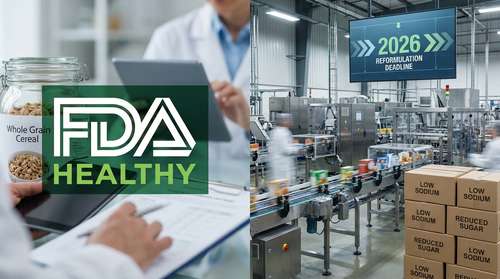
Major U.S. food manufacturers are in the midst of a critical food reformulation 2026 crisis as the reality of the FDA’s strict new "healthy" label standards sets in. Reports emerging yesterday reveal that while the compliance deadline is officially set for 2028, the industry is already facing a severe bottleneck. A massive rush to overhaul product recipes has triggered shortages of key ingredients needed to meet the new FDA healthy label rule, forcing brands to compete aggressively for limited supplies of salt substitutes and specialty fibers.
The 2026 Reformulation Crunch
According to industry data released on February 23, 2026, the race to redefine popular grocery items is intensifying faster than predicted. The FDA’s updated definition of "healthy"—which prioritizes nutrient-dense foods and imposes strict limits on added sugars, sodium, and saturated fats—has effectively rendered thousands of legacy products non-compliant. Brands that previously marketed their goods as "healthy" are now scrambling to adjust formulations to avoid losing that coveted front-of-pack claim.
The urgency is driven by a "first-mover advantage" mentality. Companies that delay their food reformulation 2026 efforts risk being locked out of the supply chain for essential alternative ingredients. Analysts warn that late adopters will face significantly higher premiums and potential stockouts, making the next six months a decisive period for the nutrition packaging regulations landscape.
Supply Chain Snarls: The Hunt for Sugar and Sodium Substitutes
The most immediate impact of the FDA healthy label rule is a chaotic strain on the ingredient market. As manufacturers rush to slash sodium and sugar levels, demand for potassium-based salt substitutes, allulose, and monk fruit has skyrocketed. Reports from Nutrition Insight highlight that global supply chain shortages are exacerbating the issue, with prices for these high-demand ingredients surging.
This "ingredient crunch" is reshaping low sodium food trends. It’s no longer just about reducing salt; it’s about finding palatable, functional replacements that can mimic the taste and texture consumers expect without crossing the FDA’s new thresholds. Similarly, sugar reduction news indicates that brands are moving beyond simple removal, turning to complex fiber blends to maintain mouthfeel in baked goods and snacks that must now meet rigorous added-sugar caps to qualify as "healthy."
The 'MAHA' Effect and State-Level Pressure
Adding to the complexity is the growing political momentum behind the "Make America Healthy Again" (MAHA) initiative. As of late February 2026, federal and state policymakers are aligning to tighten oversight on food additives and ultra-processed food limits. New legislative activity in states like California and New York is pushing for stricter transparency on "Generally Recognized as Safe" (GRAS) ingredients, creating a patchwork of compliance challenges for national brands.
This regulatory environment is forcing companies to look beyond just the FDA healthy label rule. They must now navigate a broader shift toward "clean label" integrity, where healthy food claims are scrutinized not just for nutrient counts but for the processing methods used. The era of using "healthy" as a marketing buzzword for highly processed, fortified snacks is effectively ending.
Strategic Pivots: The Return to 'Real' Food
In response to these pressures, forward-thinking manufacturers are pivoting their strategies. Instead of merely tweaking chemical formulations, many are embracing a "return to real" approach. This trend involves incorporating whole food ingredients—such as fruits, vegetables, and whole grains—that automatically qualify for the "healthy" claim under the new FDA framework.
- Whole Food Integration: Brands are adding visible nuts, seeds, and dried fruit to formulations to meet the "food group equivalent" requirements.
- Hybrids: The rise of products blending dairy with plant-based fibers to lower saturated fat while boosting nutrient density.
- Transparent Marketing: A shift away from vague health halos toward specific, verifiable healthy food claims backed by the new federal standards.
What Consumers Can Expect
For shoppers, the fallout from this reformulation scramble will soon be visible on store shelves. Over the coming year, expect to see a wave of familiar products with slightly altered tastes and textures as recipes are adjusted. Packaging will likely feature new, more specific nutrition packaging regulations-compliant icons, helping consumers easily identify products that truly meet the scientific definition of a healthy diet.
While the transition is costly and chaotic for the industry, the long-term result promises to be a grocery landscape where the word "healthy" actually means what it says—giving consumers the power to make better choices without needing a degree in nutrition science.