For families battling ultra-rare genetic conditions, hope often feels like a race against time. This week, that race reached a monumental finish line. On March 26, 2026, the U.S. Food and Drug Administration granted accelerated approval to Kresladi (marnetegragene autotemcel), a revolutionary one-time treatment developed by Rocket Pharmaceuticals. This highly anticipated FDA gene therapy approval 2026 milestone offers a permanent lifeline for children born with severe Leukocyte Adhesion Deficiency Type I (LAD-I), an often-fatal pediatric immune condition.
The regulatory green light arrives on the heels of a dramatic clinical trial that successfully treated nine children worldwide—including three young siblings from a single American family who were once trapped in a cycle of relentless hospitalizations. By genetically modifying a patient's own blood stem cells, this intervention effectively eliminates the need for high-risk bone marrow transplants, marking a new frontier in the search for breakthrough cures for children.
Understanding the Threat of Severe LAD-I
Severe Leukocyte Adhesion Deficiency Type I is a genetic immunodeficiency so rare it affects roughly one in a million live births globally. The disorder stems from biallelic variants in the ITGB2 gene. This specific mutation prevents the body from producing CD18, a crucial protein that acts like cellular Velcro, allowing white blood cells to stick to blood vessel walls and migrate into infected tissues.
Without CD18, a child's white blood cells float aimlessly in the bloodstream, completely unable to reach bacterial or fungal invaders. Infants born with severe LAD-I face recurrent, excruciatingly painful skin lesions, severe gum inflammation, and life-threatening respiratory infections. Historically, the only definitive LAD-I immune disorder treatment was an allogeneic hematopoietic stem cell transplant. However, relying on a bone marrow transplant requires a perfectly matched human leukocyte antigen (HLA) sibling donor. For the majority of patients without a matching donor, the mortality rate in the first two years of life hovers around an astonishing 75%.
A Clinical Miracle: The Langenhop Siblings
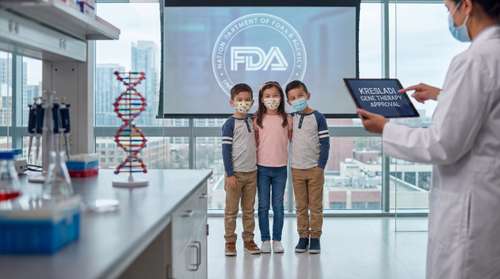
The urgency for an accessible Leukocyte Adhesion Deficiency therapy became starkly evident through the journey of Jon and Alicia Langenhop. The couple faced unfathomable odds when all three of their children—Ava (9), Olivia (7), and Landon (5)—inherited the severe form of LAD-I. With each child possessing a 25% chance of inheriting the mutation from their carrier parents, the family experienced what physicians described as a tragic anomaly.
Their early years were defined by isolation and medical emergencies. Every fever or minor scrape posed a lethal threat. Finding identical bone marrow matches for all three children proved nearly impossible. The narrative shifted dramatically when the family enrolled in an experimental Phase 1/2 clinical trial led by Dr. Donald Kohn at UCLA Mattel Children's Hospital, alongside other global sites in London and Madrid.
Rather than searching for external donors, the trial utilized the patients' own biology. Medical teams extracted the children's hematopoietic stem cells and used a specialized lentiviral vector to insert functional copies of the missing ITGB2 gene. Following a conditioning regimen to clear out the defective marrow, the modified cells were infused back into the children's bodies. Today, the three siblings are living vibrant, healthy lives, free from the constant shadow of severe infections. This remarkable outcome has quickly become one of the most celebrated stories in recent family health medical news.
The Mechanics of Autologous Gene Correction
Kresladi represents a massive leap forward in pediatric genetic medicine. Because the therapy relies on autologous (self-donated) stem cells, it completely bypasses the risk of graft-versus-host disease, a frequently fatal complication where transplanted donor cells attack the recipient's body. Trial data published in the New England Journal of Medicine demonstrated a 100% survival rate at two years post-infusion among the nine global participants. All treated children showed sustained restoration of CD18 and CD11a surface expression on their neutrophils, allowing their immune systems to function normally. Their severe skin lesions healed, their gum inflammation subsided, and they were finally able to fight off routine infections just like children with healthy immune systems.
Paving the Way for Future Genetic Cures
The FDA's decision validates years of exhaustive research and establishes a framework for targeting other ultra-rare diseases. Under the accelerated pathway, the regulatory agency recognized the profound clinical benefit of Kresladi, issuing Rocket Pharmaceuticals a Rare Pediatric Disease Priority Review Voucher alongside the approval. This voucher, which can be monetized or used to accelerate future drug reviews, heavily incentivizes biotech companies to continue investing in treatments for small patient populations.
While Kresladi will undergo continued post-marketing monitoring to verify long-term efficacy, its immediate availability shifts the treatment paradigm entirely. Clinicians no longer have to depend on the lottery of finding a bone marrow match. Instead, they can rewrite the faulty genetic code directly.
As researchers continue to unlock the capabilities of lentiviral vectors and stem cell modification, we are witnessing a golden age of rare pediatric disease breakthroughs. For the Langenhops and families like them across the country, scientific innovation has finally provided the ultimate gift: the chance for their children to simply grow up.