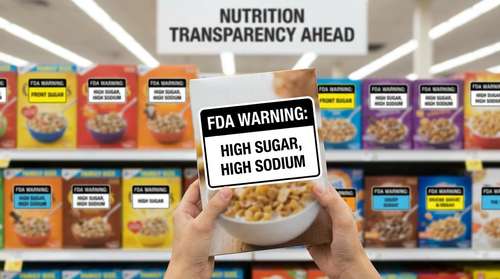
The American grocery aisle is on the brink of a historic transformation. As diet-related chronic diseases like type 2 diabetes and cardiovascular disease continue to impact millions, federal regulators are refining a major public health intervention. The much-debated FDA front-of-package labeling rule, currently undergoing intense review in mid-April 2026, aims to fundamentally change how shoppers identify both healthy and unhealthy foods. Instead of forcing consumers to decipher complex nutritional panels on the back of a box, the agency’s proposed framework moves critical data front and center.
The Push for Nutritional Transparency in 2026
For decades, public health advocates have argued that the standard Nutrition Facts panel is too difficult to parse during a hurried shopping trip. To address this, the initial framework for the new rule proposed a mandatory "Nutrition Info" box for the principal display panel of most packaged foods. This standardized design highlights three primary nutrients of concern: high sugar sodium saturated fat.
Under the original design proposed in early 2025, the label would categorize the percent Daily Value (%DV) of these nutrients as "Low," "Medium," or "High". The regulatory push aligns directly with the latest Dietary Guidelines for Americans, which advise strict limits on these specific dietary components to achieve better overall health outcomes. By mandating these disclosures, regulators hope to spark a new era of nutritional transparency, empowering shoppers to make informed decisions at a glance.
Breaking Down the Latest "High-In" Label Debate
While the core mission remains intact, the exact visual execution of these nutrition warning labels has become a subject of fierce debate over the past few days. Recent comments from senior agency leadership suggest that the inherited proposal is facing a comprehensive reassessment. FDA Deputy Commissioner for Human Foods Kyle Diamantas recently noted that the agency is meticulously reviewing the nearly 12,000 public comments submitted by stakeholders. Diamantas stated that "everything is on the table," leaving open the possibility of revising or even re-proposing the rule to ensure it meets its ambitious public health targets.
This potential pivot is echoed by current FDA Commissioner Martin Makary, who has publicly expressed skepticism about the inherited framework. During recent food policy discussions, Makary questioned whether saturated fat should remain the absolute top priority when communicating critical health features to consumers, especially in light of evolving nutritional science. As regulators weigh these options, the landscape of healthy food standards 2026 remains highly dynamic. Any meaningful modifications could trigger procedural requirements, meaning the agency must balance the urgency of public health with the complexities of administrative law.
The Impact of Independent Research
Adding momentum to the reassessment is recent independent data challenging the effectiveness of the FDA’s original label design. A pivotal study published in late March 2026 in The Lancet Public Health by researchers at UC Davis evaluated various front-of-package concepts. The findings suggest that the agency’s proposed "Low/Medium/High" tier system might actually mislead some shoppers.
Researchers discovered that if a highly processed product contains a "High" level of sodium but "Low" levels of sugar and saturated fat, the two positive markers can inadvertently create a false health halo. Consumers might perceive the product as generally healthy despite the severe sodium content. Instead, the study strongly advocates for explicit "high in" labels—such as "High in added sugar" or "High in sodium"—which significantly outperformed the FDA’s mixed-tier design in helping test subjects navigate virtual grocery stores and avoid unhealthy options.
What This Means for Consumers and Brands
The impending finalization of these food industry regulations will send ripple effects throughout the global supply chain. For consumers, the eventual rollout promises a frictionless shopping experience. Identifying heavily processed items will no longer require mathematical gymnastics or an advanced understanding of dietary percentages.
For food manufacturers, the stakes are remarkably high. Brands are already facing immense pressure to reformulate their product lines to avoid carrying a prominent "High" designation on their packaging.
Preparing for Industry Compliance
Navigating these shifts requires significant foresight from food and beverage producers. Companies that proactively reduce their reliance on excessive added sugars and sodium stand to gain a massive competitive advantage in a market increasingly driven by health-conscious buyers. Those who fail to adapt may find their products bearing prominent warnings that deter everyday shoppers.
Ultimately, whether the final mandate utilizes a tiered rating system or blunt warning tags, the trajectory is clear. The demand for clear, honest packaging is reshaping grocery retail, and the days of hiding behind confusing dietary jargon are rapidly coming to an end.