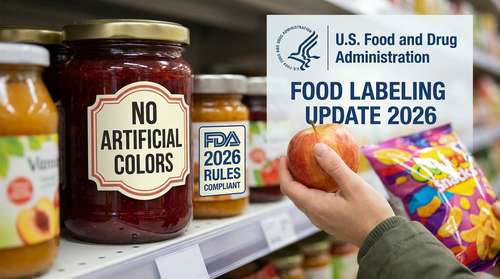
In a landmark shift for the American grocery aisle, the U.S. Food and Drug Administration (FDA) announced on February 5, 2026, that it is overhauling its regulations regarding "no artificial colors" claims. This major update to FDA food labeling rules 2026 allows manufacturers to use this highly sought-after label on products containing naturally derived dyes, such as beetroot red and spirulina extract. Previously, federal policy strictly prohibited the "no artificial colors" claim if any color additive was used, regardless of its source. This regulatory pivot marks a significant victory for the clean label movement and aligns with the broader "Make America Healthy Again" initiative championed by HHS Secretary Robert F. Kennedy Jr.
The End of the 'Zero Color' Requirement
For decades, the FDA maintained a rigid standard: if a company added beet juice to a strawberry yogurt to enhance its pink hue, it could not claim "no artificial colors" on the package. The agency's logic was that any added color—natural or synthetic—was technically "artificial" to the food itself. This technicality often confused consumers who equate "artificial" specifically with petroleum-based chemicals like Red 40 or Yellow 5.
Under the new 2026 guidance, the FDA is exercising "enforcement discretion," effectively giving a green light to brands to use the "no artificial colors" label as long as the product is free from certified petroleum-based synthetic dyes. This change acknowledges that most shoppers interpret "artificial" to mean "synthetic chemical," not "added plant juice." FDA Commissioner Dr. Marty Makary emphasized that this move is designed to remove hindrances for companies trying to reformulate their products with safer, plant-based alternatives.
Make America Healthy Again: The Policy Engine
This regulatory relaxation is not happening in a vacuum. It is a direct outcome of the "Make America Healthy Again" (MAHA) nutrition framework, which has prioritized the removal of ultra-processed ingredients from the U.S. food supply. Health and Human Services Secretary Robert F. Kennedy Jr. hailed the announcement as "real progress," framing it as a critical step in weaning the food industry off its reliance on petrochemicals.
Accelerating the Phase-Out
The updated guidance serves as a carrot to the industry's stick. By allowing the lucrative "no artificial colors" claim, the FDA provides a financial incentive for brands to ditch synthetic dyes. This complements the agency's recent ban on Red Dye No. 3 and the looming deadlines for phasing out other petroleum-based food dyes. The administration's goal is clear: make it profitable for companies to do the right thing, rather than just punishing them for non-compliance.
Natural Food Dyes vs. Synthetic: What's Changing?
Alongside the labeling update, the FDA formally approved beetroot red as a color additive and expanded the permitted uses of spirulina extract (a blue-green algae). These approvals are crucial because switching from synthetic to natural colors is chemically complex. Synthetic dyes are stable, vibrant, and cheap. Natural alternatives often fade under heat or light and can be more expensive to source.
Key distinctions for the 2026 shopper:
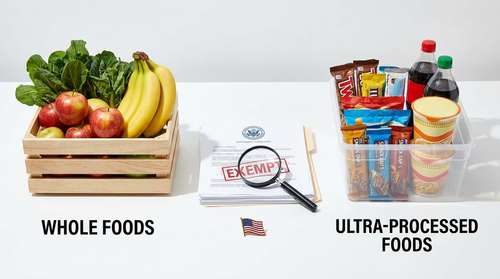
- Synthetic (Certified) Colors: derived from petroleum. Examples include Red 40, Yellow 5, and Blue 1. These are the targets of the phase-out.
- Exempt (Natural) Colors: derived from plants, minerals, or animals. Examples include annatto, turmeric, beta-carotene, and the newly expanded spirulina and beetroot options.
By expanding the toolbox of approved natural colors, the FDA is addressing the technical hurdles that have historically slowed the clean label food trends 2026. Brands now have more stable blue and red options—the two most difficult colors to replicate naturally—and the legal backing to market them effectively.
What This Means for Your Grocery Run
Shoppers should expect to see a wave of packaging updates hitting shelves throughout late 2026. The new "no artificial colors" label will likely appear on cereals, yogurts, candies, and beverages that were previously stuck in regulatory limbo. However, vigilance is still required. While a product may lack synthetic dyes, "natural" does not always equal "healthy." A sugary soda colored with beet juice is still a sugary soda.
Consumer advocacy groups generally support the move but advise reading the ingredient list on the back of the package. The "no artificial colors" claim simplifies the front-of-pack messaging, but the ingredient statement remains the source of truth. You will see terms like "colored with beet juice" or "spirulina extract for color" replacing names like "Red 40" or "Artificial Color."
Industry Impact and Future Outlook
Food manufacturers are already scrambling to secure supply chains for these natural pigments. The demand for agricultural crops used for dyes—specifically beets, carrots, and spirulina—is projected to skyrocket. This shift creates new opportunities for American farmers but also poses short-term supply challenges as the entire massive U.S. food system pivots simultaneously.
This 2026 labeling shift is likely just the beginning. With the MAHA initiative gaining momentum, industry analysts predict further scrutiny on other artificial additives, including preservatives and flavorings. For now, the FDA's decision effectively modernizes food labeling to match consumer expectations, bridging the gap between regulatory definitions and common sense.