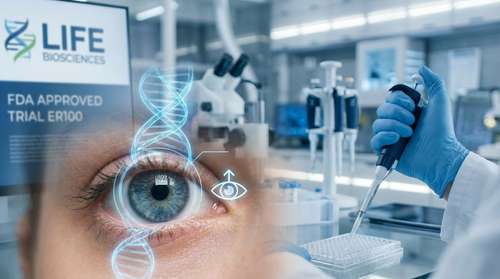
In a historic milestone for longevity medicine, the U.S. Food and Drug Administration (FDA) has granted clearance for the first-ever human clinical trial of a partial epigenetic reprogramming therapy. Life Biosciences, a Boston-based biotechnology company co-founded by renowned geneticist David Sinclair, received the green light this week to begin testing its lead candidate, ER100, in patients with age-related optic neuropathies. This groundbreaking decision marks the transition of cellular age reversal technology from the lab to the clinic, offering new hope for restoring vision by literally turning back the biological clock of retinal cells.
A Watershed Moment for Longevity Breakthroughs in 2026
The FDA's approval of the ER100 clinical trial represents a paradigm shift in how we treat age-related diseases. Unlike traditional therapies that manage symptoms or slow progression, epigenetic reprogramming aims to address the root cause of aging itself. Life Biosciences' therapy uses a "cellular reset" approach to restore youthful gene function in damaged tissues.
"This is not just a treatment; it is a demonstration that we can reverse the age of a complex tissue in a living human," said Sharon Rosenzweig-Lipson, Ph.D., Chief Scientific Officer of Life Biosciences, in a statement released Thursday. The trial will focus on two specific conditions: Open-Angle Glaucoma (OAG) and Non-Arteritic Anterior Ischemic Optic Neuropathy (NAION), both characterized by the irreversible loss of retinal ganglion cells.
The Science of ER100: Reversing Cellular Aging
At the core of this breakthrough is a technology known as partial epigenetic reprogramming. As cells age, their DNA accumulates chemical marks—like rust on a car—that disrupt normal gene expression and lead to dysfunction. ER100 is designed to polish off this "rust" without altering the underlying DNA sequence.
The therapy delivers three specific transcription factors—Oct4, Sox2, and Klf4 (collectively known as OSK)—directly to the eye via an intravitreal injection. These factors are part of the "Yamanaka factors" originally discovered to turn adult cells into stem cells. However, Life Biosciences uses a modified partial approach that rejuvenates the cell's epigenetic markers to a youthful state without causing it to lose its identity. In preclinical studies involving non-human primates, this method successfully restored visual function and regenerated optic nerve axons, a feat previously thought impossible.
Details of the Upcoming Phase 1 Trial
The Phase 1 anti-aging human trial will primarily evaluate the safety and tolerability of ER100. Recruitment is expected to begin immediately, targeting a small cohort of patients with severe vision loss. The study design includes:
- Target Population: Patients with diagnosed OAG or NAION who have significant vision impairment.
- Methodology: A single intravitreal injection of ER100, followed by a course of doxycycline to activate the reprogramming genes.
- Endpoints: Safety monitoring, immune response assessment, and preliminary efficacy measures such as visual acuity and electroretinogram (ERG) readings.
By using a "inducible" system, researchers can turn the therapy on and off, adding a critical layer of safety control that was pivotal in securing FDA clearance.
Implications for the Future of Medicine
If successful, the ER100 trial could open the floodgates for longevity breakthroughs 2026 and beyond. Success in the eye—a self-contained and easily accessible organ—could validate the platform for systemic applications, potentially targeting other age-related conditions like Alzheimer's, heart disease, and kidney failure.
"We are witnessing the first step toward a future where aging is a treatable condition," notes industry analyst Dr. Michael West. While the current focus is on reversing cellular aging in the eye, the broader implication is that the biological age of human tissues is malleable. As the first patient dosing approaches later this month, the world is watching closely. This trial is no longer science fiction; it is the new frontier of modern medicine.