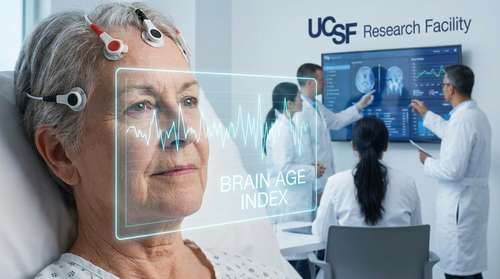
Waking up feeling older than your chronological years is a common complaint, but a new discovery reveals that your brain might literally be aging faster than your body while you rest. A major study published today in JAMA Network Open demonstrates that tracking a novel metric called the Brain Age Index can predict future memory loss years before symptoms emerge. Developed through advanced sleep wave analysis, this tool highlights how the electrical activity in our brains at night serves as a crystal ball for long-term neurological health.
What is the Brain Age Index?
For decades, scientists have searched for non-invasive ways to accurately measure biological brain age. Researchers have now successfully used machine-learning models to analyze sleep electroencephalography (EEG) data to solve this puzzle. By examining the brain's electrical patterns during sleep, they calculate a person's Brain Age Index—the numerical gap between their actual chronological age and how old their brain "looks" overnight.
Yue Leng, an associate professor of psychiatry at UCSF who authored the study, explained that the size of this gap is highly predictive of future cognitive issues. For example, a 65-year-old whose sleep waves resemble those of a 68-year-old has a brain age gap of three years. If that gap widens, the danger escalates significantly, giving doctors a clear warning sign long before memory begins to fade.
Quantifying the Dementia Risk Factors
The scale of this study provides a staggering look at how our nightly habits influence neurological decay. The research team tracked approximately 7,100 US adults between the ages of 54 and 94 across five distinct sleep studies. None of the participants displayed any signs of cognitive decline at the onset of the research, and scientists monitored their progress for anywhere from 3.5 to 17 years, creating a massive, longitudinal dataset.
The findings were definitive: for every 10-year increase in the Brain Age Index, a person's risk of developing dementia rose by 39%. This stark correlation solidifies poor sleep architecture as one of the most vital dementia risk factors currently known to medicine. Rather than relying solely on family history or subjective cognitive tests, medical professionals now have a quantifiable, biological marker to assess risk early in the aging process.
The Intersection of Sleep and Neurological Health
Why does sleep hold the key to our cognitive future? UCSF longevity research continues to investigate the exact mechanisms, but scientists know that sleep is an incredibly active period for the mind. During deep, slow-wave sleep phases, the brain's glymphatic system acts like a biological dishwasher. It pumps cerebrospinal fluid through brain tissue to clear out accumulated metabolic waste, including the toxic amyloid-beta proteins traditionally associated with Alzheimer's disease.
When sleep is fragmented or lacks sufficient deep phases, this necessary cleaning process is interrupted. Leng noted that conditions like sleep apnea, frequent nighttime awakenings, and excessive daytime sleepiness consistently correlate with a higher future risk of memory loss. Researchers are currently working to determine if these sleep disruptions directly cause the cognitive damage, or if they represent an early symptom of underlying neurodegeneration.
Preventing Cognitive Decline Before It Starts
The ability to detect a rapidly aging brain a decade or more before severe memory loss sets in fundamentally changes the medical approach to preventing cognitive decline. Currently, most dementia diagnoses occur after the damage to brain tissue is irreversible. By leveraging the Brain Age Index, doctors could eventually screen patients in their 50s and 60s, identifying those who need immediate lifestyle interventions.
While clinical EEGs are the current gold standard for this type of measurement, the rapid advancement of wearable health technology suggests that consumers might soon be able to track their own brain age from home. Until then, focusing on sleep quality remains the most immediate and effective defense against premature brain aging.
Actionable Healthy Aging Tips 2026
Understanding your biological brain age is only helpful if you can take concrete steps to protect it. Based on the latest clinical data, optimizing your nighttime routine is no longer just about feeling rested—it is a medical necessity. To protect your brain's youthful architecture, prioritize these healthy aging tips 2026:
- Treat sleep disorders immediately: Conditions like sleep apnea chronically deprive the brain of oxygen and shatter sleep continuity. Using a CPAP machine or specialized oral appliance can dramatically improve your nighttime brain waves.
- Protect your deep sleep: Limit alcohol and caffeine intake in the afternoon and evening. Both substances severely disrupt the deep, slow-wave sleep required for the brain's nightly toxin-clearance process.
- Manage your physical health: The UCSF team found that a high body mass index (BMI) and poor cardiovascular health directly negatively impact sleep quality and accelerate brain aging. Regular cardiovascular exercise remains one of the most potent tools for deepening sleep and preserving cognition.
- Maintain a consistent schedule: Going to bed and waking up at the exact same time every day stabilizes your circadian rhythm, which helps ensure you cycle through all necessary sleep stages efficiently.
Taking control of your sleep hygiene today provides the most direct route to keeping your mind sharp and your brain biologically young for decades to come.