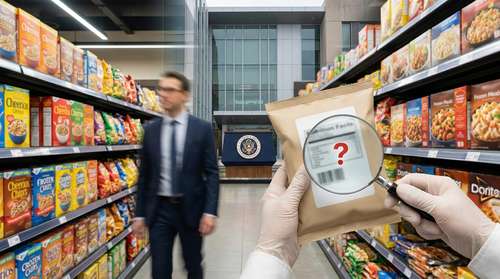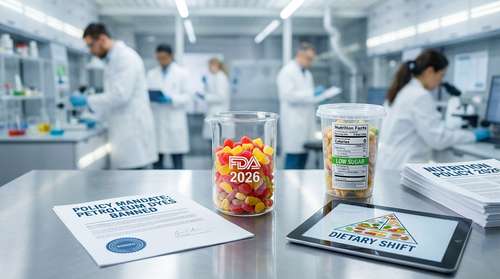
WASHINGTON, D.C. — In a historic overhaul of American food policy, the FDA officially released its 2026 priority roadmap this week, confirming a sweeping ban on petroleum-based food dyes and establishing rigorous new labeling standards for added sugars. The announcement, which follows the January 7 release of the radical “inverted pyramid” 2025-2030 Dietary Guidelines, marks the most aggressive federal intervention in the food supply in decades. Under the new “Make America Healthy Again” (MAHA) agenda led by HHS Secretary Robert F. Kennedy Jr., the agency is pivoting from voluntary guidance to strict mandates aimed at dismantling the dominance of ultra-processed foods.
Petroleum-Based Dyes to Be Phased Out by Late 2026
The FDA’s roadmap sets a hard deadline for the removal of synthetic color additives that have defined American snack foods for half a century. By December 2026, manufacturers must phase out Red No. 40, Yellow No. 5, and Yellow No. 6—dyes linked in recent HHS reviews to behavioral issues in children and potential carcinogenic risks. This federal mandate supersedes the patchwork of state-level bans that began with California and West Virginia in 2025, creating a unified national standard.
“We are ending the era of cosmetic chemicals in our children’s food,” stated FDA Commissioner Dr. Marty Makary during the roadmap’s unveiling. The agency has simultaneously fast-tracked approval for four new natural color alternatives derived from spirulina, turmeric, and beet juice to help manufacturers reformulate. Industry giants like PepsiCo and Kraft Heinz, anticipating the regulatory cliff, have already begun shifting to these natural sources, though the new mandate forces laggards to comply or face steep fines starting in 2027.
‘Low Added Sugar’ & Front-of-Package Labeling
Alongside the chemical cleanup, the FDA confirmed the finalization of its mandatory Front-of-Package (FOP) labeling rule. Effective immediately for new products (with a 2-year compliance window for existing SKUs), food items must display bold “High,” “Medium,” or “Low” indicators for added sugars, sodium, and saturated fats. This moves beyond the “Healthy” nutrient content claim updates proposed in 2025, forcing a stark visual warning on sugary cereals, yogurts, and beverages that previously marketed themselves as nutritious.
The ‘Sugar Cliff’ for Manufacturers
The new definition of “Low Added Sugar” is stricter than anticipated. To qualify for the claim, a product must contain less than 5% of the Daily Value (DV) of added sugar per serving—a threshold that disqualifies over 70% of the current breakfast cereal aisle. This policy aligns directly with the administration’s goal to reduce chronic disease by targeting the “bliss point” engineering used in ultra-processed formulations.
The ‘Inverted Pyramid’ Shift in 2025-2030 Guidelines
The regulatory crackdown provides the enforcement teeth for the controversial 2025-2030 Dietary Guidelines released earlier this month. In a dramatic departure from the grain-heavy foundations of the past, the new “inverted pyramid” model prioritizes high-quality proteins, full-fat dairy, and vegetables at the widest top tier, while relegating refined grains and ultra-processed carbohydrates to the narrow tip. This visual rebrand explicitly categorizes “ultra-processed foods” (UPFs) as items to avoid, rather than just suggesting moderation.
This structural shift has sparked intense debate but signals a unified government stance: nutrition policy 2026 is no longer about calorie counting, but about ingredient quality. With the FDA now empowered to enforce these distinctions through labeling and ingredient bans, the American grocery landscape is set for its most profound transformation since the introduction of the Nutrition Facts label in 1990.