In the world of physical training, there is no universal blueprint. What pushes one athlete to peak physical conditioning might leave another fatigued, stagnant, or injury-prone. For decades, experts relied on outward metrics like VO2 max and lean muscle mass to gauge an individual's capabilities. While helpful, these measurements only paint a partial picture. But on April 28, 2026, an unprecedented breakthrough was published in the journal Communications Biology, offering a glimpse into the cellular machinery that truly dictates how we perform. By successfully mapping the molecular markers of fitness, scientists have finally cracked the code to individualized physical performance.
Inside the Groundbreaking MIT West Point Fitness Research
The collaborative effort brought together leading experts from MIT, GE HealthCare, and the U.S. Military Academy at West Point. To understand the complex biological pathways driving exceptional endurance and strength, the research team recruited 86 highly active cadets training for the grueling Sandhurst Military Skills Competition. Supported by funding from the Defense Advanced Research Projects Agency (DARPA), this initiative represents a seismic shift in how we understand human capability.
Over a rigorous three-month period, these volunteers underwent intense military and physical training. At up to five distinct sessions, scientists drew blood samples both before and immediately after strenuous workouts. The sheer scale of the resulting biological fitness data was staggering. The team successfully analyzed over 50,000 distinct biomarkers. They mapped DNA methylation patterns, sequenced messenger RNA transcripts, and cataloged thousands of proteins and small molecules circulating in the bloodstream. This vast repository of information formed the backbone of the MIT fitness study 2026, moving the conversation from simple statistical correlations to identifying the true, mechanistic drivers of human performance.
From Big Data to Actionable Insights
Having 50,000 data points per sample is a monumental scientific feat, but it is entirely impractical for everyday clinical or athletic use. The core objective of this extensive research was to separate the noise from the essential signals. Ernest Fraenkel, the Grover M. Hermann Professor in Health Sciences and Technology at MIT and co-senior author of the study, noted that the ultimate goal was to distill this massive pool down to roughly 100 highly predictive molecular markers of fitness. They wanted markers that do not just coincidentally appear during exercise, but actively cause biological changes in physical readiness.
Decoding Biomarkers for Athletic Performance
The research team, led by Azar Alizadeh, a principal scientist at GE HealthCare's Healthcare Technology and Innovation Center, built a proprietary computational model to process this massive dataset. The algorithm evaluated how specific molecular cascades correlated with scores on the Army Combat Fitness Test (ACFT), the strict benchmark used to measure Cadet physical readiness.
Rather than simply showing that certain molecules are present when someone exercises, the computational model highlighted the exact cellular pathways responsible for building stamina, accelerating healing, and generating power. Isolating these specific biomarkers for athletic performance—and proving a causal relationship rather than a mere correlation—is a massive leap forward for sports science.
Revolutionizing Exercise Recovery Science
Understanding the molecular signature of an elite athlete does much more than satisfy scientific curiosity. It completely redefines exercise recovery science. Currently, athletes and their coaches often rely on trial and error to determine whether they need an extra rest day, specific nutritional interventions, or a shift in their training load. This guesswork frequently leads to overtraining syndrome, chronic fatigue, or acute injuries.
By isolating the exact biological mechanisms that facilitate tissue repair and energy synthesis, trainers can eventually eliminate that uncertainty. If a runner's blood profile indicates severe depletion in specific regenerative proteins, their coaching staff could enforce recovery protocols before a catastrophic injury occurs. The applications stretch far beyond elite sports, too. Alizadeh points out that tracking these biomarkers could provide someone with a chronic illness—or a patient dealing with a long-term injury—with a highly accurate roadmap to recovery, improving their performance ceiling far beyond what conventional rehabilitation measures currently allow.
The Future of Precision Fitness Technology
We are moving rapidly toward a reality where your fitness routine is prescribed not by a generic online template, but by your unique biological signature. The ultimate goal of the researchers behind the MIT fitness study 2026 is to create a single, simplified blood test that can easily measure these curated markers in clinical, commercial, or even at-home settings.
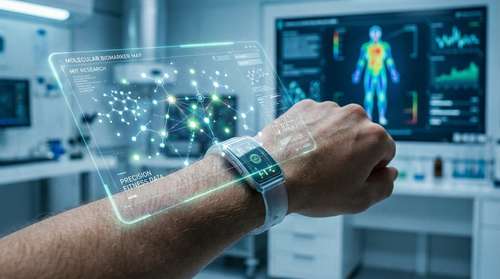
Imagine waking up, performing a quick prick of the finger or wearing a minimally invasive monitor, and knowing exactly what kind of workout your body is biologically primed for that day. Precision fitness technology is no longer just a hypothetical concept; the foundation has officially been laid. As researchers continue to refine this computational model and isolate the most essential molecular markers of fitness, the ambiguity of physical training will vanish.
The 'fitness code' has been cracked. Now, the sports science and medical communities face the exciting challenge of translating these massive datasets into actionable, everyday tools. It is a paradigm shift that will undoubtedly redefine human capability, longevity, and performance for decades to come.