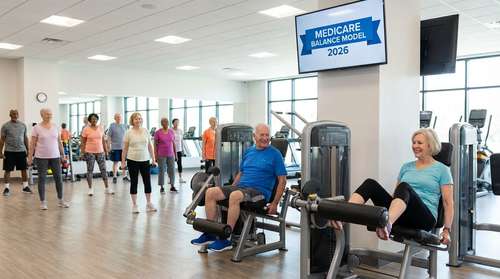
For decades, older Americans and health advocates have asked when the federal government would treat exercise as a medical necessity rather than a recreational hobby. That question finally has an answer. Following a series of accelerated policy rollouts this week, the Centers for Medicare & Medicaid Services (CMS) officially activated the framework for the CMS BALANCE Model 2026. This landmark initiative introduces a groundbreaking Medicare gym subsidy designed to redefine how older adults access preventative care. By directly connecting healthcare coverage with certified fitness facilities, the administration is making a historic investment in the physical longevity of its beneficiaries.
What the CMS BALANCE Model 2026 Means for You
The BALANCE program—which stands for Better Approaches to Lifestyle and Nutrition for Comprehensive hEalth—was initially conceived to expand access to next-generation weight-loss medications, specifically GLP-1s, for Medicare and Medicaid enrollees. However, the most disruptive component of the policy is its mandatory lifestyle intervention requirement. To qualify for ongoing coverage, beneficiaries must participate in an approved lifestyle support program. This mandate transforms preventative healthcare fitness from an optional add-on into a strict federal healthcare pathway.
Fitness brands, regional health clubs, and digital wellness platforms are now racing to achieve "authorized lifestyle provider" status. For enrolled beneficiaries, this designation translates to personalized metabolic coaching and access to certified facilities at zero out-of-pocket cost. Industry analysts are already calling this the biggest development in 2026 fitness industry news, as it opens a massive, government-funded referral pipeline directly to local gyms.
Bridging the Gap: Gym Reimbursement for Seniors
Historically, traditional Medicare Part B fitness benefits explicitly excluded standard gym memberships. Seniors were forced to pay completely out of pocket or rely exclusively on private Medicare Advantage plans to access third-party programs like SilverSneakers. The BALANCE initiative fundamentally disrupts this outdated standard by weaving direct fitness support into the broader federal healthcare safety net.
The medical justification for this shift is profound. Clinical data shows that rapid weight loss driven by GLP-1 medications can result in severe muscle depletion, with lean muscle mass accounting for up to 50% of total weight lost. Consequently, structured resistance training is no longer viewed as a lifestyle choice; it is a clinical imperative to prevent frailty. This new structure for gym reimbursement for seniors ensures that beneficiaries receive the necessary metabolic guidance and strength training required to maintain mobility and long-term health.
A Multi-Phased Rollout Timeline
The implementation of these senior fitness programs 2026 is moving at an unprecedented pace. Beneficiaries need to track several key deadlines to ensure they do not miss out on the incoming benefits:
- May 2026: The lifestyle support and coverage model officially goes live for eligible Medicaid recipients across participating states.
- July 2026: The highly anticipated Medicare GLP-1 Bridge program launches. This specialized six-month demonstration gives Medicare Part D beneficiaries early access to treatments at a fixed $50 monthly copay, alongside mandatory manufacturer-sponsored fitness support.
- January 2027: Full integration begins across participating Medicare Part D plans. CMS requires an 80% plan participation threshold by late April 2026 to guarantee this broader rollout.
The MAHA ELEVATE Expansion: April 2026 Developments
Adding fuel to the fire, CMS doubled down on its fitness-first approach just days ago. On April 2, 2026, the agency announced the MAHA ELEVATE (Make America Healthy Again: Enhancing Lifestyle and Evaluating Value-based Approaches Through Evidence) Model. This supplementary initiative injects $100 million into functional and lifestyle medicine interventions specifically for Original Medicare beneficiaries.
While the BALANCE model focuses heavily on patients utilizing weight-management medications, MAHA ELEVATE casts a wider net. It mandates that all participating health organizations incorporate rigorous physical activity or nutrition protocols into their care designs. Together, these twin initiatives signal a complete overhaul of how the government approaches healthy aging, targeting the root causes of chronic disease rather than just treating the symptoms.
How to Prepare for the Preventative Healthcare Fitness Wave
The lines between traditional medical care and physical fitness have permanently blurred. As premium health clubs and local community centers integrate clinical oversight to meet federal standards, older adults will soon have access to a caliber of care previously reserved for professional athletes.
If you are a Medicare beneficiary, the next few months are critical. Review your current coverage and pay close attention to your plan's announcements regarding BALANCE participation ahead of the fall enrollment period. Contact your local fitness centers to see if they are actively pursuing the authorized lifestyle provider designation. By staying informed, you can ensure you are fully positioned to take advantage of this unprecedented federal investment in your physical well-being.