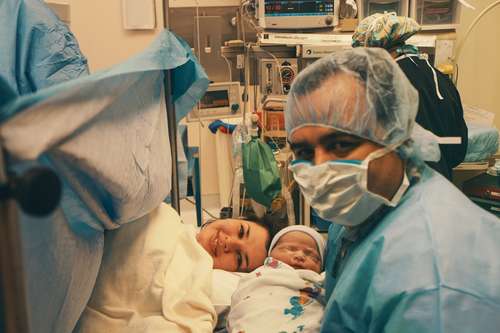
In a desperate bid to reverse a deepening demographic crisis, China has unveiled its most ambitious population policy to date: a staggering 180 billion yuan ($25.8 billion) fiscal package designed to make pregnancy and childbirth essentially free for all citizens in 2026. The historic initiative, detailed by officials and economists on Friday, pledges to eliminate out-of-pocket expenses for expectant mothers—covering everything from prenatal checkups to delivery and even IVF treatments—as the nation braces for its fourth consecutive year of population decline.
A Radical Fiscal Push: Breaking Down the $25.8 Billion Investment
The sheer scale of the financial commitment marks a pivotal shift in Beijing’s strategy. Authorities are mobilizing approximately 180 billion yuan for 2026 alone to fund these maternity support policies. This figure represents a massive expansion of the state's role in family planning, moving from mere encouragement to direct financial underwriting of reproduction.
According to estimates from research firm Trivium China and recent government disclosures, the funding is split into two primary buckets. Approximately 108 billion yuan is allocated for the national child subsidy, a program introduced last year that provides families with 3,600 yuan ($500) annually for each child under the age of three. The remaining 70 billion yuan is earmarked specifically for the new medical reimbursement mandate, designed to absorb the entire cost of giving birth for millions of families.
"No Out-of-Pocket Expenses": Complete IVF and Maternity Coverage
The cornerstone of the 2026 plan is the guarantee of "no out-of-pocket expenses" for maternity care. Under the new guidelines, China’s national medical insurance system will fully reimburse all standard costs associated with pregnancy. This includes prenatal examinations, labor and delivery fees, and postnatal medical services, effectively standardizing free childbirth across all provinces.
Expanding IVF Reimbursement Nationwide
Perhaps the most significant development is the nationwide inclusion of assisted reproductive technologies. Following successful pilot programs in Beijing and provincial-level regions like Jilin and Jiangsu, IVF reimbursement in China will now be a national standard. With infertility rates rising, this policy aims to assist millions of couples who were previously priced out of treatment. By covering these high-cost procedures, the government hopes to unlock a reservoir of pent-up demand for children among older couples and those facing fertility challenges.
Combating the Demographic Crisis: 2026 Birth Incentives in Context
This urgent policy rollout comes just days before the National Bureau of Statistics is expected to release data on January 19, which analysts predict will confirm a fourth straight year of population shrinkage. The China birth rate 2026 targets are set against a grim backdrop: the country’s fertility rate hovers around 1.0 births per woman, far below the replacement level of 2.1 needed to maintain a stable population.
The economic stakes could not be higher. A shrinking workforce and a rapidly aging society threaten Beijing's long-term economic goals, including domestic consumption growth and pension system sustainability. By treating population growth as a top-tier economic priority, officials are acknowledging that previous incremental measures—such as the three-child policy and minor tax incentives—have largely failed to move the needle.
Will Free Childbirth Be Enough?
Despite the historic nature of the free pregnancy costs initiative, demographers remain cautiously optimistic at best. Financial barriers to childbirth are only one piece of the puzzle. Young Chinese couples frequently cite the exorbitant costs of education, high housing prices, and intense workplace competition as their primary reasons for delaying or foregoing parenthood.
Experts point to the struggles of neighboring East Asian nations like Japan and South Korea, where cash handouts and medical subsidies have had limited success in reversing demographic declines. While removing the immediate medical costs of birth is a necessary step, it does not address the long-term expense of raising a child to adulthood in one of the world's most competitive societies. However, for millions of families weighing the decision to have another child in 2026, this $25 billion promise removes a significant immediate hurdle.