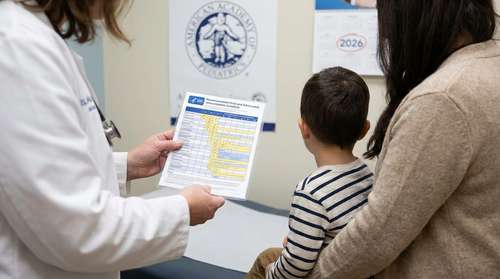
In an unprecedented public health clash, the American Academy of Pediatrics (AAP) issued a stark warning to parents over the last 48 hours: ignore the newly implemented CDC vaccine schedule 2026 and trust your local doctor. The federal agency recently overhauled its decades-old recommendations, drastically reducing universally recommended routine childhood vaccinations from 17 down to just 11. While the CDC asserts this move aligns the United States with peer nations like Denmark, pediatricians are sounding the alarm over the potential resurgence of preventable illnesses. For parents caught in the middle of this policy earthquake, understanding these childhood immunization changes is critical. Here is exactly why the medical community is breaking away from the federal government, and what it means for your child's next checkup.
The Historic Shift in Childhood Immunization Changes
The newly finalized federal guidelines represent the most significant departure from established public health policy in modern history. Under the revised framework, the CDC has pared down its list of universal immunizations to 11 diseases. The agency maintains that it will only universally recommend vaccines that hold a broad international consensus.
The surviving core list includes immunizations for polio, measles, mumps, rubella, varicella (chickenpox), human papillomavirus (HPV), diphtheria, tetanus, pertussis, Haemophilus influenzae type b (Hib), and pneumococcal disease. According to the Department of Health and Human Services, this streamlined approach is designed to provide families with more flexibility while reducing perceived coercion. However, this drastic reduction leaves out several critical illnesses that American doctors have successfully inoculated against for years, leading to widespread pushback from frontline healthcare providers.
The Move to Shared Decision-Making Vaccines
Instead of universally recommending immunizations for influenza, COVID-19, rotavirus, and Hepatitis A and B, the CDC has reclassified them. They now fall into a new category of shared decision-making vaccines or are reserved strictly for high-risk populations. In a clinical setting, this means public health authorities are no longer universally endorsing these shots for every healthy child. Instead, doctors and parents are expected to weigh the individual risks and benefits together.
Federal officials argue this empowers parents to make individualized healthcare choices. Conversely, infectious disease experts warn that removing the universal recommendation for severe respiratory and liver viruses will inevitably depress vaccination rates. Without a unified public health push, doctors fear that hesitancy will rise, leaving communities vulnerable to outbreaks of diseases that were previously well-controlled.
AAP vs CDC Guidelines: Why Pediatricians Reject the Cuts
The growing rift between the AAP vs CDC guidelines reached a boiling point this week. The AAP strongly advised its nationwide network of pediatricians to entirely disregard the federal cuts, labeling the changes as dangerous and unnecessary. The medical society argues that dropping the universal birth dose of the Hepatitis B vaccine, for example, abandons decades of rigorous, evidence-based science.
Major medical organizations, including the American Medical Association and the Infectious Diseases Society of America, have overwhelmingly endorsed the AAP’s comprehensive 18-disease schedule. The resistance extends beyond medical societies. Currently, at least 27 states and Washington, D.C., have announced they will reject the federal schedule. Health departments in these states plan to continue following the AAP's robust immunization policy, ensuring that the standard of care remains intact at the state level despite the federal shake-up.
Deciphering the Pediatric Health Alerts 2026
If you have logged into your family's medical portal in the last two days, you have likely seen a flurry of new notifications. Pediatricians are actively sending out pediatric health alerts 2026 to clarify their clinical stance before the busy spring checkup season begins. These proactive messages are designed to reassure parents that their local clinics will not be adopting the CDC’s reduced schedule.
The AAP recently launched a massive confidence campaign, providing doctors with toolkits and messaging guides to communicate effectively with concerned families. Doctors are utilizing these alerts to explain why they still advocate for the full suite of vaccines, including the seasonal flu and RSV shots. The core message from your pediatrician is simple: the science supporting the safety and efficacy of the original 17-vaccine schedule has not changed, even if federal policy has.
Securing Vaccine Insurance Coverage for Families
One of the most immediate panics sparked by the federal shift surrounds the financial implications. If the government no longer universally recommends certain shots, will parents be forced to pay out of pocket? Fortunately, vaccine insurance coverage for families remains heavily protected.
The CDC explicitly clarified that all immunizations recommended as of December 31, 2025, will continue to be fully covered by Affordable Care Act insurance plans, Medicaid, and the Vaccines for Children program. Families will not face new cost-sharing burdens or out-of-pocket expenses to access the vaccines that were moved to the optional tiers. This vital financial protection ensures that parents can confidently follow their pediatrician's advice and adhere to the AAP’s broader guidelines without worrying about unexpected medical bills.