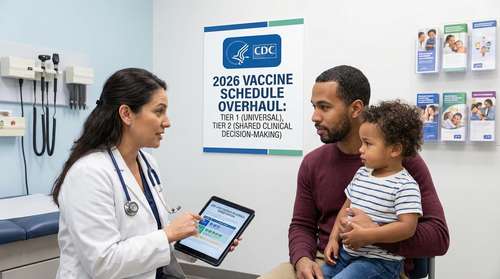
In a historic shift that fundamentally redefines pediatric healthcare in the United States, the Centers for Disease Control and Prevention (CDC) has implemented a sweeping overhaul of the childhood immunization schedule for 2026. Officially announced in a January 5 decision memo from the Department of Health and Human Services (HHS), this new framework moves away from the one-size-fits-all approach of the past decades. The CDC 2026 vaccine schedule now categorizes vaccines into a three-tiered system, reducing the number of universally recommended "core" protections from 18 to 11. For parents navigating these changes, understanding the distinction between "universally recommended," "risk-based," and "shared clinical decision-making" is now essential for making informed choices about their child's health.
The New Three-Tiered Vaccine Framework
The most significant change in the childhood immunization updates is the restructuring of the schedule into three distinct categories. Previously, the CDC recommended a comprehensive list of vaccines for all healthy children. The new 2026 guidelines, championed by HHS officials to "restore trust" and align the U.S. with peer nations like Denmark, prioritize flexibility and individualized care.
The three tiers are defined as:
- Recommended for All Children (Universal): Core vaccines with broad international consensus, protecting against highly contagious or severe diseases.
- Risk-Based Recommendations: Vaccines advised only for children with specific risk factors, such as underlying health conditions or travel to endemic areas.
- Shared Clinical Decision-Making (SCDM): A category where the decision to vaccinate is made on a case-by-case basis between the parent and pediatrician, rather than being a default recommendation.
The 'Core 11': What Is Still Recommended for Everyone?
Under the new new CDC vaccine tiers, the list of universally recommended vaccines has been streamlined to 11 core protections. Federal health officials emphasize that these vaccines remain critical for public health and school safety. The "Core 11" includes protections against:
- Measles, Mumps, and Rubella (MMR)
- Diphtheria, Tetanus, and Pertussis (DTaP)
- Polio
- Haemophilus influenzae type b (Hib)
- Pneumococcal disease
- Varicella (Chickenpox)
- Human Papillomavirus (HPV)
Major Shift in HPV Guidelines
A notable update within the core list is the change to the HPV vaccine regimen. Reflecting recent scientific data and international standards, the CDC now recommends a single-dose HPV schedule for most adolescents, replacing the previous two- or three-dose requirement. This adjustment aims to simplify compliance while maintaining robust protection against HPV-related cancers.
The Shift to 'Shared Clinical Decision-Making'
Perhaps the most controversial and confusing aspect of the overhaul is the reclassification of several previously routine vaccines into the shared clinical decision making category. This designation implies that while these vaccines are available and FDA-approved, public health authorities no longer deem them necessary for every child by default.
Vaccines moved to this category include:
- Hepatitis B (specifically the birth dose for infants of negative mothers)
- Hepatitis A
- Rotavirus
- Influenza (Flu shots)
- COVID-19
- Meningococcal disease
For these vaccines, the CDC advises that "physicians and parents, who know the child, are best equipped to decide." This aligns with pediatric healthcare shifts toward personalized medicine, but it places a greater burden on parents to research and discuss risks versus benefits with their providers. For instance, the Hepatitis B birth dose is now primarily risk-based, recommended universally only if the mother tests positive for Hepatitis B or her status is unknown.
Insurance Coverage and School Requirements in 2026
A primary concern for families is whether these changes affect vaccine insurance coverage 2026. The HHS has explicitly stated that all vaccines listed in the 2026 schedule—whether universal, risk-based, or SCDM—must continue to be covered by insurance plans, including Medicaid and the Vaccines for Children (VFC) program. Families will not face out-of-pocket costs if they choose to administer vaccines from the SCDM list.
Will School Mandates Change?
Crucially, school vaccine requirements 2026 are determined by individual state legislatures, not the federal CDC. While the CDC's guidance often informs state laws, the shift to a tiered federal system does not automatically repeal state mandates. Parents should check with their local school districts, as many states may continue to require vaccines like Hepatitis B or Meningococcal for school entry despite the federal shift to a "shared decision" model. However, this federal pivot provides new leverage for advocates seeking to align state mandates with the streamlined federal "Core 11."
Navigating the New Landscape
This overhaul represents a pivot toward what officials call "less coercion" and more parental autonomy. However, medical organizations like the American Academy of Pediatrics (AAP) have expressed concern that the removal of universal recommendations for diseases like the flu and rotavirus could lead to a resurgence of preventable hospitalizations. As the CDC 2026 vaccine schedule takes effect, the most important step for parents is to schedule a dedicated consultation with their pediatrician to review the new tiers and decide which protections align best with their family's health needs.