In a surprising medical breakthrough announced this week, scientists have discovered that a common supplement renowned for protecting human vision might hold the key to revolutionizing modern oncology. The latest data published in Cell Reports Medicine reveals a novel zeaxanthin cancer treatment approach that significantly enhances the immune system's ability to destroy malignant cells. Researchers found that this simple plant-derived carotenoid, naturally abundant in leafy greens and colorful vegetables, acts as a powerful catalyst for immune cells, opening an entirely new frontier in treating devastating diseases.
The Breakthrough University of Chicago Nutrition Study
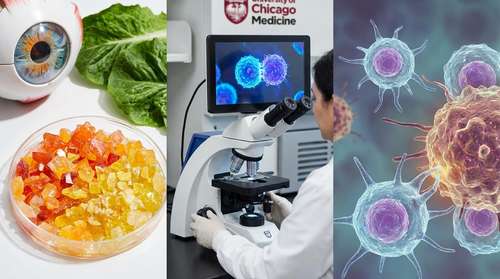
The discovery stems from a massive undertaking at the University of Chicago Medical Center, where a research team led by Jing Chen, PhD, analyzed a vast library of blood nutrients. Their goal was to understand exactly how dietary components interact with our immune defenses at a cellular level. The results of this rigorous University of Chicago nutrition study pointed directly to zeaxanthin.
While historically marketed as an over-the-counter vision protector, zeaxanthin demonstrated an unprecedented ability to activate CD8+ T cells—the specific immune cells responsible for hunting down and eliminating tumors. The researchers noted that mice receiving oral supplementation experienced drastically slower tumor growth. When these cancer fighting superfoods and extracts were tested on engineered human T cells, they successfully increased the destruction of melanoma, glioblastoma, and multiple myeloma cells in laboratory settings.
The Mechanism: T-Cell Receptor Stabilization
To understand why this nutrient is so effective, scientists looked at the microscopic interactions between immune cells and tumors. CD8+ T cells rely on a molecular structure called the T-cell receptor (TCR) to identify abnormal growths. When a T cell encounters a threat, the TCR must bind to the target to initiate an attack.
Through advanced biochemical assays and imaging, the researchers confirmed that zeaxanthin promotes T-cell receptor stabilization. By directly binding to TCR components, the nutrient fortifies the connection between the immune cell and the cancer cell. This stabilized assembly triggers much stronger intracellular signaling, driving enhanced T-cell activation and increased cytokine production. Essentially, the nutrient equips your natural defenses with the structural reinforcement they need to mount a fiercer, more sustained fight against tumors.
Pioneering Nutritional Immunology Research
This molecular insight fills a massive void in our understanding of how diet influences oncology. For decades, the exact mechanisms governing dietary impacts on anti-tumor immunity remained a mystery. The recent findings establish a solid foundation for nutritional immunology research, proving that specific plant pigments can dictate the structural integrity of vital immune receptors. Interestingly, the researchers found that zeaxanthin's structural cousin, lutein, did not produce the same tumor-killing enhancement. This specificity highlights how precise cellular communication can be, and why isolating the exact carotenoid is crucial for future therapeutic development.
A Strategy to Boost Immunotherapy Naturally
Perhaps the most exciting aspect of this discovery is how zeaxanthin interacts with existing medical interventions. The study revealed that when combined with immune checkpoint inhibitors—a sophisticated class of drugs that prevent cancer from hiding from the immune system—the anti-tumor effects were profoundly magnified. The combination yielded a much stronger response than immunotherapy alone.
Because the compound naturally augments the efficacy of anti-PD1 treatments, it provides a safe method to boost immunotherapy naturally without introducing additional toxic pharmaceutical compounds. Patients undergoing these advanced treatments often face variable success rates, but adding a well-tolerated, widely available adjunct therapy could tip the scales in their favor.
Repurposing Eye Health Nutrients for Cancer
Unlike experimental drugs that require decades of safety testing, zeaxanthin already boasts an established, proven safety profile. It occurs naturally in yellow corn, orange peppers, spinach, kale, and even the yolks of eggs from corn-fed chickens. As one of the most accessible eye health nutrients for cancer intervention, it is inexpensive, well-tolerated, and widely available as an over-the-counter dietary supplement at local pharmacies.
Researchers are now aggressively preparing for human clinical trials to determine the optimal dosing protocols for oncology patients. Because liquid chromatography-mass spectrometry confirmed that the nutrient successfully reached tumor tissues in the animal models—registering elevated levels in both blood plasma and tumor interstitial fluid—experts are highly optimistic about its translational potential. Dr. Chen and his team believe that this week's breakthrough underscores the immense, untapped power of a biochemically targeted diet. By integrating these specific dietary compounds into standard care protocols, the medical community may soon offer a low-cost, highly effective tool to ensure modern cancer therapies work better for everyone.