For decades, the cultural narrative surrounding getting older has been overwhelmingly bleak: a perceived one-way street of inevitable physical and mental decline. A groundbreaking new analysis is shattering that outdated assumption. Fresh off the presses in late June 2026, a comprehensive Yale aging study reveals a radically optimistic reality. Nearly half of adults over the age of 65 actually get better with age, not worse. The secret? Their mindset. Embracing positive age beliefs dramatically alters how our bodies and minds navigate later life, placing healthy aging entirely within our grasp.
Redefining the Trajectory of a Healthy Healthspan
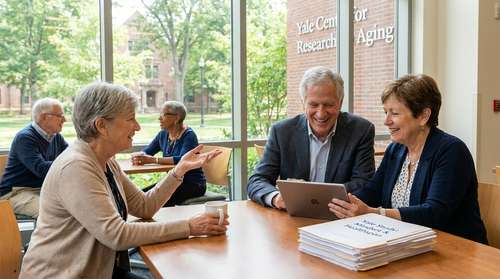
The research, published in the journal Geriatrics and spearheaded by Yale University’s Becca R. Levy and Martin Slade, tracked the real-world health trajectories of more than 11,000 Americans. Backed by the National Institute on Aging, scientists combed through up to 12 years of longitudinal data from the federally supported Health and Retirement Study.
For years, medical literature missed this phenomenon due to a statistical blind spot. When analysts run data by averaging an entire population together, the resulting graph inevitably shows a downward slope. Cognition seemingly slips, and walking speeds appear to drop. But when the Yale researchers broke away from the mean and tracked individual, person-by-person trajectories, the average was exposed as an incomplete narrative that hid millions of thriving seniors.
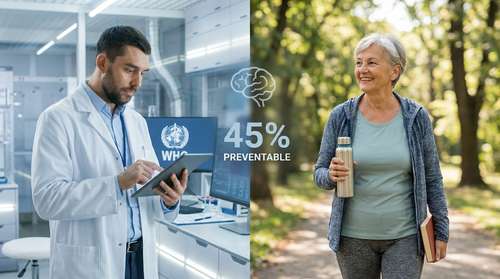
Roughly 45 percent of the participants demonstrated measurable gains in cognitive function, physical ability, or both over the study period. About 32 percent of these older adults got noticeably sharper, securing genuine cognitive improvement in seniors, while 28 percent grew physically stronger. The researchers measured physical vitality using walking speed—a metric geriatricians consider a crucial "vital sign" directly tied to mortality, fall risk, and sustained independence.
Crucially, these gains were not just statistical anomalies or instances of sick patients simply recovering from a sudden illness. Many participants started from a perfectly normal, healthy baseline and still saw their capabilities expand. It proves that reaching our senior years does not shut the door on physical fitness or mental acuity.
The Biological Power of Positive Age Beliefs
While the sheer volume of people experiencing health gains is remarkable, the study's most actionable discovery lies in why some people improve while others decline. The data points directly to a psychological catalyst. Individuals harboring optimistic, positive age beliefs at the onset of the study were significantly more likely to experience these cognitive and physical upgrades.
This correlation remained robust even after researchers adjusted for a wide array of variables, including baseline age, gender, education level, chronic diseases, and depression. Simply put, adopting a longevity mindset acts as a biological shield and a tangible engine for physical growth.
Becca Levy, an international expert on the psychosocial determinants of aging, has long championed "Stereotype Embodiment Theory." This framework suggests that the cultural stereotypes we absorb from social media, advertising, and casual conversation eventually become internalized. If we ingest the toxic notion that aging equates to frailty, our bodies often manifest that exact decline through increased stress hormones, heightened cardiovascular risk, and poorer memory. Conversely, visualizing old age as a period of continued growth unlocks a hidden "reserve capacity" that physically rejuvenates the brain and body.
Shifting Senior Health Trends in 2026
This mindset-driven breakthrough is rapidly becoming one of the most talked-about senior health trends 2026 has to offer. For years, preventive care has focused primarily on diet, exercise, and medication. Now, clinical professionals are realizing that tackling internalized ageism is a medical necessity. By recognizing that our thoughts actively remodel our neurology, healthcare providers can begin prescribing cognitive reframing alongside traditional treatments to ensure a healthy healthspan.
Building Your Own Longevity Mindset
How do we translate these clinical findings into vibrant daily living? The first step requires aggressive awareness of the media we consume and the language we use. Dismissing a forgotten name as a "senior moment" or joking about being "over the hill" reinforces the very stereotypes that accelerate physical and cognitive decline.
Instead, the Yale findings invite us to actively challenge pessimistic assumptions. Older adults who actively engage in their communities, seek out new learning opportunities, and view their accumulated years as an asset of resilience consistently chart better health trajectories. We must look for examples of older individuals thriving—those who start businesses, master new languages, or excel in athletic feats late in life—and internalize those narratives as the standard rather than the exception.
The implications for public health policy are massive. Extrapolating these findings across the United States demographic suggests that more than 26 million older persons are currently experiencing an improvement in functioning. The evidence is undeniable. We are not passengers on a slow, inevitable descent. By dismantling outdated myths and embracing an optimistic outlook on our later years, we hold the power to write a vibrant, continually improving final chapter.