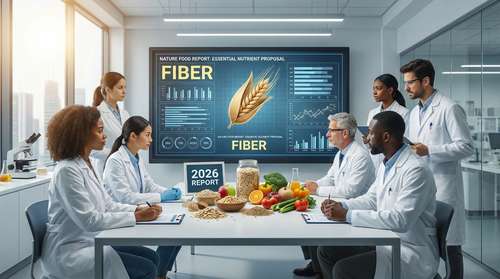
In a historic shift that could redefine global dietary guidelines, a landmark report published today in the journal Nature Food urges international health authorities to officially classify dietary fiber as an essential nutrient. This proposal, spearheaded by leading nutrition researchers from the University of Dundee and the University of Otago, marks the first time in over half a century that a new candidate has been nominated for this critical category, currently reserved for vitamins, minerals, proteins, fats, and water.
For decades, fiber has been viewed merely as "roughage"—a helpful digestive aid but not strictly necessary for survival. However, the new consensus from the scientific community suggests that a lack of fiber creates a distinct deficiency state, contributing directly to the global rise in chronic non-communicable diseases. With the viral fibermaxxing trend already sweeping social media in 2026, this scientific validation arrives at a pivotal moment for public health.
The End of 'Roughage': Why Fiber is Now Essential
The definition of an "essential nutrient" has long been rigid: it must be a substance the body cannot produce on its own, and its absence must cause a specific deficiency disease. Vitamin C deficiency causes scurvy; iron deficiency causes anemia. For years, critics argued fiber failed this test because its absence didn't produce immediate, acute symptoms.
The new report challenges this outdated view. Lead authors, including Professor John Cummings of the University of Dundee and Professor Sir Jim Mann of the University of Otago, argue that the "deficiency disease" of low fiber intake is not a sudden illness, but a slow-motion metabolic collapse. The researchers present overwhelming evidence that insufficient fiber intake is a primary causal factor in colorectal cancer, type 2 diabetes, and coronary heart disease.
"To be recognised as essential, a nutrient must be beneficial to human health, not be produced by the body itself, and its absence must result in a measurable detrimental impact," explains Professor Cummings. "We now have over 100 years of chemical and physiological data confirming fiber meets every single one of these criteria. It is metabolic suicide to ignore it."
From TikTok to the Lab: The 'Fibermaxxing' Phenomenon
While scientists debate definitions, the public has already begun its own experiment. The fibermaxxing trend, which exploded on platforms like TikTok in late 2025, sees Gen Z and Millennials aggressively tracking their soluble and insoluble fiber intake. Unlike previous restrictive diet fads, fibermaxxing encourages abundance—loading plates with legumes, ancient grains, and fibrous vegetables to hit targets of 30-50 grams daily.
This grassroots movement aligns surprisingly well with the new Nature Food nutrition research. "It is rare to see social media trends align so perfectly with rigorous clinical science," says Dr. Andrew Reynolds, a co-author of the report. "The public's intuition to prioritize gut health 2026 is correct, but we need policy to catch up. Relying on influencers isn't enough; we need essential nutrients list update protocols that force food manufacturers to prioritize fiber density rather than stripping it away."
Gut Health 2026: The Microbiome Connection
The biological mechanism driving this classification change is the gut microbiome. We now understand that fiber is not just an inert bulking agent; it is the primary fuel source for beneficial gut bacteria. When deprived of fiber, these bacteria can turn against the host, degrading the protective mucus lining of the colon and increasing inflammation.
Colorectal Cancer Prevention Diet
One of the most urgent arguments in the report concerns cancer. Colorectal cancer rates have been rising alarmingly among adults under 50. The report highlights that a high-fiber colorectal cancer prevention diet is one of the few proven interventions available. By fermenting fiber, gut bacteria produce short-chain fatty acids like butyrate, which have potent anti-cancer properties. Classifying fiber as essential would mandate its inclusion in medical nutrition therapies for oncology prevention globally.
Implications for Food Labeling and Industry
If the World Health Organization and other bodies accept this proposal, the implications will be seismic. Currently, fiber is often listed voluntarily or as a sub-item on nutrition labels. An "essential" status would likely require:
- Mandatory Fortification: Staple foods like bread and pasta might need to meet minimum fiber thresholds, similar to how flour is fortified with folic acid.
- Revised Daily Values: The recommended daily intake could shift from a soft target to a hard requirement, potentially increasing to 30g or more for adults.
- Medical Prescriptions: Doctors could officially "prescribe" fiber supplements or specific high-fiber foods as a first-line treatment for metabolic conditions, covered by insurance.
The Future of Nutrition
As we move further into 2026, the era of viewing food merely as calories is ending. The proposal to crown fiber as an essential nutrient acknowledges that human biology is deeply intertwined with the food matrix. Whether you call it fibermaxxing or adhering to new dietary fiber health benefits guidelines, the message is clear: fiber is no longer optional. It is the missing link in our modern diet, and restoring it may be the single most effective action we can take for our long-term health.