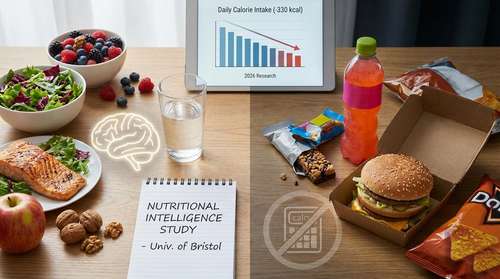
A groundbreaking new study published this week has fundamentally shifted our understanding of weight loss, revealing that humans possess a hidden nutritional intelligence that naturally regulates calorie intake—but only when we eat the right foods. Researchers at the University of Bristol found that individuals who switched to an unprocessed, whole-food diet spontaneously cut their daily intake by an average of 330 calories, all while eating significantly larger portions that left them feeling completely satisfied.
The Science of 'Nutritional Intelligence'
For decades, the weight loss conversation has revolved around willpower and calorie counting. However, this new research, led by Professor Jeff Brunstrom at the University of Bristol's School of Psychological Science, suggests our bodies are smarter than we give them credit for. The study, published in The American Journal of Clinical Nutrition, re-analyzed data from a landmark National Institutes of Health (NIH) trial to understand the mechanics of human appetite.
The findings are counterintuitive yet revolutionary: participants on a whole-food diet consumed 50% more food by weight compared to those on an ultra-processed diet, yet they still lost weight. This phenomenon is driven by what the researchers call "nutritional intelligence"—an innate biological system that guides us toward nutrient-dense foods like fruits, vegetables, and whole grains until our micronutrient needs are met.
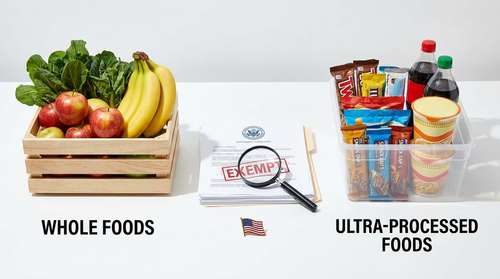
Unprocessed Food vs. Ultra-Processed Food
The study highlights a critical disruption caused by the modern food environment. Ultra-processed foods (UPFs) effectively "hack" our nutritional intelligence. Because many processed foods are fortified with vitamins and minerals, they trick the body into thinking it is getting adequate nutrition, but they deliver a massive surplus of energy (calories) in the process.
"It's exciting to see that when people are offered unprocessed options, they intuitively select foods that balance enjoyment, nutrition, and a sense of fullness, while still reducing overall energy intake," Professor Brunstrom explained. essentially, when you strip away the processing, your body's natural appetite control system comes back online.
How to Cut Calories Without Hunger
The implications of this 2026 nutrition breakthrough are practical and immediate for anyone looking to improve their metabolic health. The data shows that calorie restriction doesn't have to mean eating tiny portions of bland food. Instead, the secret lies in caloric density and nutrient leveraging.
Participants in the unprocessed group naturally gravitated toward lower-calorie, high-volume foods. They filled their plates with fiber-rich produce, which physically stretches the stomach and triggers satiety hormones, sending a "stop eating" signal to the brain much sooner than processed alternatives. In contrast, those on the ultra-processed diet consumed energy-dense foods that took up less space in the stomach, leading to passive overconsumption.
Practical Steps for Your Diet
- Prioritize Volume: Focus on foods that take up space on the plate but have lower calorie density, such as leafy greens, cruciferous vegetables, and water-rich fruits.
- Trust Your Body: When eating whole foods, listen to your hunger cues. The study suggests you can trust your appetite more when the food is unprocessed.
- Avoid the "Fortification Trap": Be wary of processed snacks that boast added vitamins; they may be delivering the nutrients your body seeks but with a heavy caloric price tag.
A New Era for Weight Loss Research
This University of Bristol nutrition research challenges the long-held "calories in, calories out" dogma by adding a crucial layer of nuance: the source of the calorie dictates how the body regulates intake. It aligns with a growing body of evidence in 2026 suggesting that the quality of food is the primary driver of metabolic health, not just the quantity.
Co-author Mark Schatzker noted that this biological mechanism likely evolved to ensure our ancestors obtained a balanced diet. In today's supermarket aisles, however, that same mechanism leads us astray when faced with engineered foods designed to be hyper-palatable. By simply reverting to whole foods, we can leverage this ancient biological wisdom to maintain a healthy weight effortlessly.
Metabolic Health Benefits Beyond Weight Loss
Beyond the headline number of 330 calories, the shift to whole foods offers profound benefits for metabolic health. The study participants didn't just eat less; they improved their nutritional profile. The "micronutrient deleveraging" effect observed by the researchers means that when we eat whole foods, we naturally hunt for vitamins and minerals, leading to a more diverse and nutrient-rich diet.
This automatic regulation reduces the spike in blood sugar and insulin that typically accompanies processed meals, lowering the risk of type 2 diabetes and cardiovascular issues. As we move further into 2026, this study stands as a definitive proof point that the path to health isn't about fighting our biology, but rather working with it by providing the raw materials it was designed to process.