For millions of Americans seeking the elusive fountain of youth, popping a daily metabolic booster has become as routine as a morning cup of coffee. However, a startling medical discovery from April 2026 has completely upended what we know about cellular longevity. Recent data has thrust the reality of an NAD+ supplements cancer risk into the spotlight, revealing that the same cellular fuel designed to keep us young might inadvertently act as high-octane gasoline for lethal tumors.
The Dark Side of Anti-Aging Supplements Research
Over the last decade, science has heavily focused on the regenerative potential of nicotinamide adenine dinucleotide (NAD+), a crucial coenzyme present in every living cell. Because natural NAD+ levels plummet as we get older, health enthusiasts have turned to precursors like nicotinamide mononucleotide (NMN), nicotinamide riboside (NR), and nicotinamide (NAM) to bridge the gap. These compounds are widely celebrated for boosting cellular energy, sharpening cognition, and protecting cardiovascular health.
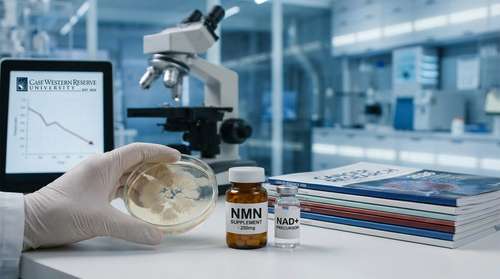
Yet, a groundbreaking Case Western Reserve aging study published on April 1, 2026, in the medical journal Cancer Letters, paints a much more complex picture. Researchers discovered that these beloved longevity boosters possess a dual nature. While they genuinely revitalize healthy tissues, they are equally adept at fortifying malignant cells, creating an unprecedented challenge for patients undergoing active oncological treatments.
How Vitamin B3 Derivatives Fuel Cancer Cells
The research, spearheaded by Dr. Jordan Winter at the Case Western Reserve University School of Medicine, specifically investigated the interaction between these supplements and pancreatic cancer—an aggressive malignancy with a grim five-year survival rate of merely 13 percent. The findings regarding the link between vitamin B3 derivatives cancer risks are sounding alarms across the oncology community.
When someone takes an NAD+ precursor, it floods the body with raw cellular fuel. The problem arises because cancer cells are notoriously greedy. Tumors hijack this newly available energy infrastructure to power up their own metabolic systems. Instead of feeling energized, a patient battling cancer might unknowingly be supplying their tumor with the exact tools it needs to thrive and resist medical intervention.
Three Ways NMN and NR Undermine Chemotherapy
Cancer patients frequently turn to over-the-counter vitamins to manage the debilitating fatigue and toxicity associated with rigorous cancer therapies. Unfortunately, the laboratory experiments and in vivo mouse models highlighted severe NMN and NR side effects 2026 protocols must now consider. The researchers found that these supplements, particularly NMN, drastically shielded pancreatic cancer cells from three frontline chemotherapy drugs: oxaliplatin, 5-fluorouracil, and gemcitabine.
The study outlines three distinct ways these supplements undermine conventional treatments:
- Supercharging Tumor Energy: The supplements provide raw biochemical fuel, making malignant tumors stronger and far more resilient to metabolic stress.
- Reducing Oxidative Stress: Chemotherapy often relies on generating oxidative stress to destroy tumors. NAD+ precursors neutralize this stress, effectively disarming the drugs.
- Suppressing DNA Damage: By enhancing cellular repair mechanisms, the supplements prevent the targeted DNA damage and subsequent cell death that chemotherapy requires to eliminate malignancies.
Rethinking Longevity Supplement Safety in Cancer Patients
This paradoxical finding forces the medical field to immediately reevaluate longevity supplement safety, particularly in clinical settings. The data serves as a stark warning against the indiscriminate use of metabolic enhancers. For individuals currently diagnosed with or undergoing treatment for cancer, taking an over-the-counter NAD+ booster is no longer considered a harmless attempt to mitigate fatigue.
Dr. Winter's team emphasized that this discovery is a direct call to action for the medical community. Oncologists must proactively ask patients about their supplement regimens, as these seemingly benign anti-aging pills could be the unseen force sabotaging otherwise effective chemotherapy regimens. The interference is so profound that it essentially grants cancer cells a molecular shield against lethal chemical doses.
The Future of Healthy Aging Breakthroughs 2026
Does this mean the general public should clear their medicine cabinets of all NAD+ precursors? Not necessarily. The researchers were careful to clarify that the study does not classify these supplements as dangerous for perfectly healthy individuals. For those without active malignancies, optimizing cellular energy still holds immense physiological promise.
However, the narrative surrounding healthy aging breakthroughs 2026 is undeniably shifting toward precision medicine. The era of taking a handful of longevity pills without considering underlying biological contexts is coming to a close. As researchers continue to untangle the complex relationship between cellular metabolism, aging, and disease, the priority will be developing targeted therapies that deliver anti-aging benefits to healthy tissues while systematically starving malignant ones.