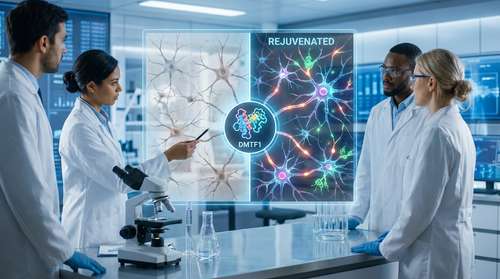
A groundbreaking discovery announced this week has illuminated a potential path to reversing the biological clock of the human brain. Scientists at the National University of Singapore (NUS) have identified a critical protein, DMTF1, that acts as a master regulator for neural stem cell rejuvenation. This breakthrough, detailed in the journal Science Advances, suggests that restoring levels of this specific transcription factor could effectively "wake up" dormant brain cells, offering new hope for reversing cognitive decline and memory loss in 2026.
The "Molecular Switch" for Neural Rejuvenation
As we age, our brains gradually lose the ability to generate new neurons—a process known as neurogenesis. This decline is a primary driver of age-related memory loss and cognitive impairment. The research team, led by Assistant Professor Ong Sek Tong Derrick and Dr. Liang Yajing at the Yong Loo Lin School of Medicine, pinpointed DMTF1 (cyclin D-binding myb-like transcription factor 1) as the pivotal element in this process.
In younger brains, DMTF1 is abundant and active, driving the continuous production of fresh neural stem cells. However, the study reveals that levels of this protein plummet in older brains, causing stem cells to enter a state of dormancy or senescence. By artificially boosting DMTF1 expression in laboratory models, researchers successfully restored the regenerative capacity of aged neural stem cells, effectively making them behave like young cells again.
How DMTF1 Reverses Cellular Aging
The mechanism behind this rejuvenation is both complex and fascinating. The study found that DMTF1 doesn't work alone; it functions as a gateway controller for a specific genetic program. When active, DMTF1 triggers the expression of two "helper" genes known as Arid2 and Ss18.
These genes are components of the SWI/SNF complex, a molecular machine that remodels chromatin—the tightly packed structure of DNA. By loosening this structure, the complex allows access to growth-related genes (specifically E2F targets) that are usually locked away in aging cells. This process was shown to work even in cells with shortened telomeres, a classic biological marker of aging that typically halts cell division.
Overcoming Telomere Dysfunction
One of the most significant aspects of this finding is DMTF1's ability to bypass the limitations imposed by telomere damage. Typically, when telomeres (the protective caps on chromosomes) erode, cells stop dividing to prevent DNA damage. The NUS team demonstrated that restoring DMTF1 could rescue the proliferation defects in these cells without repairing the telomeres themselves, effectively engaging a bypass mechanism to restart neuron production.
Implications for Treating Cognitive Decline
This discovery represents a significant leap forward in healthy aging breakthroughs for 2026. Current treatments for conditions like Alzheimer's and general dementia often focus on slowing progression rather than restoration. The identification of DMTF1 offers a tangible target for regenerative medicine.
"Our findings suggest that DMTF1 can contribute to neural stem cell multiplication in neurological aging," stated Dr. Liang Yajing. If translated to human therapies, this could lead to treatments that don't just protect existing neurons but actively replenish the brain with new ones, potentially reversing years of cognitive decline.
Future Horizons and Safety Considerations
While the results are promising, the path to a clinical drug involves careful navigation. Because DMTF1 drives cell growth, unrestricted activation carries a theoretical risk of unchecked cell division, which could lead to tumors. The researchers are now focused on identifying small molecules that can safely enhance DMTF1 activity within a controlled range.
The team plans to move forward with in vivo studies to see if boosting this protein improves learning and memory in aged animals. For now, this research stands as a beacon of hope, redefining what is possible in the field of cellular longevity research and suggesting that a "fountain of youth" for the brain may lie within our own DNA.