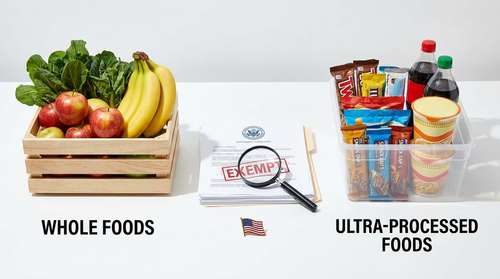
In a historic pivot that dismantles decades of federal nutrition policy, the U.S. government has released the 2025-2030 Dietary Guidelines for Americans, officially advising the nation to "avoid" highly processed foods while embracing full-fat dairy, red meat, and higher protein intake. Unveiled this week by the incoming administration’s health officials, including HHS Secretary Robert F. Kennedy Jr., the new standards mark the cornerstone of the Make America Healthy Again nutrition policy. This radical reset moves away from the traditional grain-heavy pyramid, replacing it with an "inverted pyramid" that prioritizes nutrient-dense animal proteins and healthy fats, signaling a new era in the government's war on chronic disease.
The "Eat Real Food" Reset: A War on Ultra-Processed Foods
For the first time in history, federal dietary advice has explicitly targeted the processing of food rather than just individual nutrients. The new guidelines issue a stark warning against "highly processed" products, a move that directly challenges the $1 trillion packaged food industry. The document advises Americans to rigorously avoid ready-to-eat meals, sugary cereals, and snacks laden with artificial preservatives, colors, and flavors—categories now labeled as primary drivers of the nation's obesity and metabolic health crisis.
This shift aligns with growing scientific consensus on the dangers of ultra-processed foods, but the policy goes further than previous iterations by recommending their complete exclusion rather than mere moderation. The ultra-processed food warnings 2026 implementation could reshape everything from school lunch menus to military rations. "Our message is clear: Eat real food," officials stated during the briefing, emphasizing that a return to whole, single-ingredient foods is the only viable solution to America’s epidemic of diet-related illness.
Full-Fat Dairy and Red Meat Return to the Table
Perhaps the most controversial aspect of the update is the rehabilitation of saturated fats. Deviating from the low-fat dogma that has dominated since the 1980s, the new guidelines recommend full-fat dairy health benefits, encouraging the consumption of whole milk, butter, and cheese. The rationale suggests that the matrix of nutrients in whole foods differs fundamentally from isolated saturated fats, a nuance that has been hotly debated in nutrition circles for years.
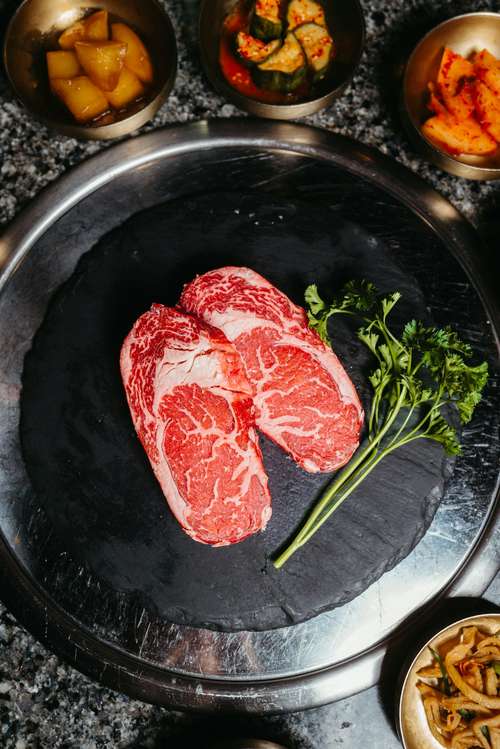
Alongside dairy, red meat has been elevated to a top-tier protein source. The guidelines suggest that nutrient-dense animal foods, including beef and eggs, are essential for metabolic health. This contradicts previous advice that urged Americans to limit red meat consumption due to climate and cardiovascular concerns. The document even lists beef tallow—a fat long banished from fryers—as a viable cooking option, sparking an immediate red meat nutrition controversy among cardiologists who warn that the accompanying 10% saturated fat limit in the text contradicts these food recommendations.
New Protein Targets Challenge the Status Quo
The new USDA protein recommendations represent a significant physiological shift. The guidelines raise the recommended daily allowance (RDA) for protein from 0.8 grams per kilogram of body weight to a range of 1.2 to 1.6 grams. For an average 180-pound adult, this effectively doubles the target daily intake to nearly 100-130 grams.
Officials argue that the previous minimums were merely sufficient to prevent deficiency, not to support optimal muscle mass, metabolic function, and healthy aging. This "protein-first" approach is designed to increase satiety and displace refined carbohydrates in the standard American diet.
Sugar and Grains Demoted
While protein and fats ascend, sugar and grains have fallen out of favor. The guidelines adopt a zero-tolerance stance on added sugars for young children and advise that "no amount" of added sugar is considered part of a healthy diet for adults. This is a sharper condemnation than the previous "limit to 10% of calories" rule. Furthermore, the once-celebrated "base" of the food pyramid—grains—has been shrunk and moved to the bottom of the new visual hierarchy, with a specific advisory to minimize refined carbohydrates like white bread and pasta.
Experts Divided Over the "US Nutrition Guidelines Reset"
The release has triggered a firestorm of debate within the medical community. Supporters of the US nutrition guidelines reset praise the move as a long-overdue correction that aligns policy with the realities of human biology. "We are finally treating food as information, not just calories," noted one metabolic health advocate involved in the transition team.
However, mainstream nutrition organizations have voiced serious concerns. The American Heart Association and other legacy groups caution that the unrestricted promotion of saturated fats could reverse decades of progress in fighting cardiovascular disease. Critics also argue that the demonization of all processed foods lacks nuance, potentially stigmatizing affordable, fortified options that many low-income families rely on. The vagueness surrounding alcohol consumption—which removed specific drink limits in favor of a general "drink less" advisory—has also left public health experts worried about consumer confusion.
As these guidelines trickle down into the Supplemental Nutrition Assistance Program (SNAP) and the National School Lunch Program, the battle over what defines a "healthy" American diet is only just beginning.