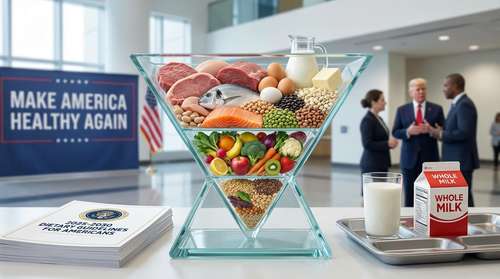
In a historic overhaul of national nutrition policy, the U.S. government has officially released the 2025-2030 Dietary Guidelines for Americans, marking the most radical shift in federal health recommendations in decades. Spearheaded by Health and Human Services Secretary Robert F. Kennedy Jr. under the banner of the Make America Healthy Again health policy, the new guidelines dismantle the traditional food pyramid in favor of an 'inverted' model that prioritizes high-quality protein and full-fat dairy while declaring a 'war' on added sugars and ultra-processed foods.
The 'Inverted Food Pyramid': A Radical Shift to Protein and Fats
The most striking visual change in the new 2025-2030 Dietary Guidelines for Americans is the introduction of the 'Inverted Food Pyramid.' Unlike previous iterations that placed grains at the base, this new model flips the script, positioning nutrient-dense proteins—including red meat, poultry, and eggs—and healthy fats at the top as the foundation of the American diet. Grains, particularly refined carbohydrates, have been relegated to the bottom, signaling a major departure from the carbohydrate-heavy advice of the last 40 years.
Under the new high protein diet recommendations, federal health officials now advise adults to consume between 1.2 and 1.6 grams of protein per kilogram of body weight daily. This is nearly double the previous standard of 0.8 grams, a change Secretary Kennedy described as essential to combatting muscle loss and metabolic disease. "We are returning to the basics of human biology," Kennedy stated during the January 7 press briefing. "The era of fearing natural fats and prioritizing cheap, processed fillers is over."
Redefining 'Heart Healthy' Fats
The guidelines also challenge long-held beliefs about saturated fats. For the first time, the USDA explicitly recommends the consumption of natural animal fats, such as beef tallow and butter, over industrial seed oils. This aligns with the administration's broader push to support American ranchers and move away from what officials call "corporate-driven nutritional dogma."
Whole Milk for Healthy Kids Act Becomes Law
Coinciding with the guideline release, President Trump signed the Whole Milk for Healthy Kids Act into law on January 14, 2026. This landmark legislation permanently reverses Obama-era restrictions that limited schools to skim and low-fat milk options. Effective immediately, the full-fat dairy school lunch program allows schools participating in the National School Lunch Program to serve whole and 2% milk, both flavored and unflavored.
"We are putting real food back on our children's trays," said USDA Secretary Brooke Rollins. The move has been celebrated by the dairy industry and parents advocating for nutrient density, though it has sparked debate among some pediatricians concerned about calorie intake. The administration argues that the satiety provided by whole milk will ultimately reduce childhood obesity by curbing cravings for sugary snacks.
War on Ultra-Processed Foods Declared
Perhaps the most aggressive stance in the new policy is the explicit warning against industrial food products. The ultra-processed food warnings 2026 section of the guidelines advises Americans to "avoid or strictly limit" foods containing artificial preservatives, dyes, and non-nutritive sweeteners. This is the first time federal guidance has categorically grouped ultra-processed foods (UPFs) as a distinct health risk separate from their individual nutrient profiles.
The document introduces a clear definition of "Real Food" versus "Food-Like Products," urging consumers to shop the perimeter of the grocery store. This terminology is a direct reflection of the RFK Jr nutrition policy, which has long blamed the rise of chronic disease on the proliferation of chemical additives in the food supply. Labels like "Contains Bioengineered Food Ingredients" will now face stricter scrutiny under proposed follow-up legislation expected later this year.
Reactions from the Health Community
The release has triggered a firestorm of debate within the medical community. Supporters praise the pivot towards metabolic health and the recognition of nutritional psychiatry, noting that higher protein intake is crucial for mental resilience and physical longevity. "This is the correction we've been waiting for," said Dr. Mark Hyman, a vocal proponent of the changes.
However, traditional nutritionists argue the pendulum may have swung too far. Critics worry that the high protein diet recommendations could strain kidney health in vulnerable populations and that the de-emphasis on grains might reduce fiber intake. Despite the controversy, the administration remains firm, citing the failure of the previous low-fat paradigm to halt the obesity epidemic.
What This Means for Your Plate
For the average American, these changes will soon be visible everywhere from school cafeterias to hospital menus. The 'MyPlate' icon is being phased out in favor of the new pyramid visuals, and federal procurement policies are already shifting to source higher-quality meats and full-fat dairy school lunch options. As the Make America Healthy Again health policy takes full effect, the message is simple: prioritize protein, embrace natural fats, and eliminate the processed.