The quest to live longer has dominated nutritional science for decades, but the focus has definitively shifted from simply extending lifespan to maximizing healthspan. At the upcoming Vitafoods Europe 2026 conference in Barcelona, industry innovator dsm-firmenich is set to unveil "Age Slower," a targeted nutritional intervention designed to combat chronic inflammation and physically decelerate cellular aging. Backed by rigorous data from Europe's largest healthy aging study, this specific combination of marine lipids and vitamins offers unprecedented proof that we can objectively slow biological aging using widely accessible, science-backed protocols.
Decoding the DO-HEALTH Clinical Trial
The foundation of the 'Age Slower' concept rests on the landmark DO-HEALTH clinical trial. Published recently in Nature Aging, this comprehensive study tracked 777 adults aged 70 and older across a three-year period. Researchers led by Heike A. Bischoff-Ferrari at the University of Zurich set out to determine how specific lifestyle and dietary interventions might impact the molecular markers of aging.
Biological Age vs Chronological Age
To understand the trial's significance, one must distinguish biological age vs chronological age. While the latter simply counts the years you have been alive, biological age reflects the physical degradation of your cells and organs. Scientists measure this cellular wear and tear using sophisticated epigenetic clocks, such as PhenoAge, GrimAge, GrimAge2, and DunedinPACE, which track changes in DNA methylation. The DO-HEALTH clinical trial utilized all four of these next-generation clocks to capture an accurate snapshot of the aging process in real time. Because these epigenetic markers operate independently of variables like body mass index or gender, they provide a highly accurate biological baseline.
The Synergistic Power of Omega-3 Vitamin D Longevity
The findings from the Swiss-led study provided compelling evidence that nutritional interventions can alter the trajectory of our biological clocks. Participants receiving just one gram of Omega-3 daily experienced a measurable delay in their cellular aging by approximately 2.9 to 3.8 months over the three-year trial window.
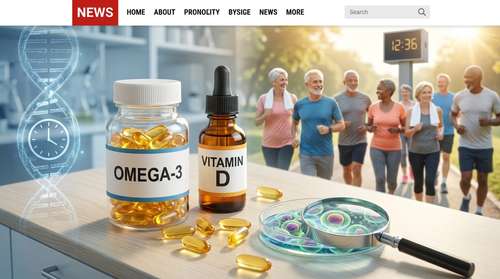
However, the most robust results emerged when researchers analyzed the combination of targeted Omega-3, 2,000 IU of Vitamin D, and a structured home exercise program performed three times a week. The Omega-3 Vitamin D longevity stack demonstrated a distinct additive benefit, working synergistically to reduce cancer risk, lower systemic inflammation, and significantly improve PhenoAge metrics. This revelation fundamentally changes the landscape for healthy aging supplements 2026, pivoting the industry toward clinically validated, multi-ingredient protocols rather than isolated vitamins.
How dsm-firmenich Age Slower Targets Inflammation
Taking the clinical data from the laboratory to the consumer market, the upcoming dsm-firmenich Age Slower innovation packages this science into a practical format. Leveraging their proprietary ingredients—life's OMEGA 60 and Quali-D—the company targets chronic inflammation, which is universally recognized as a primary hallmark of aging. Persistent inflammatory responses accelerate oxidative stress, acting as a catalyst for age-related physical decline. By equipping the body with high-quality, bioavailable marine fats and Vitamin D, the formulation attempts to regulate this inflammatory cascade directly at the cellular source.
Giovanni Calderoni, VP of Dietary Supplements EMEA at dsm-firmenich, noted that the science being presented marks a genuine leap forward for the preventive health sector. Visitors to the company's interactive 'Longevity Shift' installation will see firsthand how the nutrition industry must transition from reactive treatments to proactive health maintenance. Instead of reacting to symptoms of aging, the goal is to provide proactive nutrition that intercepts cellular deterioration, establishing a stronger global standard for longevity products.
Advancing Cellular Senescence Nutrition
Beyond systemic inflammation, longevity researchers are increasingly focused on cellular senescence—the phenomenon where damaged cells stop dividing but refuse to die, earning them the nickname "zombie cells". These lingering cells secrete inflammatory chemicals that damage surrounding healthy tissue. Parallel to the 'Age Slower' launch, dsm-firmenich is introducing 'Cellular Repair,' an intervention utilizing natural flavonoids with powerful senolytic properties.
This targeted approach to cellular senescence nutrition selectively clears out damaged zombie cells while preserving healthy ones. By attacking multiple aging hallmarks simultaneously—both inflammation and senescence—these cutting-edge formulations offer a stacked defense against physiological decline.
A New Era for Health Expectancy
The clinical breakthroughs presented ahead of Vitafoods Europe 2026 signal a necessary reframing of longevity science. Extending the human lifespan is no longer the sole metric of success; the true objective is health expectancy—ensuring our later years are characterized by vitality and resilience.
The DO-HEALTH trial proves that small, sustained lifestyle changes create compounding dividends for our cellular health. Health risks associated with marine omega-3 fatty acids are minimal, and previous systematic reviews verify that daily doses up to three grams are generally recognized as safe, even for adults managing complex medication schedules. Integrating a daily regimen of potent Omega-3s, optimized Vitamin D, and regular physical activity provides a proven blueprint to actively manage how our bodies age. As the global population trends older, these science-backed interventions empower individuals to take control of their epigenetic clocks and preserve their physical independence well into their senior years.