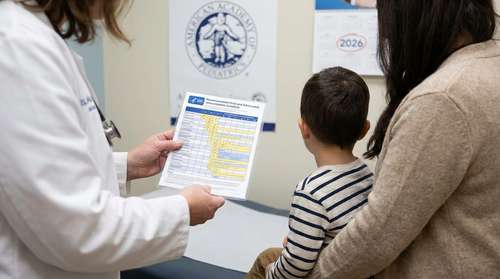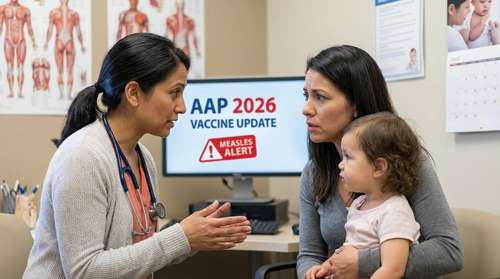
In a landmark move that deepens the divide between pediatric leaders and federal health officials, the American Academy of Pediatrics (AAP) has officially released its 2026 childhood vaccine schedule. Published on January 26, 2026, this comprehensive guidance reaffirms the necessity of routine immunizations against 18 infectious diseases, standing as a direct rebuttal to recent federal proposals that scaled back universal recommendations. With a confirmed measles outbreak already affecting multiple states this winter, the AAP’s refusal to dilute its standards highlights a critical moment for pediatric health in America.
The Core Conflict: AAP vs. CDC Guidelines
For decades, the AAP and the Centers for Disease Control and Prevention (CDC) moved in lockstep, presenting a unified front on childhood immunization. That era of collaboration has fractured in early 2026. While the AAP maintains its robust schedule—recommending universal coverage for diseases like hepatitis A, hepatitis B, rotavirus, and influenza—the CDC’s newly revised framework has downgraded several of these to "shared clinical decision-making" or high-risk-only categories.
This divergence stems from a directive issued by the Department of Health and Human Services (HHS) earlier this month, seeking to align U.S. policy with "peer nations" that have narrower vaccine mandates. However, the AAP argues that the U.S. healthcare landscape is unique and that removing universal protections is a dangerous gamble. "Our recommendations remain rooted in rigorous scientific evidence and the specific epidemiological risks facing American children," stated Dr. Sean O'Leary, chair of the AAP Committee on Infectious Diseases, emphasizing that the Academy would not endorse the federal government’s diluted approach.
Key Differences in the 2026 Schedules
Parents navigating these conflicting guidelines need to understand exactly where the split lies. The confusion centers on several key vaccines that are no longer automatically recommended by the CDC for every healthy child but remain essential according to the AAP.
Routine vs. Risk-Based Recommendations
The most significant changes in the federal guidance affect vaccines for influenza, COVID-19, hepatitis A, and hepatitis B. The AAP continues to recommend the annual flu shot for everyone over six months old and routine hepatitis series for all infants. In contrast, the new federal guidance suggests these may be optional for healthy children, pending a discussion with a healthcare provider. Pediatricians warn that this shift places an undue burden on parents to assess complex medical risks and could lead to a resurgence of preventable illnesses.
The Meningococcal and Rotavirus Debate
Another point of contention is the protection against meningococcal disease and rotavirus. The AAP’s 2026 schedule upholds universal vaccination for adolescents against meningitis and for infants against rotavirus, a common cause of severe diarrhea and dehydration. The federal rollback to a risk-based model for these shots has alarmed experts who point out that these diseases can strike healthy children without warning, making "high-risk" categorizations an insufficient safety net.
Measles Outbreak 2026: A Real-Time Warning
The theoretical debate over vaccine schedules is colliding with a harsh reality: a significant measles outbreak is currently sweeping through parts of the Western United States. As of late January 2026, over 400 confirmed cases have been reported across states including Utah, Arizona, and Washington, marking a sharp increase from previous years.
Health officials note that the majority of these cases are occurring in unvaccinated children, underscoring the risks of delayed or skipped immunizations. The AAP points to this outbreak as a prime example of why robust, universal schedules are vital. "Measles does not care about administrative changes or political debates," one pediatric infectious disease specialist noted. "It finds the vulnerable. Diluting our immunization wall now is like dismantling a dam while the water level is rising."
What This Means for Parents and Toddlers
For parents of toddlers and young children, the dual guidance creates a confusing landscape. Pediatricians advise sticking to the AAP schedule, which is designed to provide maximum protection during the most vulnerable years of development. Most private insurance plans and state-level mandates currently still align with the comprehensive AAP standards, meaning coverage for these vaccines should remain intact for the immediate future.
When visiting your pediatrician this year, expect a conversation about these discrepancies. Your doctor will likely advocate for the full AAP-endorsed schedule to ensure your child is protected against the full suite of 18 preventable diseases. This is particularly crucial for "school readiness" checks, as many schools still base their entry requirements on the more rigorous historical standards rather than the new, leaner federal suggestions.
Navigating the Path Forward
The release of the AAP 2026 vaccine schedule serves as a stabilizing anchor in a year of regulatory upheaval. By reaffirming its commitment to comprehensive disease prevention, the Academy has signaled that the medical community’s priority remains the uncompromising health of children.
As the year progresses, the tension between these medical bodies may evolve, but the advice from your child's doctor will likely stay consistent: prevention is better than cure. With diseases like measles making an unwelcome comeback, the proven track record of the traditional immunization schedule offers the safest path for keeping American families healthy.