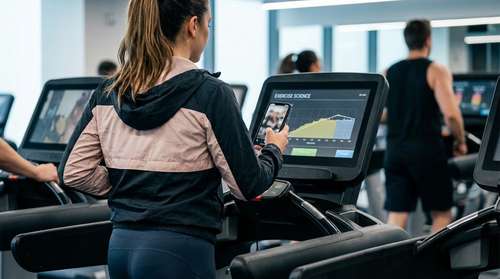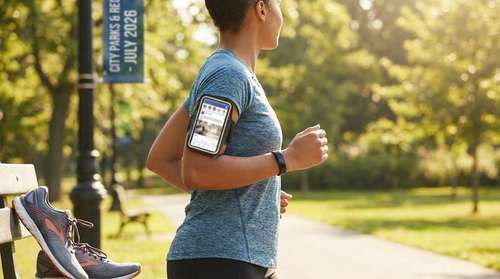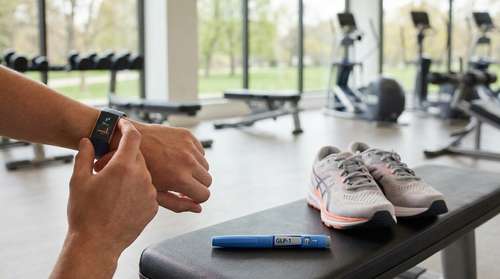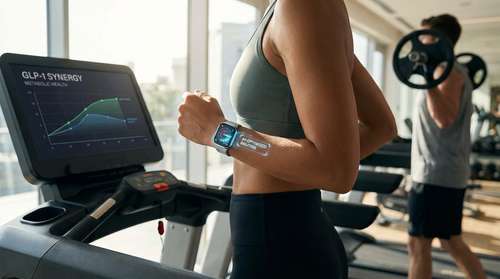
The verdict is in, and the future of fitness is officially digital—and medicated. The American College of Sports Medicine (ACSM) has released its highly anticipated Worldwide Survey of Fitness Trends for 2026, and for the third consecutive year, wearable health technology has claimed the #1 spot. But this isn't just about counting steps anymore. As we move further into 2026, a profound shift is occurring: the convergence of AI-driven wearables with the exploding popularity of GLP-1 weight-loss medications. This powerful combination, dubbed "GLP-1 Synergy," is fundamentally reshaping how Americans approach exercise, prioritizing muscle mass preservation and metabolic health over simple calorie burning.
The Wearable AI Revolution: From Tracker to Coach
It is no surprise that wearable health technology 2026 remains the industry's dominant force. However, the devices on our wrists today are vastly more sophisticated than their predecessors. According to the ACSM report, published in the Health & Fitness Journal, the focus has shifted from passive data collection to active, AI-driven intervention. Modern wearables now utilize complex algorithms to interpret biometric data—such as heart rate variability (HRV), glucose levels, and recovery metrics—to offer real-time behavioral coaching.
"The question is no longer whether people will use wearables," says Dr. Cayla R. McAvoy, lead author of the 2026 forecast. "What matters now is teaching people how to use them in ways that best support their health." This year's trend emphasizes AI fitness coaching, where your smartwatch doesn't just tell you that you slept poorly; it adjusts your scheduled workout intensity to prevent injury and optimize recovery. This integration of metabolic health trends into daily wearables is bridging the gap between clinical medical advice and recreational fitness.
GLP-1 Synergy: The New Rules of Weight Management
Perhaps the most significant development in the 2026 fitness trends is the rise of "Exercise for Weight Management" to the #3 spot, driven almost entirely by the ubiquity of GLP-1 receptor agonists like Semaglutide and Tirzepatide. The fitness industry has moved past viewing these drugs as competition and is now embracing a concept known as GLP-1 and exercise synergy.
The challenge with rapid pharmaceutical weight loss is the risk of sarcopenia—the involuntary loss of skeletal muscle mass. In response, gyms and fitness professionals are pivoting their programming. The new mandate for 2026 is muscle mass preservation workouts. Personal trainers are increasingly acting as "body composition architects," designing resistance training protocols specifically for clients on these medications. The goal is no longer just to get smaller; it is to get stronger and metabolically resilient. "Movement is what keeps the progress sustainable," notes a recent industry analysis, highlighting that resistance training is non-negotiable for patients who want to maintain their metabolic rate while shedding pounds.
The Rise of Medical Fitness Integration
This synergy also signals a broader trend: the medicalization of the gym. Fitness professionals are now expected to collaborate more closely with healthcare providers. With millions of Americans on prescription weight-loss plans, the gym floor has become an extension of the doctor's office. This shift is elevating the role of certified exercise physiologists who understand the unique physiological demands of clients undergoing metabolic therapies.
The Silver Tsunami: Fitness for the Super-Aged
Claiming the #2 spot on the ACSM list is Fitness Programs for Older Adults. As the Baby Boomer generation—all of whom will be over 65 by 2030—continues to age, the demand for longevity-focused fitness is skyrocketing. This demographic is less interested in vanity and more focused on functional independence.
These programs are heavily influencing the market, driving a resurgence in low-impact, high-stability modalities. Trends like Balance, Flow, and Core Strength (ranked #5) are seeing a revival, catering to older adults who need to mitigate fall risks while building core stability. It is a holistic approach that perfectly complements the industry's new focus on longevity and healthspan rather than just lifespan.
Mental Health and the Mind-Body Connection
Rounding out the top trends is the continued emphasis on Exercise for Mental Health (ranked #6). In 2026, the psychological benefits of movement are treated with the same gravity as the physical ones. Whether it is a high-intensity interval training (HIIT) session to clear anxiety or a restorative yoga class for stress regulation, Americans are increasingly using exercise as a primary tool for emotional well-being.
This mental health focus ties back into the wearable trend, with devices now tracking "stress loads" and "mental energy" alongside calories. It creates a closed loop where your mental state dictates your physical training, and your physical training improves your mental state—all monitored by the AI on your wrist.
The Future is Hybrid and Hyper-Personalized
As we navigate 2026, the "one-size-fits-all" workout is officially dead. The ACSM worldwide fitness trends paint a clear picture of a hybrid future. We are seeing a landscape where biology, technology, and pharmacology intersect. Your workout is no longer just a routine; it is a prescription—informed by your AI wearable, supported by your medication strategy, and designed to keep you strong for decades to come.