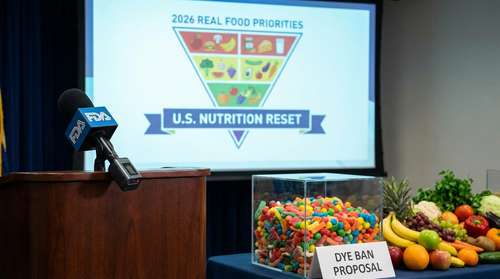
In a seismic shift for American food policy, the Food and Drug Administration (FDA) has officially unveiled its 2026 Human Foods Program priorities, signaling the beginning of the end for ultra-processed additives in the nation's diet. The announcement, released this week, serves as the regulatory muscle behind the newly published 2025-2030 Dietary Guidelines for Americans, which controversially replaced the decades-old 'MyPlate' model with a 'Real Food' inverted pyramid. At the forefront of this overhaul is a landmark mandate to phase out petroleum-based food dyes by the end of the year, a move that delivers on a central promise of the MAHA nutrition policy.
FDA 2026 Priorities: The End of 'Eat It and We'll See'
The FDA's 2026 roadmap represents the most aggressive intervention in the U.S. food supply since the 1990 Nutrition Labeling and Education Act. Under the direction of the new administration's "Make America Healthy Again" (MAHA) agenda, the agency is pivoting from a reactive stance to a proactive "precautionary principle" approach.
The centerpiece of the new agenda is the immediate targeting of synthetic additives. The FDA confirmed it will enforce a nationwide ban on petroleum food dyes—specifically Red 40, Yellow 5, and Yellow 6—requiring manufacturers to reformulate products by December 31, 2026. "If companies want to sell food to American families, they must stop painting it with chemicals derived from oil," the agency stated in its briefing.
Additionally, the FDA is closing the "GRAS" (Generally Recognized as Safe) loophole. Previously, companies could self-determine if an ingredient was safe. The new FDA 2026 food priorities mandate mandatory notification and rigorous safety reviews for all new chemical additives, effectively ending the era of unregulated food innovation.
The New Food Pyramid 2026: Steak, Butter, and Whole Proteins
This week's regulatory action follows the shockwave caused by the release of the 2025-2030 Dietary Guidelines earlier in January. In a dramatic departure from previous advice, the new guidelines have retired the grain-heavy models of the past in favor of an inverted food pyramid.
This new visual guide prioritizes nutrient-dense, whole foods at the top—specifically emphasizing high-quality proteins, full-fat dairy, and healthy fats like tallow and butter—while relegating refined grains and sugars to the bottom "minimize" tier. The shift explicitly challenges the "low-fat" dogma that has dominated federal advice for 40 years, aligning instead with modern metabolic health science championed by figures like HHS Secretary Robert F. Kennedy Jr. and advisors like Dr. Casey Means.
Critics in the processed food industry have called the changes "radical," but the administration argues the shift is necessary to combat the country's metabolic health crisis. "We are returning to biology," the HHS Secretary noted during the rollout. "The experiment with industrial food-like substances has failed."
Cracking Down on Ultra-Processed Foods Regulation
Beyond the pyramid and dyes, the FDA's 2026 docket includes a complete definition overhaul for the term "Healthy." The healthy label update will strictly exclude any product containing ultra-processed foods regulation markers, such as high-fructose corn syrup, seed oils, or synthetic emulsifiers, regardless of the product's calorie count.
The agency is also finalizing a "Front-of-Package" (FOP) labeling system. Unlike the voluntary "Smart Choices" of the past, these new mandatory labels will act as warning signs, clearly flagging high levels of added sugars, sodium, and the newly classified "ultra-processed" ingredients. This move aims to empower consumers to make informed decisions in seconds, bypassing the confusion of traditional nutrition facts panels.
Industry Response and Market Impact
The announcement has sent ripples through the food and beverage sector. Major conglomerates are already pivoting, with several announcing "Clean Label 2027" initiatives this week to beat the regulatory clock. While trade associations have expressed concern over the tight timeline for the petroleum food dye ban, consumer advocacy groups are celebrating the alignment of U.S. standards with those already in place in Europe.
As the FDA begins enforcement this quarter, American grocery shelves are set to undergo their most visible transformation in decades. For the first time, federal policy is not just suggesting Americans eat real food—it is rewriting the rules to ensure they can find it.