For decades, the pursuit of a longer, healthier life has been confined to wellness fads and experimental animal models. That changes now. In a massive shift for public health policy, the federal government has officially launched the VITAL-H clinical trial, a historic $38 million effort to test whether three widely available medications can slow biological aging. This bold move signals that the United States is finally treating aging not as an inevitable decline, but as a modifiable biological process.
Backed by the Advanced Research Projects Agency for Health, this landmark nationwide study evaluates the so-called "Big Three" interventions: Rapamycin for longevity, Semaglutide for healthy aging, and Dapagliflozin. By stepping away from the traditional model of reacting to individual diseases, researchers are building the first formal roadmap for longevity medicine FDA approval.
Inside the $38 Million VITAL-H Clinical Trial
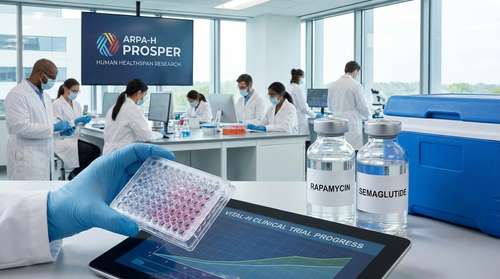
The Validation and Intervention Testing for Aging, Longevity and Healthspan (VITAL-H) study is being spearheaded by the Sam and Ann Barshop Institute at UT Health San Antonio. Driven by an initial $38 million contract under the ARPA-H Prosper initiative (Proactive Solutions for Prolonging Resilience), the project seeks to recruit 726 healthy adults aged 60 to 65. This critical mid-life window represents the period when functional decline often begins, but before chronic disease takes a permanent hold.
Led by Dr. Elena Volpi, investigators will rigorously track participants over three years. Rather than simply measuring lifespan, the study evaluates intrinsic capacity—a comprehensive World Health Organization framework encompassing mobility, cognition, vitality, sensory function, and psychological health. It is a groundbreaking pivot in human healthspan research that aims to prove existing drugs can preserve the years people live in good health.
A standout feature of this nationwide effort is its focus on diverse demographics. UT Health San Antonio is strategically utilizing its location in South Texas to ensure Hispanic communities—a population historically underrepresented in major medical studies—are a central part of the recruitment process. This ensures the resulting data will accurately reflect the broader United States population, making the findings far more generalizable.
Testing the "Big Three" Anti-Aging Interventions
The core premise of the study relies on geroscience: the idea that aging alters a small group of biological mechanisms driving chronic illness. Addressing these mechanisms could delay multiple diseases simultaneously.
Rapamycin for Longevity
Originally approved to prevent organ transplant rejection, Rapamycin is widely regarded as the gold standard in longevity science. Because it inhibits the mTOR pathway—essentially forcing cells into a protective maintenance mode that recycles damaged proteins—researchers have long noted its ability to extend lifespan in mice. The VITAL-H clinical trial will explore low-dose, daily oral administration to see if these sweeping biological benefits translate to humans without causing insulin resistance.
Semaglutide for Healthy Aging
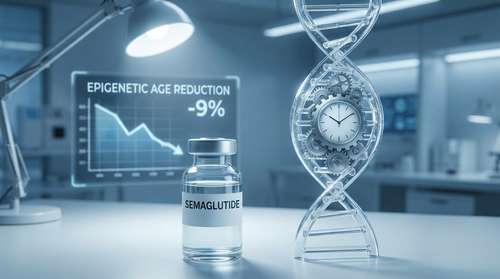
Most commonly recognized under the brand names Ozempic and Wegovy, Semaglutide is a GLP-1 receptor agonist fundamentally transforming metabolic medicine. Beyond mere weight management, scientists are leveraging it for its profound off-target effects. In preclinical models, it has been shown to reduce chronic inflammation, protect neurons, and potentially slow epigenetic aging. Participants will take a daily oral tablet instead of weekly injections, emphasizing steady-state metabolic resilience.
Dapagliflozin and Inflammaging
The third pillar of the trial is Dapagliflozin, an SGLT2 inhibitor primarily prescribed for type 2 diabetes. By helping the kidneys excrete excess glucose through urine, the drug significantly reduces systemic pressure on the cardiovascular system. More importantly, researchers believe it mitigates "inflammaging"—the low-grade, chronic biological stress that slowly deteriorates cellular health over time.
A New Regulatory Path for Longevity Medicine FDA Approval
One of the most persistent bottlenecks in longevity science has been the lack of a standardized endpoint. Historically, the Food and Drug Administration does not recognize aging as a treatable condition. This regulatory barrier has deterred massive investments, as pharmaceutical developers had no clear pathway to approve therapies strictly for preserving youthfulness.
The VITAL-H clinical trial is designed to shatter this paradigm. By utilizing a decentralized, high-tech model, researchers are outfitting participants with advanced wearables like the Oura Ring and Whoop to capture a continuous stream of digital biomarkers. Heart rate variability, sleep architecture, and daily movement will be analyzed to validate intrinsic capacity as a regulatory-grade clinical endpoint. If successful, it establishes the groundwork for future anti-aging drug breakthroughs 2026 and beyond, paving a permanent avenue for federal recognition.
What the ARPA-H Prosper Initiative Means for Our Future
Supported by up to $144 million in total programmatic funding across various institutions, the ARPA-H Prosper initiative is treating the longevity sector with the same urgency as national defense. The goal is not a science-fiction quest for immortality, but rather an economic and medical imperative to compress the period of frailty at the end of life.
The economic implications of such a breakthrough are staggering. Health experts suggest that slowing the biological pace of aging by just one year across the nation could generate trillions in economic value through reduced healthcare costs and increased productivity. It is a monumental pivot toward a proactive well-care ecosystem.
As we witness one of the most critical anti-aging drug breakthroughs 2026 has offered, the transition from reactive care to proactive resilience is fully underway. By proving that biological decline is a condition we can manage and treat, the VITAL-H clinical trial may just offer the ultimate prescription for a vibrant, extended human life.