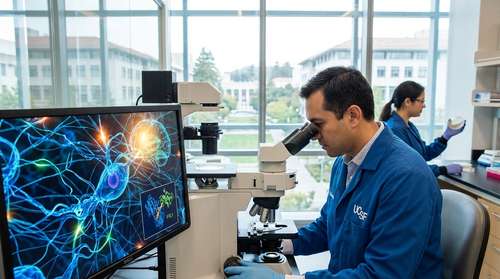
Over the weekend, researchers fundamentally shifted our understanding of cognitive decline. For decades, scientists believed memory loss was an inevitable consequence of getting older. A recent announcement upends that assumption. In the latest UCSF memory loss breakthrough, researchers identified a specific iron-storage molecule that acts as the primary driver of cognitive deterioration. The culprit, known as Ferritin Light Chain 1 (FTL1), acts as a master switch for cognitive decline. By manipulating this mechanism, scientists didn't just slow down deterioration—they actively managed to reverse it. This milestone in FTL1 protein brain aging research suggests that the debilitating brain fog experienced by millions might be a treatable condition rather than a permanent fate.
The Science Behind the Cognitive Master Switch
The team at the UCSF Bakar Aging Research Institute, led by Dr. Saul Villeda and Dr. Laura Remesal, spent years hunting for the specific biological mechanisms that trigger memory impairment. In their findings, officially presented just two days ago, they revealed an unexpected villain. Through an unbiased analysis of transcripts and proteins in the brain, FTL1 emerged as the single most consistent factor tracking with age-related decline.
When researchers artificially elevated FTL1 levels in young mice, the results were immediate and alarming. The animals' vibrant, complex neuronal networks shrank into simple, stubby extensions. Their brains behaved exactly like older brains, plagued by severe memory deficits. The protein acts as a heavy brake on energy production within the brain's learning center.
Targeting Hippocampus Cellular Metabolism
To understand why this happens, you have to look at the brain's energy demands. Healthy neurons require massive amounts of energy to communicate across synapses. The research revealed that elevated FTL1 severely disrupts hippocampus cellular metabolism, slashing the production of adenosine-triphosphate (ATP)—the vital energy currency of cells. Without sufficient energy, neurons cannot maintain the intricate branching structures needed to form and recall memories, leading to the cognitive sluggishness common in later life.
Groundbreaking Neural Connectivity Restoration
Identifying the problem was only half the battle. The true paradigm shift occurred when the UCSF team tested whether this damage could be undone. By suppressing the excess FTL1 in older mice, the researchers witnessed an unprecedented neural connectivity restoration.
The aging mice didn't merely stop losing their memories. The connections in their hippocampus actually regrew, rebuilding the complex synaptic networks characteristic of youth. On subsequent behavioral tests, these older mice scored just as well as their younger counterparts. "It is truly a reversal of impairments," Dr. Villeda noted during the weekend briefing, emphasizing that the treatment achieved much more than merely preventing symptoms. This is a monumental step toward the ultimate goal to reverse cognitive decline 2026 and beyond.
From Prevention to Reversal
While restoring youth to aging mice is an incredible feat, translating these findings into human therapies remains a complex challenge. The blood-brain barrier poses significant obstacles for drug delivery, and human brain chemistry is vastly more intricate. However, early-stage biomedical companies are already mobilizing to develop targeted therapeutics that could safely modulate FTL1 expression or rescue the metabolic pathways it disrupts.
The Future of Brain Longevity Research
We are standing on the precipice of a new era in neuroscience. Until recently, managing Alzheimer's and general age-related dementia focused almost entirely on slowing progression and making patients comfortable. This breakthrough pivots the narrative from mitigation to outright repair.
For millions of families watching loved ones slip away, this brain longevity research offers a tangible beacon of hope. By pinpointing a single protein responsible for synaptic starvation, the medical community now has a clear, actionable target for future drug development.
Actionable Steps for Healthy Aging for Seniors
You might be wondering what this means for you right now. While FTL1-blocking medications are still years away from pharmacy shelves, understanding the metabolic nature of brain aging provides immediate insights for healthy aging for seniors.
Since the core issue involves cellular energy depletion, lifestyle factors that support mitochondrial function remain your best defense. Regular cardiovascular exercise, strict management of metabolic health, and prioritizing high-quality sleep are proven ways to optimize energy production in the brain.
As we look toward clinical trials in the coming years, the UCSF findings provide a refreshing perspective. Getting older no longer has to mean losing your mind. With science rapidly closing in on the root causes of cognitive deterioration, our golden years might soon be defined by mental sharpness and vibrant memories rather than inevitable decline.