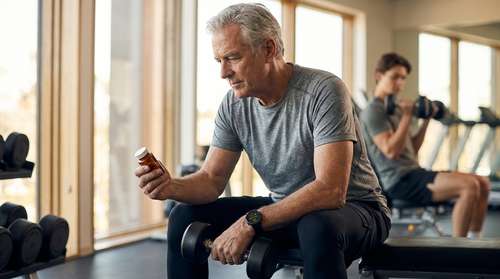
In the rapidly evolving landscape of anti-aging science, few interventions have generated as much excitement as rapamycin. Originally approved by the FDA to prevent organ transplant rejection, this compound has consistently extended the lifespan of diverse organisms in laboratory settings. But human biology is notoriously complex, and a landmark study published on April 29, 2026, in the Journal of Cachexia, Sarcopenia and Muscle exposes a fascinating biological tug-of-war. For those seeking maximum vitality, navigating rapamycin longevity side effects has just become the most pressing challenge in modern aging science.
The RAPA-EX-01 Trial: Breakthrough Healthy Aging Research 2026
The highly anticipated RAPA-EX-01 trial provides some of the most critical healthy aging research 2026 has seen to date. Led by Dr. Brad Stanfield and Dr. Matt Kaeberlein, the study sought to determine if a low weekly dose of rapamycin would supercharge the functional benefits of a 13-week exercise regimen in sedentary older adults.
Researchers administered 6 mg of rapamycin to participants once a week, intentionally timing the dose 24 hours after their final workout to avoid interfering with muscle recovery. Despite these precautions, the findings revealed a blunted physical response. Participants taking a simple placebo consistently outperformed the rapamycin group.
In the 30-second chair-stand test—a gold-standard metric for lower body strength—the placebo group completed roughly two more repetitions on average than those on the longevity drug. The placebo cohort also demonstrated better hand-grip strength and walked further during a six-minute endurance test, proving that the drug actively suppressed their physical adaptations.
The Science Behind the Clash: Exercise and Anti-Aging Drugs
To understand why exercise and anti-aging drugs are suddenly at odds, you have to look at a cellular nutrient-sensing pathway called mTOR (mechanistic target of rapamycin).
When you lift weights or cycle, mechanical stress activates mTOR, shifting your body into a building phase that triggers muscle protein synthesis. This anabolic phase is precisely how we build resilience, recover from workouts, and grow stronger.
Rapamycin, however, does the exact opposite. It inhibits the mTORC1 pathway, tricking the body into thinking nutrients are scarce. This forces cells into a maintenance phase, ramping up a cellular cleanup process known as autophagy. While clearing out cellular junk is phenomenal for extending lifespan in yeast, worms, and mice, shutting down the mTOR pathway blocks the vital anabolic response needed to repair and build muscle tissue.
The Threat to Muscle Health in Seniors
As we age, preserving physical function is just as important as preventing chronic disease. A decline in mobility is a primary driver of nursing home admissions and mortality. Consequently, prioritizing muscle health in seniors is non-negotiable.
The recent findings show that rapamycin users didn't just experience hindered strength gains; some also reported increased muscle soreness, fatigue, and elevated markers of inflammation, such as C-reactive protein (CRP). If a longevity intervention directly impairs the physiological adaptations of exercise—widely considered the most potent anti-aging therapy known to medicine—its real-world utility requires a massive rethink.
Shifting Longevity Medicine Trends and Biological Age
This paradox is sending shockwaves through the biohacking community and reshaping current longevity medicine trends. For years, the prevailing assumption was that combining proven therapies would yield exponential, synergistic benefits. We now know that timing and biology are incredibly nuanced. The drug likely lingered in the participants' systems long enough to suppress mTOR activation during crucial post-exercise recovery windows, effectively putting the brakes on their progress.
Even measures of biological age reversal proved stubborn in the presence of this chemical tug-of-war. The trial utilized epigenetic clocks—advanced DNA tests that estimate the cellular age of tissues—to see if the combination therapy would turn back the clock. Over the 13-week period, testing across multiple epigenetic clocks (like GrimAge and DunedinPACE) showed that rapamycin did not produce any statistically significant reversal in biological age compared to the placebo.
Refining Healthspan Extension Strategies Moving Forward
Does this mean rapamycin is completely off the table for aging adults? Not necessarily. The results simply underscore that human biology resists shortcut solutions. The pursuit of longevity is no longer just about adding years to our lives; it is about adding life to our years. Muscle tissue acts as a metabolic sink for glucose and a crucial armor against frailty. Compromising muscle integrity for a theoretical increase in lifespan presents an unacceptable tradeoff for most active adults.
Moving forward, researchers are exploring variations of the cycling hypothesis—the idea that altering the dosage or taking longer breaks from the drug might allow patients to reap the benefits of cellular autophagy without sacrificing their hard-earned exercise adaptations.
Until the science is perfected, the most reliable healthspan extension strategies remain anchored in the fundamentals. Progressive resistance training, cardiovascular endurance, and proper nutrition are the true, undisputed champions of aging well. There is no biological free lunch, and this latest trial proves that you cannot simply pill your way out of the gym.