This spring, the conversation around weight loss has radically changed. For decades, the public health message focused heavily on shrinking the number on the scale, leading millions to prioritize sheer calorie burning over comprehensive fitness. Now, the medical community is sounding the alarm on exactly what we are losing. With the official rollout of the ACSM 2026 fitness guidelines, the American College of Sports Medicine has delivered a clear verdict: we must prioritize lean tissue. This new clinical shift provides the first major roadmap for the millions of Americans using GLP-1 weight-loss medications, officially sparking a strength revolution aimed at keeping us robust, independent, and metabolically healthy as we age.
The 'Muscle Mandate' and the GLP-1 Era
We are in the midst of a pharmaceutical gold rush. Drugs like semaglutide and tirzepatide yield stunning results, helping users shed significant percentages of their total body weight by suppressing appetite and slowing gastric emptying. But doctors and researchers are seeing a troubling side effect. Without targeted physical intervention, up to 30 percent of that lost weight comes from fat-free mass, primarily bone and muscle tissue. This rapid degradation of lean mass poses a silent but severe threat to long-term well-being.
Enter the concept of muscle preservation GLP-1. The updated ACSM 2026 fitness guidelines specifically target this medication-induced deficit. Rather than relying solely on aerobic activity to burn calories, the medical consensus now demands that patients lift weights. It is a critical pivot. Muscle acts as our metabolic engine and structural armor. Stripping it away accelerates physical decline and dramatically increases the risk of falls, especially in older adults.
Decoding the Spring Fitness Trends: Why Cardio Isn't Enough
Take a look at the emerging Spring fitness trends, and you will notice a distinct departure from the treadmill-dominated routines of the past. The focus has decisively migrated to the weight room. In March 2026, the ACSM released its most comprehensive update on the subject—a massive synthesis of 137 systematic reviews covering more than 30,000 participants.
The data reveals that the resistance training benefits go far beyond mere aesthetics. While cardiovascular exercise is excellent for heart health, it completely fails to prevent the specific muscle wasting associated with rapid weight reduction. The latest ACSM trends report elevated "Exercise for Weight Management" to the number three overall fitness trend globally, up from previous years, directly citing the explosion of GLP-1 use. The mandate comes with a stark caveat: if you are shedding pounds, resistance training is non-negotiable. Lifting weights provides the mechanical tension required to signal your body to retain its lean tissue, even when operating in a steep caloric deficit.
Forging Functional Strength 2026 Style
So, what does this actually look like for the average person who might be intimidated by barbells? You do not need to become a competitive powerlifter to reap the rewards. The clinical definition of functional strength 2026 is highly accessible and designed for real-world application.
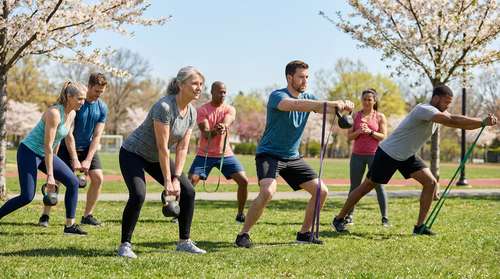
The baseline prescription laid out in the ACSM 2026 fitness guidelines is straightforward: train at least twice a week. You need to target all major muscle groups using compound movements—think squats, rows, deadlifts, and presses. The load does not necessarily have to be staggering. Elastic bands, bodyweight step-ups, and moderate dumbbells are highly effective, provided you push yourself within a few repetitions of failure. The goal is to build physical capacity that translates directly to everyday life, whether that means carrying heavy groceries, playing with grandchildren, or getting up from the floor with ease.
Adapting Workouts for Medication Side Effects
One of the major hurdles for individuals starting these treatments is managing the initial physical fatigue. Nausea and low energy are common during the dose-escalation phase of GLP-1 therapy. Recognizing this, the latest guidance emphasizes adaptability. If a full hour at the gym feels impossible, breaking workouts into shorter, 15-minute home-based sessions can provide the necessary muscle stimulus without triggering exhaustion. The key is consistency and ensuring that the effort level remains appropriately challenging when you do train.
The Long Game: Metabolic Health and Longevity
This spring's strength revolution is ultimately about redefining how we age. We are shifting away from a narrow obsession with thinness toward a broader, more sustainable vision of vitality. Incorporating metabolic health exercise into your weekly routine pays dividends that compound over decades.
Muscle tissue acts as a vital sink for blood glucose, helping to regulate insulin sensitivity and fend off metabolic syndrome. When you engage in strength training for longevity, you are actively fighting back against sarcopenia, the natural age-related loss of muscle mass that sidelines so many older adults. For the millions navigating the complexities of modern weight-loss treatments, the message is resoundingly clear. The ACSM 2026 fitness guidelines have rewritten the rulebook. The scale is no longer the sole arbiter of success; preserving your strength is the ultimate currency for a long, resilient life.