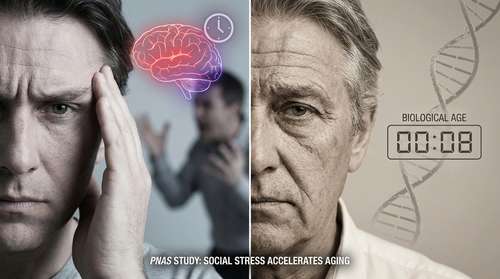
If you have ever felt like a difficult colleague or a demanding relative was taking years off your life, science has just confirmed your suspicion. A groundbreaking study published this week in the Proceedings of the National Academy of Sciences (PNAS) introduces the concept of the "Hassler Effect," revealing that regular interactions with conflict-prone individuals can tangibly accelerate your biological age.
The research, led by sociologist Byungkyu Lee of New York University, quantifies the toll of negative social ties with alarming precision. According to the findings, each additional "hassler"—defined as a person who regularly creates problems or makes life difficult—in your social network increases your pace of aging by approximately 1.5%. This discovery adds a crucial layer to longevity research 2026, shifting the focus from diet and exercise to the biological impact of our social environments.
The Biological Cost of Social Stress
For decades, healthy aging advice has centered on what we eat and how much we move. However, this new data suggests that social stress and aging are inextricably linked at a molecular level. The study analyzed data from over 2,300 adults, using advanced epigenetic biomarkers known as DNA methylation clocks—specifically GrimAge2 and DunedinPACE—to measure the speed at which participants' bodies were deteriorating.
The results were stark. Individuals with just one chronic "hassler" in their life showed signs of being roughly nine months older biologically than their chronological peers. "These negative relationships function as chronic stressors," explains Dr. Lee. "Unlike acute stress, which dissipates, the constant low-grade tension of dealing with a difficult person keeps the body's inflammatory response activated, effectively wearing down cellular machinery faster."
Defining the 'Hassler'
Not every annoying acquaintance qualifies as a hassler. The study specifically identified these individuals as network members who are demanding, critical, or the source of regular conflict. Alarmingly, nearly 30% of study participants reported having at least one such person in their close circle. The effect was cumulative: the more hasslers a person engaged with, the faster their epigenetic clock ticked, compounding the risk for age-related diseases like heart disease and Alzheimer's.
Family vs. Spouses: A Surprising Finding
One of the most counterintuitive findings of the study was who causes the most damage. Researchers found that difficult relationships with immediate family members (kin)—such as parents, siblings, or adult children—had a far more detrimental impact on biological age than difficult spouses.
While marital strain is well-documented, the study suggests that the optional nature of modern marriage might offer some buffer; people can, in theory, divorce. Family ties, however, are often viewed as inescapable. The sense of obligation mixed with chronic conflict creates a potent recipe for epigenetic biomarkers of aging to accelerate. "The inability to detach from a toxic family member creates a sustained physiological load that a difficult coworker or neighbor simply doesn't replicate," the study notes.
How to Age Slower in a Stressful World
Given that we cannot always remove difficult people from our lives, how can we mitigate the damage? Experts in longevity research 2026 suggest that changing our response to these interactions is key to preserving our health.
- Cognitive Reframing: Viewing a difficult interaction as a problem to be solved rather than a personal attack can dampen the cortisol spike that drives inflammation.
- Micro-Boundaries: If you cannot cut ties, limit the duration of interactions. Shorter exposure times reduce the physiological recovery period your body needs.
- Positive Buffering: The study found that strong, supportive relationships can partially offset the harm of negative ones. Investing energy in your "uplifters" is a valid anti-aging strategy.
The Future of Healthy Aging
This research marks a pivot in how to age slower. It validates the idea that social health is physical health. As we move further into 2026, the definition of a "healthy lifestyle" is expanding to include social curation. Just as you might cut processed foods from your diet to lower cholesterol, editing your social circle—or changing how you navigate it—might be essential for keeping your biological age youthful.
Ultimately, the "Hassler Effect" serves as a powerful reminder: the company we keep gets under our skin, quite literally rewriting our DNA. Prioritizing peace in your relationships isn't just good for your mood—it’s vital for your longevity.