For decades, cardio has been championed as the ultimate ticket to a long, healthy life. But a groundbreaking 30-year study led by researchers at the Harvard T.H. Chan School of Public Health, published just days ago in the British Journal of Sports Medicine, shifts the spotlight entirely. When it comes to extending your lifespan, picking up dumbbells or doing bodyweight exercises is just as crucial as logging miles on a treadmill. Specifically, researchers have identified the exact strength training for longevity sweet spot—and it is far more achievable than most fitness influencers would have you believe.
The notion that building muscle is reserved for athletes or bodybuilders is quickly fading. Current science clearly points to muscle mass as a vital organ system that dictates how well, and how long, we live. This latest research provides the missing numerical target for anyone wanting to optimize their weekly routine without overtraining.
Discovering the Optimal Workout Time for Healthy Aging
Scientists analyzed massive amounts of data from 147,374 adults spanning three decades. Using records from the Health Professionals Follow-up Study and two phases of the Nurses' Health Study, researchers tracked participants from as early as 1992 through 2022. Every two years, these individuals detailed their physical activity habits, allowing researchers to build a comprehensive picture of how long-term exercise impacts lifespan. The findings firmly challenge the 'more is always better' mentality that pervades modern fitness culture.
People who engaged in 90 to 120 minutes of resistance training each week achieved a 13% lower risk of dying from any cause compared to those who avoided muscle-strengthening activities altogether. Hitting this optimal workout time healthy aging protocol equates to roughly two or three 40-minute sessions per week. Interestingly, the data showed a clear plateau. Pushing past the two-hour mark yielded no additional survival advantages. This means you don't need to live in the gym to reap maximum rewards; working out smarter, rather than longer, is the true key.
Cardiovascular Health Strength Training Connections
While protecting against general mortality is impressive, the study revealed startling disease-specific benefits that completely reframe how we view weightlifting. Participants hitting the 90-to-120-minute threshold saw a 19% reduction in their risk of cardiovascular death. Historically, aerobic exercise held a monopoly on heart health. However, the mechanical stress placed on muscles during resistance work improves vascular function, lowers resting blood pressure over time, and enhances insulin sensitivity, solidifying the vital link between cardiovascular health strength training and longevity.
Even more striking was the impact on cognitive decline. Those maintaining this weekly resistance routine experienced a massive 27% lower risk of dying from neurological diseases, such as Alzheimer's and other forms of dementia. Muscle contractions release myokines—specialized proteins and hormones that travel directly to the brain. These compounds promote the growth of new neural connections, reduce systemic inflammation, and protect existing brain structures from age-related degradation.
The Ultimate Formula: How to Live Longer Exercise Routines
The research paints a clear picture: isolation isn't the answer. If you are actively researching how to live longer exercise strategies, the most profound benefits emerged when participants combined their weight room sessions with regular cardiovascular activity. The lowest mortality risks across the board belonged to individuals who embraced a hybrid approach.
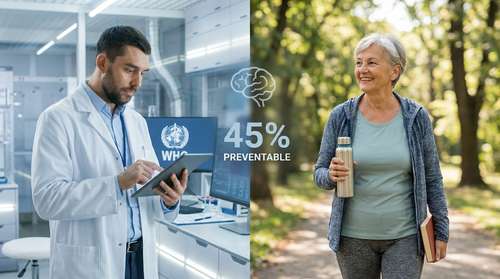
Adults who met the standard aerobic recommendations—like brisk walking, cycling, or swimming—while also hitting the strength training sweet spot achieved up to a 45% lower risk of overall mortality compared to sedentary peers. The two forms of physical activity work synergistically. Cardio improves heart and lung efficiency, increasing oxygen delivery, while lifting weights preserves the metabolic engine and skeletal structure.
Maximizing Resistance Training Benefits for Seniors
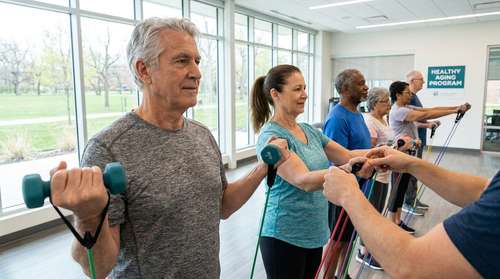
As we age, muscle tissue naturally deteriorates through a process called sarcopenia, which accelerates frailty, increases fall risks, and compromises immune function. This is exactly why resistance training benefits for seniors cannot be overstated. Activities that force muscles to work against a load signal the body to retain its structural integrity and bone density.
Older adults do not need to train like competitive lifters to see these physiological changes. Simple, functional movements performed consistently provide enough stimulus to trigger these life-extending adaptations. Using resistance bands, a pair of modest dumbbells, or simple calisthenics in the living room can effectively halt age-related muscle wasting. Focus on compound movements like squats, lunges, and push-ups, which mimic daily activities and keep you independent longer.
Updating the Exercise Guidelines for Longevity
Currently, federal health recommendations suggest at least 150 minutes of moderate aerobic activity and two days of muscle-strengthening work each week. However, fewer than a quarter of Americans actually meet both targets. This latest Harvard analysis adds urgent context to the standard exercise guidelines for longevity by putting a precise, data-backed number on the resistance requirement.
To effectively optimize your weekly routine and hit that 90-to-120-minute window, experts suggest breaking the time into manageable, realistic chunks. You might try:
- Three 30-to-40-minute sessions focused on full-body functional movements.
- Two 45-minute workouts splitting upper and lower body exercises.
- Short 15-to-20-minute daily bodyweight circuits covering squats, planks, and glute bridges.
Building muscle is quite literally building a retirement account for your physical health. The evidence is now definitive. Allocating just an hour and a half each week to push, pull, and lift is one of the most scientifically proven investments you can make for a longer, sharper, and more resilient life.