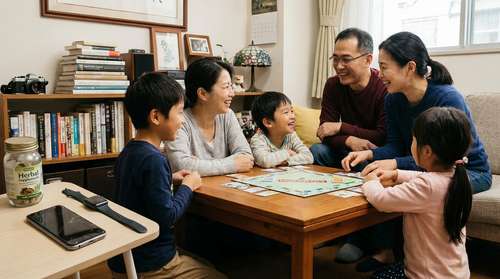
Parents across the country are quietly initiating a wellness rebellion. After a decade dominated by tracking REM cycles, monitoring macronutrients, and optimizing personal biology, a profound shift is taking over American households. Welcome to the Social Health 2026 movement. Rather than buying the latest smart-bassinet or brain-training app, caregivers are intentionally returning to basics. This movement trades the hyper-individualized pursuit of physical optimization for something far more foundational: face-to-face connection. As new research points to deep relational bonds as the ultimate antidote to the ongoing pediatric mental health crisis, families are replacing their complex tech stacks with intentional, screen-free community building.
Biohacking vs Social Health: A Paradigm Shift
For years, the wellness industry sold us on the idea that health was a solo endeavor measured by wearable rings and longevity supplements. But the conversation surrounding biohacking vs social health has recently reached a tipping point. While biohacking focuses on micro-adjusting individual biology, social health looks at the human nervous system through a collective lens.
According to a landmark Early Relational Health (ERH) framework emphasized by the National Academies of Sciences, Engineering, and Medicine, positive childhood experiences and mutual, affirming moments of connection are the strongest buffers against stress. In early 2026, health professionals began officially prioritizing these relational dynamics over individual metrics, arguing that children's flourishing reflects a collective societal commitment. The data is clear: no amount of green juice or blue-light blocking glasses can replicate the profound relational health benefits of active, engaged human bonding.
The Return to Analog Parenting
This pivot away from screens has birthed one of the most significant family wellness trends of the decade. Enter analog parenting, a lifestyle choice rapidly gaining traction among Millennial and Gen Z caregivers. Recent parenting trend reports from March 2026 reveal a staggering 200% year-over-year increase in searches for screen-free activities, alongside a massive 340% spike in planning a "no phone summer".
Analog parenting isn't about entirely rejecting modern conveniences; it is about intentionality. Parents are actively choosing wooden blocks over tablets, reading physical books instead of streaming interactive apps, and printing photographs rather than letting them die in a camera roll. By curating an environment free from algorithmic interference, families are creating "slow" spaces that protect developing attention spans and foster emotional regulation.
Swapping Smart Gadgets for "Dumb" Toys
The aesthetic of the modern nursery is fundamentally changing. Sales of open-ended play items like silk scarves, wooden rainbows, and simple clay are vastly outpacing electronic equivalents. Caregivers are realizing that a cardboard box and a magnifying glass do more for a developing brain than an expensive AI-powered robot ever could.
Healing the Pediatric Mental Health Crisis
The urgency behind this analog shift is inextricably linked to the ongoing mental health struggles faced by modern youth. As clinical psychologists continue to study the impacts of digital overload on adolescent brains, a clear consensus has emerged. Anxiety and depression rates in youth are largely exacerbated by social isolation and constant digital tethering. The American Psychological Association has increasingly advocated for relational focuses in early childhood, shifting the paradigm to ensure mental well-being starts at birth through secure attachments.
To combat this, systemic changes are reflecting what parents are doing at home. States like New Jersey recently passed landmark 2026 legislation to expand preventative behavioral support, allowing healthcare providers to treat the root causes of family stress before a formal psychiatric diagnosis is even necessary. Early relational health is now recognized as foundational. By emphasizing strong, uninterrupted caregiver-child attachments, parents provide the exact neurological safety required to reverse downward mental health trends, allowing positive experiences to buffer against life's inevitable adversities.
Designing a Digital Detox for Families
Transitioning from a heavily digitized household to an analog-first environment doesn't have to happen overnight. A successful digital detox for families requires small, sustainable adjustments rather than a rigid ban on all technology.
Here are practical ways to integrate this revolution into your daily life:
- Implement the Daily Analog Hour: Dedicate sixty minutes each evening where all phones, tablets, and smartwatches are placed in a drawer. Use this time for family walks, cooking together, or unstructured conversation.
- Revive the Landline: Some families are installing basic home phones to teach kids how to communicate without handing them a smartphone at age six.
- Create a Family Tech Agreement: Sit down with older children to draft clear boundaries around device usage, ensuring that technology serves the family rather than distracting from it.
- Embrace Slower Media: Swap out high-stimulation video content for screen-free audio players that allow kids to control their environment through stories and music without the blue light strain.
By prioritizing community over optimization, caregivers in 2026 are proving that the most advanced wellness tool we have is each other.