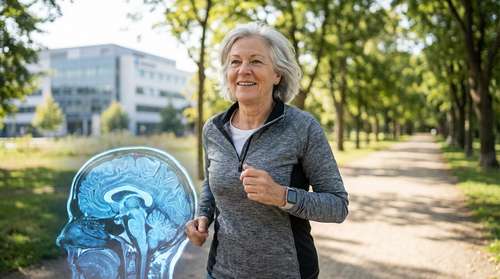
A groundbreaking new study published this week has delivered some of the most compelling evidence to date that you can effectively "rewind" your brain's biological clock. Research released in the Journal of Sport and Health Science reveals that just one year of consistent aerobic exercise can reverse cognitive aging by nearly a full year in middle-aged adults. Using advanced MRI technology to measure brain health, scientists at the AdventHealth Research Institute found that adhering to standard physical activity guidelines offers profound neuroprotective benefits, potentially reshaping how we approach healthy aging in 2026 and beyond.
The Science of Reversing Brain Aging
The study, which has generated significant buzz in the medical community over the last 48 hours, utilized a sophisticated metric known as brain-predicted age difference (brain-PAD). This biomarker compares a person's chronological age with how "old" their brain appears on an MRI scan based on structural integrity and volume. A higher brain-PAD typically signals accelerated aging and is linked to a higher risk of cognitive decline and dementia.
Researchers recruited 130 healthy adults between the ages of 26 and 58—a critical "midlife" window where preventative measures are most effective. Participants were randomly assigned to either a moderate-to-vigorous aerobic exercise group or a control group that maintained their usual lifestyle. After 12 months, the results were striking: while the control group's brains aged slightly (appearing about 0.35 years older), the exercise group's brains actually looked 0.6 years younger. The net difference between the groups was approximately 0.95 years—effectively a 12-month reversal in biological brain age.
"We found that a simple, guideline-based exercise program can make the brain look measurably younger over just 12 months," stated Dr. Lu Wan, the study's lead author and a data scientist at the AdventHealth Research Institute. This finding challenges the assumption that brain aging is a strictly linear, irreversible process.
The 150-Minute Solution: A Realistic Protocol
One of the most encouraging aspects of this brain age MRI study is the accessibility of the intervention. Participants didn't need to train for marathons or engage in extreme athletic feats. Instead, they followed the standard public health recommendation of 150 minutes of moderate-to-vigorous activity per week. This amounted to roughly four 30-to-40-minute sessions of activities like brisk walking, running, or cycling.
What "Moderate-to-Vigorous" Means for You
To replicate the study's benefits, the intensity matters. The goal is to get your heart rate up and break a sweat. If you can talk but not sing, you're likely in the moderate zone. If you can only say a few words without pausing for breath, you've hit vigorous intensity. The study suggests that consistency at this level is the key to unlocking neuroprotection tips that actually work.
Dr. Kirk I. Erickson, the study’s senior author and a prominent neuroscientist, noted that while the absolute changes might seem modest, a one-year shift in brain health could have compounding benefits over decades. "From a lifespan perspective, nudging the brain in a younger direction in midlife could be very important," he explained.
Why Midlife is the Critical Window
While much of the existing cognitive health research focuses on seniors who are already experiencing decline, this study uniquely targeted adults as young as 26. This shift in focus highlights a crucial reality: brain health is built (or lost) decades before the first symptoms of Alzheimer's or dementia appear.
By intervening in midlife with aerobic exercise for seniors-in-training, we may be able to build a "cognitive reserve." This structural resilience acts as a buffer against the natural wear and tear of aging. The data suggests that starting an exercise routine in your 30s, 40s, or 50s isn't just about heart health or weight management—it's a direct investment in your future neurological independence.
Actionable Steps for Neuroprotection
Based on these findings, here is how you can integrate these neuroprotection tips into your weekly routine to target reverse brain aging:
- Track Your Minutes: Aim for the magic number of 150 minutes per week. Break it down into manageable chunks, such as 30 minutes, five days a week.
- Monitor Intensity: Use a smartwatch or the "talk test" to ensure you are reaching moderate-to-vigorous zones. A casual stroll is beneficial, but may not provide the same structural brain rewind seen in this study.
- Be Patient: The study measured results after a full year. Cognitive changes take time to manifest structurally on an MRI, so consistency is non-negotiable.
- Start Now: Regardless of your current age, the plasticity of the brain means it's rarely too late to start, but the protective effects are likely strongest when started early.
As we navigate healthy aging in 2026, this research serves as a powerful reminder that our biology is not destiny. With a pair of sneakers and a commitment to 150 minutes a week, we have the power to turn back the clock on our most vital organ.