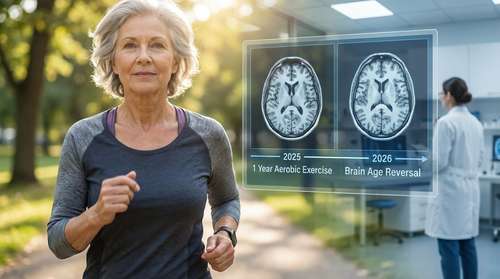
A groundbreaking new study published on January 22, 2026, offers compelling biological proof that it is never too late to reverse brain aging. Researchers at the AdventHealth Research Institute have utilized advanced MRI scanning to demonstrate that a single year of consistent aerobic exercise can rewind the brain's biological clock by nearly 12 months. This definitive new evidence suggests that moderate-to-vigorous workouts do not just halt cognitive decline—they may actively rejuvenate critical brain structures in older adults.
The Science of Reversing Brain Aging
The findings, detailed in the Journal of Sport and Health Science, focused on a metric known as "brain-predicted age difference" (brain-PAD). This advanced neuroimaging biomarker compares a person's chronological age with how old their brain actually appears on an MRI scan. While previous research has linked physical fitness to better memory, this study is among the first to quantify the structural "age reversal" effect of exercise with such precision.
In the randomized clinical trial, 130 healthy adults aged 26 to 58 were divided into two groups: one that maintained their sedentary lifestyle and another that adhered to a guideline-based aerobic exercise routine for 12 months. The results were stark. Those who exercised saw their brain age decrease by an average of 0.60 years, while the sedentary group’s brains aged an additional 0.35 years. The net difference was a staggering 0.95 years—essentially a full year of preserved brain health.
Key Findings at a Glance
- Biological Reversal: The exercise group's brains looked biologically younger after just one year.
- Sedentary Risks: Doing nothing accelerated brain aging markers, even in midlife adults.
- Midlife Window: The study highlights that the 40s and 50s are a critical "prevention window" for gray matter preservation.
How Aerobic Workouts Rejuvenate Gray Matter
Dr. Lu Wan, the study's lead author, emphasizes that the structural changes observed were linked to improvements in cardiorespiratory fitness. As participants increased their VO2 peak (a measure of oxygen uptake), their brain scans showed signs of enhanced structural integrity. This phenomenon is likely driven by increased blood flow and the release of neurotrophic factors that support the health of gray matter—the brain tissue responsible for processing information and memory.
"We found that a simple, guideline-based exercise program can make the brain look measurably younger over just 12 months," noted Dr. Kirk I. Erickson, the study’s senior author. This challenges the long-held assumption that brain atrophy is an inevitable, linear part of aging. Instead, the data suggests that the brain remains plastic and responsive to lifestyle interventions well into midlife and beyond.
Practical Steps to Prevent Cognitive Decline
For those looking to replicate these results, the study's protocol was surprisingly accessible. Participants did not run marathons; they engaged in moderate-to-vigorous aerobic activities—such as brisk walking, cycling, or jogging—for approximately 150 minutes per week. This aligns with standard health recommendations but adds a powerful new motivator: specific neuroprotective benefits.
To start your own brain rejuvenation journey, consider these evidence-based strategies:
- Aim for Zone 2: Engage in steady-state cardio where you can talk but not sing. This intensity builds the aerobic base linked to brain health.
- Consistency is Key: The study found significant results after 12 months, highlighting the importance of long-term adherence over short-term bursts.
- Monitor Progress: improvements in stamina and breathing are physical signs that your brain is likely reaping biological rewards.
The Future of Healthy Aging News
As we move further into 2026, this study sets a new benchmark for healthy aging news. It shifts the narrative from merely "slowing decline" to actively "reversing aging" biomarkers. With dementia rates climbing globally, the ability to potentially buy back time for our brains through accessible, natural means is a profound development in preventative medicine.
While more research is needed to see if these structural changes translate directly to decades of delay in Alzheimer's onset, the immediate message is clear: Your next workout is doing more than just burning calories; it is actively sculpting a younger, more resilient brain.