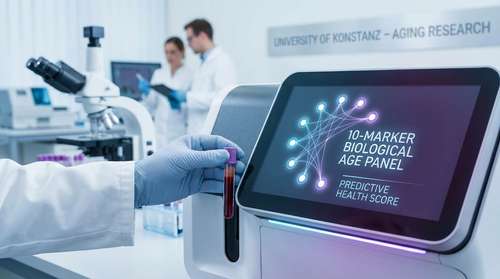
While celebrating a birthday every twelve months gives you a chronological age, that number rarely tells the full story of your physical health. Groundbreaking research released this week has introduced a revolutionary biological age test that measures exactly how fast your body is wearing out. Led by scientists from the University of Konstanz in Germany, this new blood-scanning technique successfully identifies 10 precise biomarkers that act as an early warning system for age-related disease.
The highly anticipated University of Konstanz aging study offers a dramatic leap forward for preventative medicine. Rather than relying on a single indicator, the international MARK-AGE consortium leveraged machine learning to pinpoint a specific combination of chemical, cellular, and genetic signals. This makes the newly developed screening not just one of the most exciting longevity breakthroughs of the year, but a highly practical clinical tool for doctors to assess physiological decline before symptoms appear.
The Breakthrough: Moving Beyond Chronological Age
For decades, physicians have known that chronological age is an imperfect proxy for true health. Lifestyle, environmental factors, and genetics all dictate the actual rate of physiological wear and tear. However, establishing an accurate metric for this process has proven incredibly difficult.
"The biological aging process is very complex," explains biologist Maria Moreno-Villanueva, co-leader of the study. "It affects all of the body's tissues and organs, and it is not the result of a single cause. As a result, single biomarkers are not enough to reliably determine a person's biological age."
To solve this, researchers analyzed 362 different biological parameters from the blood samples of 3,300 people across eight European countries, ranging in age from 35 to 74. Utilizing statistical modeling and advanced machine learning algorithms, the team filtered these parameters down to the 10 most crucial blood biomarkers for aging. Recognizing that the aging process differs fundamentally between sexes, they developed separate diagnostic algorithms and marker combinations for men and women.
Uncovering the 10 Predictive Health Markers
The researchers found that calculating a precise bioage score relies on a complex blend of predictive health markers linked to immune function, lipid metabolism, and bone status. Among the markers isolated in the final diagnostic panels were:
- 25-hydroxy-Vitamin D: A critical indicator of bone health and systemic inflammation.
- High-Density Lipoprotein (HDL): Essential for managing cardiovascular risk and fat metabolism.
- T helper cell ratio: Specifically, the share of T helper cells among leukocytes (the CD3+CD4+/CD45+ ratio), which reflects the immune system's resilience.
When an individual's blood profile reflects a younger biological age, these specific markers generally fall within optimal, healthy ranges.
Testing the Accuracy on Fast Aging Profiles
To validate their findings, the researchers applied their newly established blood test to groups with known accelerated or decelerated biological aging rates. The results confirmed the algorithm's accuracy. Subjects with Down syndrome (trisomy 21) and chronic smokers were correctly identified by the test as biologically older than their chronological years. Conversely, postmenopausal women utilizing hormone replacement therapy were shown to be biologically younger, validating the model's sensitivity to both positive and negative physiological influences.
Drivers vs. Bystanders: Can We Slow Biological Aging?
One of the most profound discoveries to emerge from the data is the classification of these markers into two distinct categories: drivers and bystanders. Bystander markers, like glucose levels, correlate with chronological age but do not actively accelerate the physiological decline. Drivers, however, appear to actively contribute to the aging process.
Understanding this distinction is vital for those looking into how to slow biological aging. By identifying the exact mechanisms driving cellular degradation, medical professionals can target these specific pathways with individualized therapies, rather than just treating the resulting symptoms.
The Future of Healthy Aging in 2026 and Beyond
As the global population skews older, finding reliable methods to promote healthy aging 2026 has become a paramount objective in medical science. The Konstanz team's bioage score provides a scalable, minimally invasive solution to track the effectiveness of lifestyle interventions and anti-aging treatments.
According to molecular toxicologist Alexander Bürkle, co-author of the study, the implications are vast. "Reliable biomarkers for biological aging provide key tools for tracking the aging process—even in healthy individuals—as well as for identifying people who have a higher risk of developing an age-related illness," he states.
This breakthrough opens the door to a new era of preventative medicine. By measuring your biological age through a routine blood draw, you and your healthcare provider can spot hidden damage, adjust your health protocols, and potentially reverse the physiological clock before chronic diseases take root.