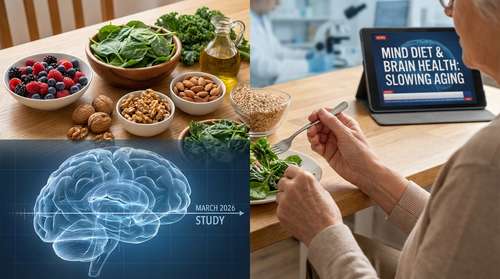
A groundbreaking study published on March 21, 2026, offers compelling evidence that what you put on your plate directly dictates how your brain ages. For years, researchers have suspected a profound link between diet and cognitive longevity, but new brain scan imaging has definitively confirmed just how powerful this connection truly is. Prioritizing MIND diet brain health can effectively delay biological brain aging by up to three years. The findings, drawn from more than a decade of high-resolution MRI scans, reveal that sticking to this targeted, plant-forward dietary pattern drastically reduces the rate of brain shrinkage. For older adults, this provides a realistic, non-pharmaceutical roadmap to protect your mind as you grow older.
The Science Behind Grey Matter Preservation
Medical professionals have long known that our brains naturally shrink as we age, but the rate of that shrinkage is absolutely not set in stone. The latest clinical analysis observed older adults over a median period of 12 years, carefully tracking their daily dietary habits alongside structural changes inside their brains.
Those who strictly followed the MIND protocol experienced a significantly slower loss of grey matter. This vital tissue is heavily packed with the nerve cells responsible for memory formulation, learning new skills, and complex decision-making. In fact, for every three-point increase in a person's diet adherence score, researchers noted a remarkable 20 percent reduction in overall age-related brain tissue loss. This extraordinary level of grey matter preservation directly translates to roughly two and a half to three years of delayed biological aging.
Fluid-Filled Spaces and Brain Atrophy
As brain tissue degrades over time, the fluid-filled spaces inside the brain, known scientifically as ventricles, tend to naturally expand. The sweeping 2026 data demonstrated that strong, consistent adherence to the MIND framework limited this ventricular enlargement by nearly 8 percent. By effectively minimizing this physical structural decay, individuals are far better equipped to actively prevent cognitive decline well into their seventies, eighties, and beyond.
Top Neuroprotective Foods for Seniors
The MIND diet—short for Mediterranean-DASH Diet Intervention for Neurodegenerative Delay—isn't about extreme calorie restrictions or deprivation. Instead, it highlights specific, nutrient-dense ingredients proven to shield vulnerable neurological pathways. When researchers drilled down into the individual dietary components driving these positive scan results, a few standout items emerged as the ultimate neuroprotective foods for seniors.
Berries, particularly blueberries and strawberries, showed the most consistent link to reduced brain shrinkage across the board. Their exceptionally high antioxidant content helps neutralize oxidative stress before it can damage fragile neurons. Lean proteins like poultry also demonstrated significant neurological benefits, correlating with much slower ventricular expansion. Other staple foods that physically fortify the brain include leafy green vegetables, beans, nuts, whole grains, and extra virgin olive oil.
Foods That Accelerate Brain Aging
Just as certain foods protect the mind, others actively accelerate its decline. The study highlighted that heavy consumption of sweets and fried fast foods led to much faster expansion of brain ventricles and rapid hippocampal atrophy. The dangerous trans fats and advanced glycation end-products found in heavily fried items trigger widespread vascular damage and neuroinflammation, essentially putting the brain's aging process into overdrive.
How to Slow Brain Aging Naturally with the MIND Diet
You don't need a perfectly pristine diet to see measurable structural results; the imaging research confirms that even moderate dietary improvements yield massive neurological benefits. If you want to slow brain aging naturally, the true key is sustainable consistency rather than perfection.
Transitioning to the MIND framework doesn't require a total kitchen overhaul overnight. Start by integrating at least six servings of leafy greens into your weekly routine, whether that means tossing a handful of spinach into a morning smoothie or having a robust side salad with your dinner. Swap out heavy red meat for lean poultry or wild-caught fish a few times a week, and keep a small bowl of walnuts or almonds on hand for midday snacking. Substituting standard butter for extra virgin olive oil when cooking is another incredibly seamless transition that pays immense, measurable dividends over a decade.
The Benchmark for Brain Health Nutrition 2026
We are officially entering a new medical era where cognitive longevity is treated with the exact same dietary urgency as heart disease. The March 2026 breakthrough shifts the global conversation from merely hoping to avoid dementia to actively building a structurally resilient brain through everyday daily choices.
While genetics and physical activity play undeniable roles in our overall wellbeing, the food we consume remains one of the few entirely controllable variables in our personal aging process. For anyone actively looking for evidence-based healthy aging tips, the clinical verdict is crystal clear: your grocery list is your ultimate first line of defense. By leaning into the brain health nutrition 2026 standards set by the MIND approach, you are effectively buying your brain extra years of sharpness, clarity, and structural youth.