Starting today, February 18, 2026, a landmark shift in public health policy takes effect across Louisiana. Families relying on the Supplemental Nutrition Assistance Program (SNAP) will see significant changes at the checkout line as the state implements its new Food Restriction Waiver. Under this federally approved demonstration project, SNAP benefits—formerly known as food stamps—can no longer be used to purchase soft drinks, energy drinks, and candy. This controversial yet ambitious initiative aims to combat Louisiana's high rates of childhood obesity and type 2 diabetes by redirecting hundreds of millions of federal dollars toward nutrient-dense options like proteins, fresh produce, and dairy.
The 'Food Restriction Waiver' Explained
The new regulations are part of a two-year pilot program approved by the USDA's Food and Nutrition Service (FNS). While federal SNAP rules generally allow the purchase of any food item intended for home consumption, Louisiana secured a specific waiver to test whether restricting access to empty-calorie foods improves health outcomes. The project, which is mandatory for all 800,000+ SNAP recipients in the state, is scheduled to run through January 12, 2028.
State officials, led by Governor Jeff Landry, have championed the move as a necessary intervention. "We're basically freeing up money for families to buy better foods," explained Louisiana health officials in a recent briefing. The logic is financial as well as medical: the state estimates that SNAP recipients previously spent approximately $350 million annually on sweetened beverages—money that will now legally must be spent on essential groceries.
What Is Banned? Detailed EBT Sugar Ban 2026 Rules
Confusion at the register is a major concern for both shoppers and retailers. To clarify, the Louisiana Department of Children and Family Services (DCFS) has released strict definitions for the newly restricted items. If you are shopping with an EBT card today, here is what you need to know:
Soft Drinks
The ban applies to any carbonated, non-alcoholic beverage containing high fructose corn syrup or artificial sweeteners. This includes:
- Regular and diet sodas (e.g., Coke, Pepsi, Sprite)
- Fruit-flavored carbonated sodas
Exceptions: You can still purchase plain or flavored carbonated water (like LaCroix) and drinks that are at least 50% fruit or vegetable juice.
Energy Drinks
Both carbonated and non-carbonated energy drinks are now ineligible. The rule defines these as beverages containing added stimulants such as caffeine, guarana, taurine, or glucuronolactone. Brands like Red Bull, Monster, and similar performance-enhancing drinks must be purchased with cash or a debit card.
Candy
This category targets preparations of sugar, honey, or other sweeteners combined with chocolate, fruits, or nuts in the form of bars, drops, or pieces. While Snickers bars, gummy bears, and M&Ms are out, there is a nuance: granola bars, protein bars, and baking ingredients (like chocolate chips for baking) remain eligible for SNAP purchase.
Public Health Goals: Combatting Childhood Obesity
Louisiana has long ranked near the bottom of national health metrics, with alarming rates of hypertension and diabetes. The family nutrition policy driving this waiver is explicitly designed to break this cycle. By removing the ability to buy sugary treats with government aid, the state hopes to nudge purchasing habits toward healthier staples.
"This isn't about shaming families; it's about prioritizing nutrition," said a spokesperson for the Louisiana Department of Health. "When tax dollars are used to buy food, that food should nourish the body, not contribute to chronic disease." The pilot program will include data collection to analyze if the restrictions lead to a measurable increase in fruit and vegetable consumption among SNAP households.
Impact on Retailers and Checkout Lines
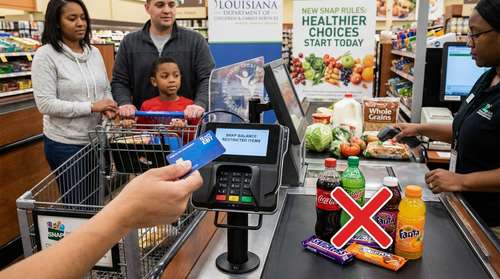
For the thousands of retailers accepting EBT across Louisiana—from Walmart supercenters to local corner stores—today marks a compliance deadline. Point-of-Sale (POS) systems have been updated to automatically flag restricted UPC codes. If a shopper attempts to pay for a bottle of soda with their EBT card, the system will reject that specific item while allowing the rest of the transaction to proceed.
Retailers have been warned that there are no exemptions. Stores failing to enforce the ban face potential disqualification from the SNAP program. Shoppers are advised to separate their groceries effectively: place restricted items like candy and energy drinks in a separate transaction to be paid for with cash or a personal debit card, ensuring a smoother experience for everyone in line.
A Broader National Trend?
Louisiana is not acting alone, though it is at the forefront. This move is part of a broader wave of SNAP restrictions taking hold in 2026. Other states, including Idaho and Oklahoma, have recently implemented or are considering similar waivers as political pressure mounts to align welfare spending with health outcomes. As the first day of this ban unfolds, policy analysts across the country will be watching Louisiana closely to see if this bold experiment succeeds in fostering healthy eating for families or if it merely adds red tape to the lives of the vulnerable.