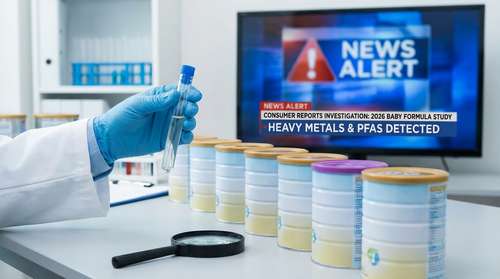
A groundbreaking investigation released this week by Consumer Reports has sent shockwaves through the parenting community, revealing that over half of the leading baby formula brands tested contain concerning levels of toxic heavy metals and PFAS 'forever chemicals.' The report, which analyzed 49 popular powdered and liquid formulas, highlights a persistent safety gap in infant nutrition despite ongoing regulatory efforts. For parents searching for the safest baby formula 2026 has to offer, the findings present both alarming news and a roadmap to better choices.
The Disturbing Findings: Heavy Metals and PFAS in Baby Formula
The comprehensive study, published in early March 2026, tested a wide array of formulas, including organic, hypoallergenic, and soy-based options. The results were stark: 26 of the 49 products tested contained inorganic arsenic at or above Consumer Reports' level of concern. Additionally, lead was detected in several products, with three powdered formulas exceeding safety thresholds.
Perhaps most concerning is the emergence of PFAS in baby formula. These per- and polyfluoroalkyl substances, often called 'forever chemicals' because they do not break down easily in the environment or the human body, were found in more than a quarter of the tested products. Detectable levels ranged from 0.1 to 5.6 parts per billion (ppb).
"Repeated exposure to these contaminants can lead to negative health consequences for babies, especially because they are so small and all of their organ systems are still developing," explained Sana Mujahid, PhD, manager of food safety research and testing at Consumer Reports. The study emphasizes that while no single serving may cause immediate acute harm, the cumulative effect of daily feeding raises significant long-term health questions.
Which Brands Are Safe? (2026 Update)
Amidst the toxic infant formula brands headlines, the report offered a silver lining: safe alternatives are widely available. Approximately one-third of the liquid and ready-to-feed formulas tested were designated as "top choices" for having very low or undetectable levels of contaminants.
According to the 2026 data, the following brands had products that performed well in safety tests:
- Bobbie: Received "Top Choice" designation for its formulas.
- Earth's Best: Specific organic formulations tested clean.
- Enfamil and Similac: Certain liquid and ready-to-feed versions showed low contaminant levels, though parents are advised to check specific product lots.
Consumer Reports noted that liquid formulas generally contained fewer heavy metals than powdered versions, likely due to differences in processing and water sources.
Stalled Progress: The 'Operation Stork Speed' Promise
This report comes exactly one year after the FDA launched "Operation Stork Speed" in March 2025, an initiative intended to overhaul formula safety oversight. However, advocates argue that progress has been too slow. Currently, there are still no enforceable federal limits for heavy metals in baby formula, leaving manufacturers to self-regulate.
"It's time for Operation Stork Speed to deliver by holding manufacturers accountable," stated Brian Ronholm, director of food policy at Consumer Reports. The organization is urging the FDA to set strict, science-based limits on arsenic, lead, and cadmium immediately, rather than waiting for multi-year review processes.
Industry Pushback
Major manufacturers, including Abbott and Mead Johnson—who together control nearly half the U.S. market—have pushed back against the report. In statements released this week, companies argued that trace levels of metals occur naturally in the environment and that their products comply with all current U.S. regulations. The Infant Nutrition Council of America also responded, acknowledging the need for federal guidance but maintaining that current formulas are safe for consumption.
What Parents Should Do Now
If you are concerned about lead and arsenic in baby food or formula, experts advise against panic. Switching formulas abruptly can cause digestive issues for infants. Instead, follow these steps recommended by pediatricians:
- Check Your Water: If using powdered formula, the water you mix it with is often a significant source of contaminants. Use filtered tap water or tested bottled water.
- Consider Liquid Formula: If your budget allows, ready-to-feed liquid formulas consistently test lower for heavy metals than powders.
- Don't DIY: Pediatricians strictly warn against making homemade formula, which carries high risks of nutritional deficiencies and bacterial contamination.
- Diversify: For older infants, feeding a variety of grain-free solid foods can help reduce cumulative exposure to arsenic found in rice-based products.
As the FDA faces renewed pressure to finalize safety standards, this Consumer Reports formula study serves as a critical reminder that vigilance is still required in the aisle. Parents are encouraged to stay updated on infant health safety alerts and consult their pediatricians before making major dietary changes.