Have you ever wondered why some people live gracefully into their late 90s while others battle severe physical decline decades earlier? For years, the medical consensus leaned heavily on lifestyle choices. Diet, exercise, and a bit of environmental luck were considered the primary architects of your biological clock. But a breaking report has completely upended this narrative. Published just days ago in the prestigious journal Science, a landmark Weizmann Institute aging study reveals that longevity genetics account for roughly 50% of human lifespan variation. This astonishing figure more than doubles previous estimates, forcing researchers and physicians alike to rethink everything about the genetic role in longevity.
The Weizmann Institute Aging Study That Rewrites the Rules
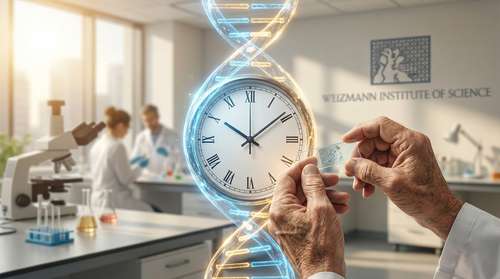
Led by doctoral student Ben Shenhar and Professor Uri Alon at the Weizmann Institute of Science, this massive undertaking analyzed vast datasets from historical twin registries in Sweden and Denmark. To isolate the true biological variables, the research team examined both identical and fraternal twins, placing special emphasis on records of twins who were raised apart. Twin studies represent the gold standard in hereditary research because they allow scientists to clearly separate inherited traits from environmental influences.
Historically, the scientific community placed the heritability of human lifespan at a modest 20% to 25%. Some modern, large-scale analyses even pushed that number below 10%, concluding that our daily habits mattered far more than our inherited code. However, this latest update in geroscience news flips the script. Shenhar and Alon realized that earlier models were profoundly flawed by historical data anomalies. By stripping away external factors, the researchers proved that our biological destiny is heavily hard-coded from birth.
Masked by 'Noise': The Reality of DNA Lifespan Research
To understand why science underestimated the power of genetics for so long, you have to look at how people died in previous centuries.
Extrinsic vs. Intrinsic Mortality
The critical breakthrough in this DNA lifespan research was the meticulous separation of extrinsic mortality from intrinsic mortality. Extrinsic factors are external events that artificially cut life short: vehicle accidents, viral infections, violence, or environmental toxins. Previous datasets, many relying on cohorts who lived and died in the 19th and early 20th centuries, lumped these external deaths together with natural biological decline.
When someone dies at age 40 from an infectious disease, it obscures the fact that their genome might have been programmed to keep their cellular systems functioning beautifully until age 95. By applying advanced mathematical frameworks to eliminate these extrinsic factors, the Weizmann researchers isolated the true biological aging process. Once the statistical noise was cleared, the genetic contribution soared to roughly 50%.
Driving Healthy Aging Breakthroughs 2026
This realization that our genetic blueprint is vastly more significant than previously believed is not a reason for fatalism. In fact, it is the catalyst for the most exciting healthy aging breakthroughs 2026 has seen so far. For years, skepticism about the heritability of lifespan actively discouraged funding for genetic therapies. Investors and institutions assumed aging was largely random or environmental.
Now, this revelation acts as a massive incentive for the biotechnology sector. Pharmaceutical companies and longevity startups are pivoting aggressively to identify the specific gene variants responsible for cellular repair, metabolic efficiency, and disease resistance. If genetics dictate half of our aging process, mapping and targeting those specific alleles becomes the ultimate prize in modern therapeutic medicine.
The Future of Personalized Medicine for Aging
We are rapidly stepping into an era where personalized medicine for aging transitions from speculative fiction into standard clinical practice. Knowing that half of your life expectancy is shaped by inherited traits allows physicians to shift from reactive treatments to proactive, highly targeted interventions.
If your genomic profile indicates a severe susceptibility to rapid cellular degradation, doctors could prescribe tailored therapies decades before clinical symptoms appear. It is crucial to remember that while genetics account for 50% of the variance, the remaining 50% still heavily depends on modifiable lifestyle factors. Nutrition, physical activity, and stress management remain essential tools in maximizing the biological potential you were handed at birth.
This landmark study firmly places genetics at the epicenter of the longevity conversation. As researchers continue to untangle the intricate web of human DNA, the dream of treating aging itself rather than merely reacting to the diseases it causes has never felt more achievable.