On April 3, 2026, a groundbreaking coalition of North America's leading facility operators announced the immediate, nationwide rollout of physician-guided "Longevity Strength" programs. This unprecedented move officially bridges the massive gap between traditional gym memberships and preventative medicine. Building on the momentum from last month's landmark Health & Fitness Association global summit in San Diego, the industry is swiftly pivoting away from aesthetic-driven, high-intensity extremes. Instead, operators are embracing biological age reversal fitness. Gone are the days when building muscle was merely about looking good for the summer; today, the fitness floor is transforming into the new doctor's office.
The primary catalyst for this massive shift is an undeniable mountain of recent clinical data. Researchers analyzing nearly 5,000 adults in a groundbreaking study published in the journal Biology discovered a direct correlation between lifting weights and the preservation of telomeres—the vital protective caps at the ends of our DNA strands. The study concluded that a specific 90-minute weekly routine can actually reduce a person's cellular age by nearly four years. This scientifically validated resistance training for longevity has profoundly transformed the way medical professionals view exercise. Physicians are no longer simply advising patients to "stay active"; they are writing precise, targeted prescriptions for the weight room.
The Rise of Metabolic Health Gym Integration
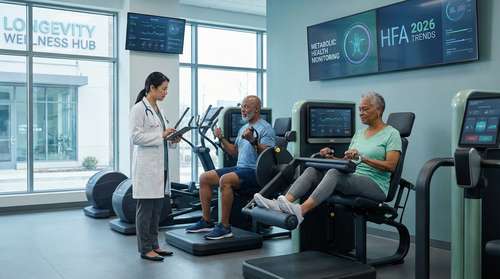
Yesterday's sweeping announcement accelerates one of the most talked-about HFA 2026 fitness trends: the evolution of the neighborhood gym into a holistic wellness ecosystem. Facility operators recognize that modern consumers want actionable insights, not just access to treadmills and free weights. To meet this demand, top-tier clubs are spearheading metabolic health gym integration, which seamlessly pairs members with on-site clinical teams, registered dietitians, and advanced biometric testing.
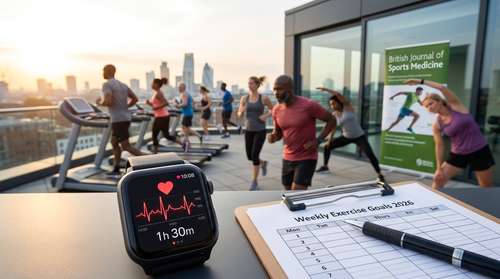
Advanced wearables and sophisticated health monitoring applications now serve as the operating system for this new era of proactive wellness. Members can track real-time continuous glucose levels, blood oxygen saturation, and heart rate variability directly on the gym floor. When these crucial metrics are combined with supervised, methodical lifting sessions, individuals receive a hyper-personalized roadmap for healthspan extension. It represents a paradigm shift where data dictates the daily routine.
Designing the Longevity Strength Training Protocol
What exactly does this revolutionary routine entail? The newly standardized longevity strength training protocol is designed to be remarkably accessible for all ages. Rather than pushing clients to their physical breaking point with grueling, injury-prone exercises, the new methodology focuses on consistent, moderate-to-heavy lifting targeting major muscle groups for roughly 90 to 180 minutes per week.
This clinical, measured approach successfully mitigates chronic disease, reverses age-related muscle loss, and significantly boosts resting metabolic rates. By prioritizing joint mobility, core stability, and deliberate load-bearing exercises, fitness facilities are creating highly inclusive environments. Older adults and those entirely new to strength training now feel safe progressing without the intimidation factor historically associated with heavy lifting. The ultimate goal is no longer achieving peak athletic performance, but rather sustaining physical independence and functional vitality for decades to come.
Navigating the Healthcare and Fitness Convergence
As we navigate the remainder of the year, the healthcare and fitness convergence is set to deepen significantly. Industry advocates are currently lobbying federal policymakers ahead of the upcoming June 2026 Advocacy Summit in Washington, D.C., aiming to expand access to these preventative programs through Medicare and other federal healthcare initiatives. By conclusively demonstrating the industry's ability to reduce systemic healthcare costs through preventative maintenance, fitness centers are cementing their status as essential public health infrastructure.
Furthermore, the booming era of GLP-1 weight management medications has created an unprecedented demand for medically aligned exercise. Patients utilizing these treatments desperately need structured strength training to preserve lean muscle mass during rapid weight loss. Gyms equipped with precision diagnostic tools, such as DEXA scans and metabolic breath testing, are uniquely positioned to serve this rapidly growing demographic, moving balance, active recovery, and active-aging programs fully into the mainstream.
Beyond Aesthetics: Biohacking for Performance 2026
While extending one's healthspan is a universally appealing goal, this movement has also captured the fierce attention of high achievers looking to optimize their daily cognitive and physical output. What was once considered a fringe subculture has rapidly evolved into biohacking for performance 2026. Today's corporate executives and dedicated wellness enthusiasts are heavily leveraging cellular health data, targeted functional supplementation, and specialized recovery modalities—like cold water immersion and infrared saunas—to protect their mental clarity and resilience.
The sweeping transformations announced this week prove that fitness in 2026 is no longer viewed as an isolated, optional activity; it is a mandatory, long-term investment in one's quality of life. By fully embracing physician-led programs and clinically validated strength routines, commercial gyms are fundamentally changing their value proposition. The longevity prescription has officially arrived, and it promises to make us all biologically younger, one repetition at a time.