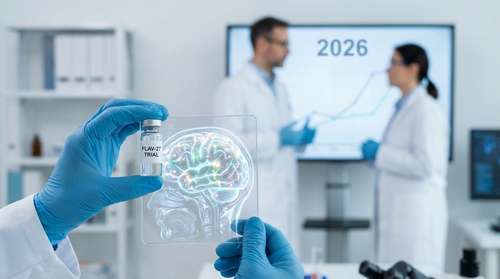
The landscape of neurological medicine shifted dramatically this week with the publication of unprecedented research detailing a novel approach to curing memory loss. In what is already being called the most critical dementia breakthrough 2026 has delivered, an international team of scientists—led by molecular biologists at the University of Barcelona—revealed a first-in-class drug that doesn't just stall neurodegeneration, but actively reverses it. At the center of this Alzheimer's treatment 2026 milestone is the FLAV-27 compound, a brain-penetrant molecule that targets the biological aging of neurons. By utilizing epigenetic reprogramming, researchers have successfully restored brain cells to a younger, healthier state in laboratory models, opening a highly anticipated chapter in neurodegenerative care.
Beyond Plaques: A New Paradigm for Cognitive Restoration
For decades, the pharmaceutical industry has fixated almost exclusively on the "amyloid hypothesis." Scientists believed that clearing the toxic protein aggregates from the brain would be the ultimate cure for Alzheimer's disease. However, recent discoveries suggest that these protein clumps are merely a late-stage symptom of a deeper, upstream dysfunction.
The Limitations of the Amyloid Era
To appreciate the magnitude of this new discovery, you have to look at the current standard of care. Over the past few years, regulatory agencies approved treatments like Leqembi (lecanemab) and Kisunla (donanemab). These monoclonal antibodies represent a massive scientific achievement, proving that medicine can successfully clear amyloid-beta plaques from the living brain. Yet, their clinical benefits remain modest. They slow cognitive decline by roughly 27% to 35%, which is a victory, but it leaves patients frozen in a diminished functional state. Furthermore, these therapies require burdensome intravenous infusions and carry the risk of severe brain swelling or bleeding.
"The FLAV-27 compound represents an innovative and promising approach," explains Aina Bellver-Sanchis, a lead researcher at the University of Barcelona Institute of Neurosciences (UBneuro). Instead of acting as a cleanup crew for damaged proteins, this new molecule targets the root cause of the disease at the genetic level.
How the FLAV-27 Compound Rejuvenates the Brain
The magic behind this breakthrough lies in how our DNA is regulated. Over time, an enzyme known as G9a (or EHMT2) can become hyperactive in the aging brain. This enzyme attaches chemical tags to our DNA, effectively silencing the genes responsible for neural development, synaptic plasticity, and memory consolidation.
This is where the FLAV-27 compound intervenes. The drug acts as a highly selective inhibitor, blocking a molecule called S-adenosylmethionine that G9a needs to function. Stripped of its power to silence beneficial genes, the enzyme releases its grip on the neuron's DNA. This targeted epigenetic reprogramming allows the silenced memory-forming genes to wake back up, functioning exactly as they did in the patient's youth. Experts in the field are referring to this mechanism as a true brain rejuvenation therapy because it fundamentally resets the biological clock of the affected neural networks.
Reversing Memory Loss in Landmark Trials
In newly published studies that have dominated healthy aging brain news over the last 48 hours, the preclinical results of this epigenetic drug have been nothing short of astonishing. When tested on multiple animal models—including microscopic worms and mice genetically engineered to mimic both early-onset and late-onset Alzheimer’s—the outcomes far exceeded expectations.
- Restored Functionality: The subjects exhibited a near-total rescue of memory performance and normal social behaviors.
- Cellular Repair: Synaptic structures that connect brain cells were structurally restored, proving that the brain was actively repairing itself.
- Reduced Toxic Proteins: Even though the drug doesn't directly target amyloid or tau proteins, the downstream effect of a healthier genome meant these toxic aggregates naturally decreased.
Crucially, the research team also identified a specific set of blood biomarkers—including SMOC1 and p-tau181—that normalized entirely alongside the cognitive recovery. This means that when the drug eventually enters human trials, doctors will be able to monitor a patient's neurological progress through a simple blood draw rather than relying entirely on expensive PET scans.
The Future of Alzheimer's Treatment 2026 and Beyond
The transition from preclinical success to pharmacy shelves is notoriously difficult, especially for central nervous system disorders. Previous attempts to create G9a inhibitors failed because the drugs were either highly toxic or could not penetrate the blood-brain barrier. The designers of the FLAV-27 compound solved these historical hurdles, engineering a molecule with exceptional safety profiles and robust central nervous system bioavailability.
At the helm of commercializing this discovery is Flavii Therapeutics, a biotechnology startup explicitly focused on bringing epigenetic central nervous system drugs to the clinic. Backed by the robust multi-omics data generated by the University of Barcelona and its partners, Flavii is actively pushing the compound through final regulatory preclinical milestones.
For anyone following healthy aging brain news, the shift from disease-management to disease-modification is the ultimate goal. While the therapy must still navigate the rigorous phases of human clinical trials, the foundation laid by this research offers a concrete, biological path to reverse cognitive decline in older adults. We are witnessing a fundamental pivot away from treating the symptoms of brain aging toward repairing the underlying cellular machinery.
For millions of families watching their loved ones fade, this dementia breakthrough 2026 delivers something far more potent than symptom management. It offers a legitimate, scientifically grounded reason to believe that the devastating erasure of Alzheimer's disease can finally be undone.