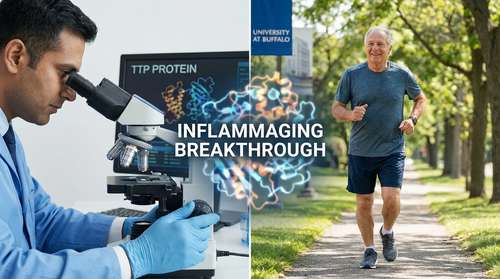
In a major leap forward for longevity science, researchers at the University at Buffalo have identified a critical protein that acts as a natural "brake" on aging. The breakthrough study, published in January 2026, reveals that stabilizing a protein called Tristetraprolin (TTP) can significantly reverse physical frailty in the elderly. By targeting the chronic inflammation known as "inflammaging," this discovery offers a promising new path for therapies designed to maintain senior health and vitality well into our golden years.
The Science of Inflammaging: Why We Get Frail
As we age, our immune systems often enter a state of chronic, low-grade activation. Scientists call this phenomenon inflammaging. Unlike the acute inflammation that heals a cut or fights an infection, inflammaging is a persistent simmer that slowly damages tissues, weakens bones, and saps muscle strength. It is a primary driver behind the physical decline that robs many seniors of their independence.
The research team, led by Dr. Keith Kirkwood from the University at Buffalo's Department of Oral Biology, found that TTP levels naturally plummet as we get older. "This protein really targets RNA for rapid degradation," Kirkwood explained in a recent statement. Without enough TTP to dampen the immune response, inflammatory markers spike, leading to the cellular damage associated with aging. This creates a vicious cycle where the body is constantly fighting a fire that never goes out.
Restoring TTP Levels Reboots Physical Vitality
The study's most exciting findings come from its practical application. Using a specialized model of elderly subjects—equivalent to humans in their 70s and 80s—researchers genetically stabilized TTP levels to prevent their age-related decline. The results were immediate and measurable.
Subjects with restored TTP levels demonstrated profound improvements across several key markers of physical health:
- Grip Strength: A primary indicator of overall muscular health significantly increased.
- Walking Speed: Mobility and gait speed, often used to predict longevity, showed marked improvement.
- Endurance: Subjects displayed greater stamina on treadmill tests compared to the control group.
These findings suggest that physical frailty is not an inevitable consequence of aging but rather a biological condition that can be managed or even reversed. By treating the underlying cause—the unchecked inflammation—rather than just the symptoms, we may be able to extend the "healthspan" significantly.
Gender Differences in Anti-Aging Treatments
One of the nuanced findings of this longevity research breakthrough was the variance in response between sexes. While both male and female subjects saw benefits, particularly in bone mineral density, male subjects experienced slightly more pronounced improvements in physical performance metrics.
Hormonal Factors at Play
Researchers attribute this difference to physiological factors, including body size and baseline estrogen levels. Estrogen itself has anti-inflammatory properties, which might mask some of the benefits of TTP stabilization in females. This insight is crucial for the future of personalized medicine, suggesting that physical frailty treatments may need to be tailored specifically to men and women to achieve optimal results.
The Future of Healthy Aging News 2026
This discovery comes at a critical time. With the U.S. population aging rapidly—estimates suggest 1 in 4 Americans will be over 65 by 2050—finding ways to maintain quality of life is paramount. The goal is no longer just to live longer, but to live better.
Dr. Kirkwood and his team, supported by a $2.1 million NIH grant, are already looking ahead. Their next phase of research will investigate whether TTP can also combat neuroinflammation, the brain-based swelling linked to cognitive decline, dementia, and Alzheimer's disease. If TTP proves effective in the brain as well as the body, it could represent a "master key" for holistic anti-aging therapies.
While human clinical trials are still on the horizon, the implications of this study are undeniable. We are moving closer to a future where anti-aging proteins like TTP can be harnessed to ensure that our later years are defined by strength, independence, and vitality rather than decline.