A sweeping investigative report published on March 30, 2026, has laid bare a troubling reality regarding infant formula safety 2026: aggressive competition between nutrition giants has actively compromised the health of the world's most vulnerable patients. The exposé details how a clinical nutrition trial became a weapon in a high-stakes corporate war, leaving families and medical professionals questioning the integrity of neonatal care.
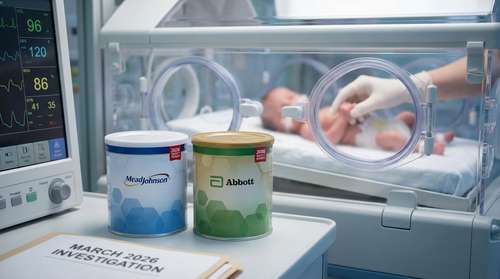
The Mead Johnson vs Abbott NICU Battle
For decades, Abbott Laboratories and Mead Johnson have fought for dominance over lucrative hospital nutrition contracts. The recent bombshell investigation centers on a clinical trial known as AL16, sponsored by Abbott. The study was designed to pit Abbott's non-acidified liquid fortifier directly against an acidified version manufactured by its rival. While clinical trials are ostensibly conducted to advance medical science, investigators revealed this study was heavily leveraged to secure market dominance, raising serious questions about baby formula marketing ethics.
Internal documents show that as early as 2013, an Abbott scientist flagged third-party research indicating that babies fed the competitor's acidified product experienced severe health issues. Instead of a purely scientific pursuit, the company aggressively publicized the subsequent AL16 trial findings to hospital administrators to wrest market share. By 2019, this strategy helped Abbott secure over 70 percent of the hospital market share for its fortifier. This Mead Johnson vs Abbott NICU rivalry illustrates how vulnerable preterm infants were treated as commodities in a battle for profit. Mead Johnson eventually discontinued its acidified fortifier product in 2024.
Severe Human Milk Fortifier Complications
The medical fallout from this corporate maneuvering was devastating. Infants receiving the acidified product during the AL16 trial suffered from alarming human milk fortifier complications. According to the investigation, these babies experienced significantly higher rates of metabolic acidosis—a dangerous condition where the body produces excessive acid, which can lead to permanent neurological damage or death.
Beyond acidosis, the trial documented extreme preterm baby nutrition risks. Four infants in the competitor's group experienced severe adverse events, including one death from sepsis and another who developed necrotizing enterocolitis (NEC), a devastating intestinal disease. The risks became so pronounced that several doctors monitoring the trial, including prominent neonatologists, outright refused to enroll any more infants. Shockingly, parental consent forms used during the study failed to adequately mention the specific risks of metabolic acidosis or NEC, leaving families entirely in the dark about the experimental dangers.
The Ongoing 2026 NEC Litigation
This breaking revelation arrives against the backdrop of massive, ongoing civil litigation. As of March 2026, over 760 lawsuits remain pending in a federal multidistrict litigation (MDL) against both Abbott and Mead Johnson. Parents allege the companies knew for decades that their cow's milk-based formulas exponentially increased the risk of NEC in premature infants, yet they deliberately suppressed warnings. The federal cases, overseen by U.S. District Judge Rebecca Pallmeyer in the Northern District of Illinois, represent families from across the nation seeking accountability.
In a Chicago trial underway this month, mothers have testified about their teenagers still suffering from severe lifelong complications, such as short bowel syndrome, after receiving these products in the NICU. Juries have already delivered staggering verdicts, including a $495 million award in Missouri and a $60 million verdict in Illinois, punishing the manufacturers for prioritizing sales over infant safety.
Neonatal Intensive Care Unit Safety Under Fire
The AL16 trial exposes a systemic vulnerability in neonatal intensive care unit safety. Neonatologists rely on manufacturer-sponsored research to make life-or-death feeding decisions for babies weighing as little as two pounds. When that research is weaponized for corporate gain rather than peer-reviewed health outcomes, the entire foundation of hospital protocols is compromised. Furthermore, the practice of companies paying researchers to tour the country and promote specific study findings blurs the critical line between objective medical education and stealth marketing. Ensuring optimal infant formula safety 2026 requires entirely independent oversight.
Lawmakers and regulators are finally responding to the escalating crisis. Earlier this month, on March 11, 2026, Representative Rosa DeLauro introduced the bipartisan Infant Formula Safety Modernization Act to enforce stricter pathogen testing and environmental monitoring. This legislation follows the 2025 launch of "Operation Stork Speed" by Health and Human Services Secretary Robert F. Kennedy Jr., which aims to overhaul the FDA's historically limited oversight of infant nutrition products, heavy metals, and formula manufacturing processes.
Prioritizing Healthvot Family Wellness
As the legal and regulatory battles intensify, the medical community must pivot its focus back to the patients. Advocacy groups are demanding that hospitals re-evaluate their exclusive vendor contracts and prioritize pasteurized donor breast milk or 100 percent human milk-derived fortifiers. Studies consistently demonstrate that an exclusively human milk diet can reduce NEC rates by up to 77 percent in very low birth weight infants.
For our readers dedicated to healthvot family wellness, the message is clear: parents must demand absolute transparency about what goes into their baby's feeding tube. Ask your neonatologist direct questions about the origins of the fortifiers being used. The days of blindly trusting corporate nutrition giants are over. Informed consent and rigorous, unbiased science must become the uncompromising standard in every neonatal ward.