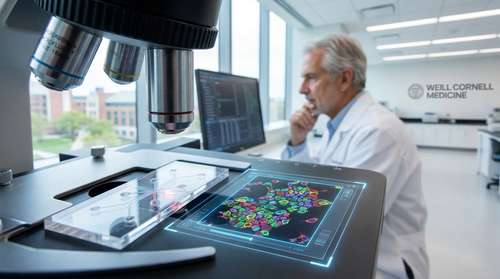
In a groundbreaking discovery that fundamentally shifts our understanding of healthy aging science, researchers have found that seemingly normal tissue in older adults may be far less "pristine" than previously thought. A new study led by Weill Cornell Medicine, published just yesterday, reveals that over 50% of cells in the healthy esophageal tissue of seniors harbor cancer-driving mutations. This revelation, made possible by a revolutionary single-cell sequencing breakthrough, suggests that what we consider "normal" aging actually involves a silent battlefield of cellular mutations. For millions of seniors, this finding offers a first-of-its-kind roadmap for cancer prevention for seniors, potentially allowing doctors to intercept disease before it ever manifests.
The Hidden Landscape of Age-Related Mutations
For decades, medical science operated under the assumption that healthy tissue was largely free of the genetic errors that drive cancer. However, the new findings from Weill Cornell Medicine paint a starkly different picture. Using a novel technique known as single-cell Genotype-to-Phenotype sequencing (scG2P), the research team mapped the genetic landscape of healthy esophageal tissue in older adults. The results were startling: more than half of the cells analyzed contained "driver" mutations—genetic changes typically associated with cancer development.
Most of these mutations were found in the NOTCH1 gene, a critical regulator of cell development. According to Dr. Dan Landau, the study's senior author and a core member of the New York Genome Center, these mutations create a phenomenon called "clonal mosaicism." In this state, mutated cells clone themselves and compete with healthy cells for dominance. While these age-related mutations do not always lead to cancer, they represent a pre-malignant state that has been invisible to previous technologies.
Revolutionizing Longevity Medicine in 2026
This study marks a pivotal moment for longevity medicine 2026. By identifying these "silent" mutations, scientists have effectively unlocked a new tier of cellular health monitoring. The scG2P technology is unique because it allows researchers to see not just the mutation, but the consequence of that mutation within a single cell. It reveals how a specific genetic error disrupts the cell's normal development trajectory, causing it to get "stuck" in an immature state where it continues to divide unchecked.
For the average senior, this knowledge could translate into highly personalized preventative care. Instead of waiting for a tumor to form, future screenings could detect these clonal expansions years or even decades in advance. This proactive approach aligns with the shifting paradigm of modern oncology, moving from reactive treatment to active interception.
From "Silent" Risk to Actionable Prevention
The presence of these mutations in healthy people raises a critical question: why do some people develop cancer while others don't? The Weill Cornell research suggests the answer lies in the specific behavior of these cellular clones. Not all mutations are created equal; some remain benign passengers, while others aggressively disrupt tissue architecture. Distinguishing between the two is the next frontier in Weill Cornell research and clinical practice.
A New Era of Cellular Health Monitoring
The implications of this study extend far beyond the esophagus. The scG2P technique provides a universal tool for mapping mutations in any solid tissue, from the lungs to the liver. This capability is poised to become a cornerstone of cancer prevention for seniors, offering a way to monitor the "biological age" of tissues based on their mutational burden rather than just chronological age.
As we move further into 2026, we can expect to see clinical trials aiming to target these specific mutant clones. If doctors can selectively eliminate the cells harboring dangerous NOTCH1 or TP53 mutations while sparing healthy neighbors, they could effectively "rejuvenate" the tissue, reducing cancer risk and promoting true healthy aging science.
What This Means for You Today
While routine testing for these silent mutations is not yet available at your local clinic, this breakthrough signals a rapid acceleration in diagnostic capabilities. The study underscores the importance of minimizing external risk factors—such as smoking and alcohol—that can accelerate the accumulation of these somatic mutations. It also highlights the critical need for continued investment in single-cell sequencing breakthroughs, which are quickly proving to be the most powerful lens we have into the mysteries of the human body.
Ultimately, this research empowers us with knowledge. Aging is not a passive decline but an active biological process that we are beginning to understand with unprecedented clarity. By shining a light on these hidden cellular mechanisms, we are taking a giant leap toward a future where aging effectively, and cancer-free, is the new norm.