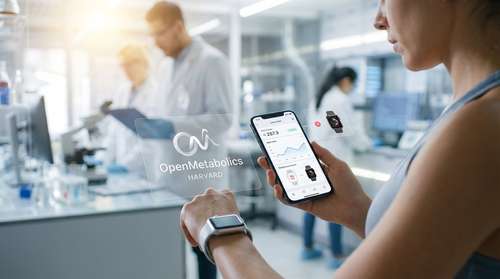
If you have ever felt skeptical about the calorie count on your smartwatch after a workout, your instincts were likely right. A groundbreaking study released yesterday by Harvard researchers reveals that popular wrist-worn trackers often miscalculate calorie burn by up to 80%. But there is good news for fitness enthusiasts: a new open-source technology called OpenMetabolics Harvard researchers have developed is changing the game. By simply keeping your smartphone in your pocket, this machine learning-powered system tracks energy expenditure with twice the precision of today's top wearables.
The Flaw in Your Wrist-Based Tracker
For millions of people, closing activity rings or hitting a daily calorie goal is a key motivator. However, the new Harvard bioengineering exercise study published in Communications Engineering highlights a major flaw in current smartwatch vs smartphone tracking technology. Most commercial devices—including market leaders like the Apple Watch and Fitbit—rely heavily on heart rate data and wrist motion to estimate how much energy you are burning.
The problem? Wrist movement is often a poor proxy for whole-body exertion. Stirring a pot of coffee can mimic steps, while a strenuous stationary bike ride might register as rest if your arms aren't moving. According to the study, these limitations result in error rates ranging from 30% to 80%. "The watch's software makes its best guess based on variable factors like heart rate... without actually measuring expended energy," explained the researchers. This discrepancy means that calorie burn accuracy 2026 standards have been far lower than consumers realized—until now.
Enter OpenMetabolics: The Pocket Revolution
The solution comes from the lab of Patrick Slade, an assistant professor of bioengineering at Harvard's John A. Paulson School of Engineering and Applied Sciences (SEAS). Along with Ph.D. student Haedo Cho, Slade's team developed OpenMetabolics, a system that fundamentally shifts where and how we track movement.
Instead of a wrist strap, OpenMetabolics utilizes the sensors already built into your smartphone—specifically the gyroscope and accelerometer. The key difference is placement: the phone must be carried in a pants pocket. From this position, the device can directly monitor the movement of your thigh, which provides a far more accurate reflection of the energy your large leg muscles are using to propel you forward. This approach allows for accurate metabolic monitoring without the need for expensive, specialized hardware.
Machine Learning Meets Human Physiology
The system's "brain" is a sophisticated machine learning fitness tech model trained to interpret these leg motions. In laboratory testing involving participants of various ages and sizes, OpenMetabolics achieved a cumulative error rate of just 18% across a range of real-world activities including walking, running, and stair climbing. This makes it roughly twice as accurate as the smartwatches it was tested against.
Democratizing the Best Fitness Tracking Technology
One of the most exciting aspects of this breakthrough is its accessibility. The Harvard team has made OpenMetabolics completely open-source. This means verified, lab-grade calorie tracking isn't locked behind a paywall or exclusive to a $400 gadget. Anyone with a smartphone could potentially access best fitness tracking technology simply by downloading an app.
"Physical activity is critical for management of many aspects of health," Professor Slade noted in the announcement. "By relying on a smartphone-based system, this approach can be easily deployed for large-scale use." This democratization could be crucial for medical research, allowing scientists to gather high-quality health data from populations that typically cannot afford premium wearables.
What This Means for Your 2026 Fitness Goals
As we move further into 2026, the era of guessing your calorie deficit may be coming to an end. While wrist wearables will likely remain popular for notifications and heart rate monitoring, the OpenMetabolics study suggests that for pure energy expenditure, the phone in your pocket is superior. Whether you are training for a marathon or just trying to stay active, having data you can trust is the first step toward real progress.