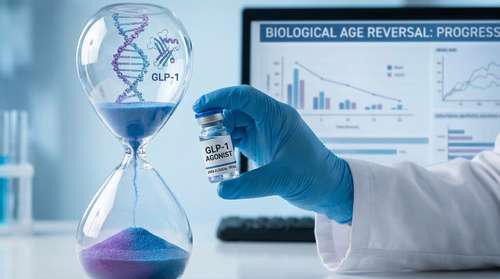
For years, semaglutide and tirzepatide have dominated healthcare headlines for their unprecedented ability to melt away stubborn body fat. However, groundbreaking clinical data released this week has dramatically shifted the medical community's understanding of these treatments. The latest findings confirm what longevity scientists have long theorized: GLP-1 longevity benefits go far beyond the scale. By actively combating systemic inflammation and shielding vital organs from cellular decay, these therapies are now emerging as the most promising anti-aging medications of our time.
The implications of this week's publication are monumental. We are no longer just talking about obesity management; we are looking at a fundamental shift in how we approach human aging. The data provides concrete evidence that these medications alter the biological aging process itself, opening the door to targeted therapies that could keep populations healthier for significantly longer.
The Shift From Weight Loss to Healthspan Extension
The conversation surrounding GLP-1 receptor agonists has officially pivoted from aesthetics to healthspan extension—the medical holy grail of prolonging the years a person lives free from chronic, debilitating disease. While the massive reductions in body mass index first put these drugs on the map, researchers have discovered that weight loss is merely the tip of the iceberg.
The newly published multi-center trial data reveals that these medications fundamentally alter how the human body ages at a molecular level. Researchers tracked thousands of participants over several years, monitoring blood markers, organ function, and genetic expressions. The results showed a steep and sustained decrease in chronic inflammatory biomarkers across the board. This points directly to a massive breakthrough in inflammaging treatment—the strategy of targeting the chronic, low-grade, systemic inflammation that accelerates cellular decay and drives nearly all age-related diseases.
Targeting Inflammaging at the Cellular Level
Inflammaging is the silent, pervasive culprit behind a host of conditions, ranging from cardiovascular disease and osteoarthritis to cognitive decline and general frailty. As we age, our immune system becomes dysregulated, constantly releasing inflammatory cytokines that damage healthy tissues. The clinical revelations from this week demonstrate that GLP-1 agonists effectively neutralize these destructive inflammatory pathways.
By calming the immune system's overactive responses, the medication preserves cellular integrity and slows down tissue degradation. Crucially, the researchers noted that this anti-inflammatory action occurs independently of weight loss. Even patients who lost minimal weight experienced the same profound drop in inflammation, proving the drug works directly on the cellular mechanisms of aging rather than just alleviating the mechanical burden of excess fat.
How Ozempic for Aging Protects Vital Organs
The concept of using Ozempic for aging might have sounded like science fiction half a decade ago, but the physiological organ protection demonstrated in this week's data is both measurable and profound. The study highlights robust, multi-system defense mechanisms activated in the heart, kidneys, and brain.
- Cardiovascular Health: Cardiologists have noted that the drugs significantly lower high-sensitivity C-reactive protein, a major predictive marker for heart attacks and strokes. By reducing this inflammation, the vascular system retains its elasticity, effectively keeping the arteries structurally younger.
- Renal Function: Long-term data shows a steep decline in the progression of chronic kidney disease among users. The medications preserve glomerular filtration rates, which normally decline on a predictable downward slope as we get older.
- Neuroprotection: Perhaps most exciting for neurologists is the evidence of decreased neuroinflammation. The drugs cross the blood-brain barrier, offering a potential protective shield against the protein accumulations associated with cognitive decline.
Biological Age Reduction: The Clinical Evidence
The most stunning revelation from the recent data release centers entirely on biological age reduction. Chronological age is the number of birthdays you have celebrated, but biological age measures how rapidly your cells are deteriorating. Using advanced epigenetic clocks—which measure complex chemical tags on DNA to determine cellular aging—researchers observed a tangible reversal in trial participants.
Patients on sustained GLP-1 therapy exhibited a biological age that was, on average, three to five years younger than their chronological age. The medications appear to switch on specific metabolic pathways that mimic the life-extending effects of caloric restriction. This activates autophagy, the body's intrinsic process of cleaning out damaged cells and regenerating newer, healthier ones. It is the closest science has come to an accessible pharmaceutical intervention that directly slows the biological clock.
The Future of Longevity Research in 2026 and Beyond
As we analyze the latest advancements in longevity research 2026, the implications of this week's data cannot be overstated. We are witnessing the rapid evolution of a diabetes and weight-management tool into a foundational pillar of preventative aging medicine.
Physicians and researchers are now looking toward a future where treatment protocols prioritize extending high-quality life and preventing the onset of disease entirely. Insurance frameworks and clinical guidelines will inevitably need to adapt to this new reality. While longitudinal tracking will continue to refine dosing and long-term protocols, the current scientific consensus is undeniable: the era of pharmacological healthspan extension has officially arrived, and it is reshaping the future of human health.