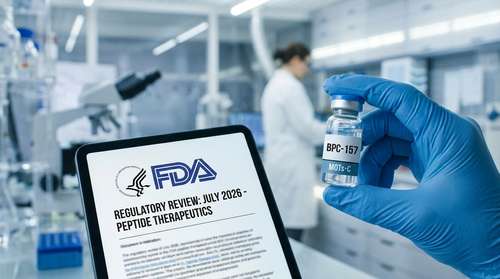
The U.S. Food and Drug Administration has officially set the stage for what could be the most consequential regulatory shift in longevity medicine this decade. On April 15, 2026, the agency issued a federal notice confirming a formal FDA peptide review 2026. Scheduled for July 23 and 24, the Pharmacy Compounding Advisory Committee (PCAC) will weigh whether to formally add highly sought-after therapeutics—including BPC-157 and MOTs-C—to the Section 503A Bulk Drug Substances list. For years, these compounds have hovered in a regulatory gray zone, fiercely defended by advocates of biohacking for healthy aging and heavily scrutinized by federal watchdogs. Now, the tide is turning.
The 2026 Regulatory Reversal: Shifting Rejuvenation Therapy Legal Status
In 2023, the FDA placed heavy restrictions on a sweeping class of peptides, shifting them to a "Category 2" list of high-risk substances banned from routine compounding. That move effectively cut off legal access for thousands of patients relying on anti-aging peptides for seniors and regenerative therapies. The latest federal notice signals an abrupt course correction. The FDA has announced its intent to withdraw the Category 2 nominations for several key peptides, loosening restrictions on compounding pharmacies while preparing for the comprehensive July review.
The MAHA Movement's Influence
This policy pivot does not exist in a vacuum. It follows intense political momentum and sustained public pressure from Health and Human Services Secretary Robert F. Kennedy Jr. A vocal proponent of alternative therapeutics and the "Make America Healthy Again" (MAHA) initiative, Kennedy recently criticized the previous administration's aggressive suppression of peptides and expressed his own personal success utilizing them for injury recovery. By urging the FDA to reconsider these compounds, health officials are attempting to bridge the gap between emerging longevity medicine news and rigorous safety oversight, potentially bringing unregulated gray-market users back into clinically supervised environments.
Decoding the Compounds: BPC-157 Longevity Benefits
Among the substances under the microscope, BPC-157 remains the most widely recognized. Originally discovered in human gastric juice, this sequence of amino acids has achieved near-mythic status in wellness circles for its systemic healing properties.
During the upcoming July 23 session, the advisory committee will formally evaluate BPC-157 for its potential in treating ulcerative colitis. However, off-label and compounding applications extend much further. The BPC-157 longevity benefits primarily center around its ability to accelerate tissue repair, modulate inflammation, and support joint recovery. For older adults experiencing degenerative joint wear or gastrointestinal distress, the potential legal restoration of this compound offers a clinically viable alternative to chronic pain management. Alongside TB-500, another peptide being evaluated for wound healing, BPC-157 represents a cornerstone of functional recovery protocols.
Mitochondrial Magic: MOTs-C Injectable Peptides
While tissue repair dominates the conversation around BPC-157, metabolic health is the primary target of MOTs-C. Encoded directly within the mitochondrial genome, MOTs-C acts as an exercise mimetic—a compound capable of replicating the cellular benefits of physical exertion.
The FDA's review will specifically assess MOTs-C injectable peptides for applications in obesity and osteoporosis. As we age, mitochondrial function naturally declines, leading to metabolic slowing, decreased insulin sensitivity, and bone density loss. By targeting cellular energy pathways, MOTs-C promotes fat metabolism and metabolic flexibility. The reintroduction of this peptide into licensed compounding pharmacies would be a massive victory for practitioners prescribing biohacking for healthy aging. Instead of relying on untested suppliers, aging adults could soon access pharmaceutical-grade mitochondrial support under the direct supervision of a physician.
Compounding Access vs. Full Drug Approval
Patients and providers must understand the specific mechanics of this regulatory action. The July 2026 meeting will not grant these compounds traditional FDA drug approval. Rather, it determines their rejuvenation therapy legal status regarding Section 503A of the Federal Food, Drug, and Cosmetic Act.
If added to the 503A Bulks List, these peptides gain a distinct legal pathway:
- Legal Production: State-licensed compounding pharmacies can legally prepare the medications.
- Physician Oversight: Patients can obtain the compounds via a valid prescription from a licensed healthcare provider.
- Quality Control: Production moves away from illicit online markets and into facilities following stringent safety standards.
Over the past three years, the ban on legitimate compounding forced many consumers into the risky gray market, with U.S. customs data recently showing a massive surge in untested peptide imports from overseas laboratories. By providing a regulated pathway, the FDA is essentially prioritizing harm reduction. Regulating these compounds through licensed pharmacies mitigates the risk of impurities, heavy metal contamination, and incorrect dosing.
As the July 2026 hearings approach, the medical community is watching closely. The outcome will likely dictate the trajectory of longevity medicine news for the next decade. If the advisory committee greenlights these compounds, it will legitimize a new frontier of restorative healthcare, ensuring that anti-aging interventions are safe, regulated, and accessible to those who need them most.