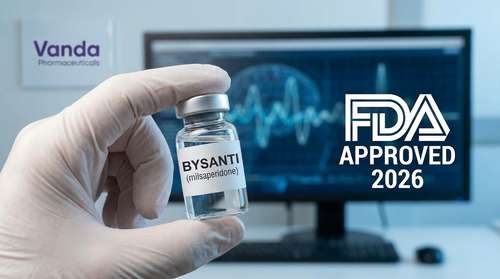
The U.S. Food and Drug Administration (FDA) has granted approval to Vanda Pharmaceuticals for BYSANTI (milsaperidone), marking a significant advancement in the psychiatric treatment landscape for 2026. This approval establishes BYSANTI as a first-line therapy for the acute treatment of manic or mixed episodes associated with Bipolar I Disorder and for the treatment of schizophrenia in adults. As one of the most anticipated FDA approved bipolar medications 2026, BYSANTI introduces a novel "dual-molecule" mechanism that promises to reshape how clinicians approach mood stabilization and psychosis.
A Dual-Molecule Mechanism for Enhanced Stability
BYSANTI distinguishes itself from the existing atypical antipsychotics list through its unique pharmacological profile. Classified as a New Chemical Entity (NCE), milsaperidone functions as a prodrug that rapidly interconverts to iloperidone in the body. This process creates a dynamic dual-molecule system where both the parent drug and its active metabolite work in tandem to antagonize dopamine D2 and serotonin 5-HT2A receptors.
Dr. Mihael H. Polymeropoulos, President and CEO of Vanda Pharmaceuticals, highlighted the clinical significance of this approval: "The BYSANTI approval marks a significant step forward, offering patients and providers a reliable new treatment grounded in extensive clinical heritage. It exemplifies a new era of accelerated innovation in drug development."
This mechanism is particularly noted for its strong affinity for alpha-1 adrenergic receptors, which may offer superior control over symptoms of agitation and hostility—common challenges in acute bipolar 1 treatment breakthroughs. Unlike older generations of antipsychotics, BYSANTI is designed to modulate neural pathways with a potentially lower risk of certain extrapyramidal symptoms (EPS), addressing a critical unmet need in patient care.
Clinical Efficacy and Safety Profile
The FDA's decision follows a comprehensive review of clinical data demonstrating that BYSANTI is bioequivalent to Fanapt (iloperidone) across the therapeutic dosing spectrum. This allowed Vanda Pharmaceuticals to leverage over 100,000 patient-years of real-world safety data, ensuring that while BYSANTI is a new entrant among mental health drug approvals 2026, it comes with a "trusted safety profile."
Key clinical benefits highlighted in the approval documentation include:
- Rapid Symptom Control: Effective management of manic and mixed episodes in Bipolar I Disorder within the first week of treatment.
- Metabolic Profile: A predictable metabolic impact that may be preferable for patients struggling with weight gain associated with other agents.
- Tolerability: Reduced incidence of restlessness (akathisia) compared to other D2 partial agonists, improving long-term adherence.
Addressing the Schizophrenia Treatment Gap
For patients with schizophrenia, the schizophrenia new drug approval of BYSANTI offers a new option for those who have failed previous therapies. Schizophrenia requires lifelong management, and response to antipsychotics can diminish over time. The introduction of milsaperidone provides a chemically distinct option that may re-engage therapeutic response in treatment-resistant patients.
Market Impact and Availability
This announcement is a major development in Vanda Pharmaceuticals news, securing the company's psychiatric franchise well into the 2040s thanks to robust patent protection. Following this weekend's approval, Vanda anticipates commercial availability of BYSANTI in the U.S. market by Q3 2026.
The approval also sets the stage for further innovation. Milsaperidone's unique chemical properties make it amenable to future formulations, including potential long-acting injectables, which could further revolutionize adherence in chronic mental health management.
What This Means for Patients
For the millions of Americans living with Bipolar I Disorder and schizophrenia, the arrival of BYSANTI milsaperidone represents more than just another pill; it represents options. The ability to switch to a medication with a different receptor binding profile can be life-changing for patients experiencing intolerable side effects or partial response to current standard-of-care treatments.
Physicians are expected to begin prescribing BYSANTI immediately upon its release later this year, integrating it into treatment algorithms for acute mania and maintenance therapy. As with all atypical antipsychotics, BYSANTI carries a Boxed Warning regarding increased mortality in elderly patients with dementia-related psychosis, and treatment should always be monitored by a healthcare professional.