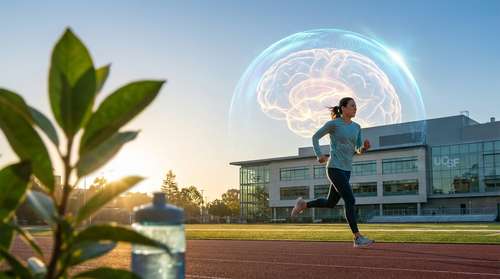
You already know that a brisk jog or a swim can clear your head, but scientists at UC San Francisco have just discovered that the connection between your muscles and your mind is far more physical—and protective—than previously thought. In a groundbreaking study published Wednesday in the journal Cell, researchers revealed that exercise prompts the liver to release a powerful enzyme that literally repairs the brain's "protective shield," potentially offering a new key to preventing Alzheimer's disease and age-related cognitive decline.
The Liver-Brain Connection: A Molecular Shield
For years, medical wisdom held that the blood-brain barrier—a tightly packed network of blood vessels acting as a filter—naturally degrades with age, allowing toxins to seep into the brain and cause the inflammation linked to memory loss. The new UCSF fitness study 2026 fundamentally changes this narrative by identifying a specific repair mechanism triggered by physical activity.
"This discovery shows just how relevant the body is for understanding how the brain declines with age," said Saul Villeda, PhD, associate director of the UCSF Bakar Aging Research Institute and senior author of the paper. His team found that when the body moves, the liver secretes an enzyme called GPLD1. This enzyme travels through the bloodstream and acts like a molecular landscaper, trimming away harmful proteins that accumulate on the brain's borders.
How GPLD1 Repairs the Blood-Brain Barrier
The study specifically isolates the interaction between GPLD1 and a protein known as TNAP (Tissue-Nonspecific Alkaline Phosphatase). In aging mice and sedentary humans, TNAP builds up on the surface of the cells forming the blood-brain barrier. This accumulation causes the barrier to become rigid and "leaky," much like an old garden hose that cracks and fails to hold water.
The breakthrough came when researchers observed that GPLD1 acts as a pair of "molecular scissors." It effectively snips the excess TNAP off the cell surface. This trimming process restores the flexibility and integrity of the blood-brain barrier repair, sealing the leaks and preventing inflammatory factors from entering the brain.
"We were able to tap into this mechanism late in life, for the mice, and it still worked," noted Gregor Bieri, PhD, a postdoctoral scholar in Villeda's lab and co-first author of the study. This suggests that the benefits of neuro-fitness science are not just preventative but could potentially reverse existing damage.
Implications for Alzheimer's Prevention Through Exercise
This biological pathway explains why exercise is so potent against neurodegenerative diseases. By maintaining the blood-brain barrier, the body effectively blocks the inflammation that fuels conditions like Alzheimer's. The study showed that older mice with restored GPLD1 levels performed as well on memory tests as young mice, despite their advanced age.
However, the implications go beyond just gym-goers. Millions of seniors are unable to exercise vigorously due to frailty or disability. Identifying the GPLD1 enzyme benefits opens the door to pharmaceutical therapies that could mimic the effects of a workout. "We're uncovering biology that Alzheimer's research has largely overlooked," Villeda added. "It may open new therapeutic possibilities beyond the traditional strategies that focus almost exclusively on the brain."
A New Era of Cognitive Fitness
As we move through 2026, the definition of "fitness" is expanding. It is no longer just about cardiovascular health or muscle tone; it is about maintaining the chemical signaling pathways that keep our cognitive defenses intact. This cognitive fitness breakthrough underscores a powerful message: what is good for the liver is surprisingly good for the brain.
While an "exercise pill" is still in development, the immediate takeaway is clear. Physical activity is not just burning calories; it is manufacturing the very medicine your brain needs to stay protected. Every step you take is helping your liver forge a stronger shield for your mind.