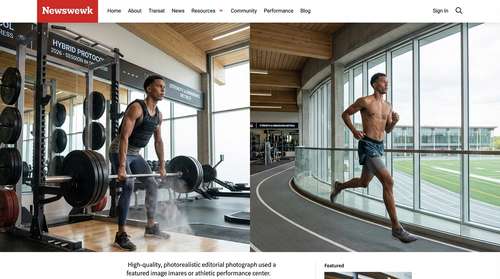
A massive industry shift is underway. For decades, the gym floor was divided into two fiercely distinct camps: the heavily muscled lifters pushing iron and the lean endurance junkies racking up mileage. You were either strong or fast, but rarely both. That binary approach is officially over. Hybrid training 2026 is completely rewriting the rules of physical culture, combining elite-level strength work with high-intensity endurance disciplines. This isn't just a fleeting fad; it has become the definitive fitness model of the year, prioritizing functional versatility and metabolic health over traditional aesthetic-only bodybuilding or pure cardio routines.
The Science Behind Concurrent Training Protocols
Recent data published in March 2026 underscores exactly why this shift is happening. A landmark twelve-week study published in the Pamukkale Journal of Sport Sciences demonstrated that trained athletes who integrated endurance and resistance exercise improved their body composition, maximal strength, and aerobic performance simultaneously . Historically, coaches warned of the "interference effect," claiming that cardiovascular work would inevitably kill your muscle gains and slow your power output.
The latest concurrent training protocols prove that narrative entirely false . By intelligently staggering heavy compound lifts with targeted aerobic sessions—often on non-consecutive days or carefully separated by adequate recovery hours—you can develop immense physical power without sacrificing your aerobic engine . The human body is remarkably adaptable, and modern sports science finally has the data to back up multi-disciplinary programming.
Debunking the Interference Effect
The secret lies in the meticulous execution of hybrid athlete programming. Research analyzing dozens of modern trials revealed that concurrent training still produces massive gains in both strength and muscle growth . While endurance-only routines leave athletes weaker, blending the two modalities correctly allows trainees to maintain high muscle mass while actively boosting their VO2 max. The key is managing the total training load. For instance, running heavy mileage on the exact same day as max-effort squats requires careful nutritional and recovery support, but scheduling a heavy lift followed by a zone-2 cycling session the next day yields incredible, sustainable results.
Mastering the Strength and Endurance Balance
The modern athlete wants to deadlift 400 pounds and still run a sub-two-hour half marathon. Achieving this elusive strength and endurance balance requires a fundamental shift in how we view the training week. Gone are the endless, junk-volume bodybuilding splits that isolate one muscle group per day. In their place, we see the rise of highly efficient, performance-driven schedules built around movement patterns rather than just individual muscles.
A typical week in the life of a modern hybrid athlete involves two to three days of dedicated heavy lifting focused on the big three—squats, deadlifts, and overhead presses. These are heavily complemented by two days of Zone 2 steady-state cardio and one high-intensity interval session. This combination builds robust joint stability while simultaneously creating an impenetrable cardiovascular system . You aren't just building a physique that looks good under harsh gym lighting; you are forging a machine capable of handling the rigorous, unpredictable demands of real life and outdoor sports.
Functional Fitness Trends and Longevity
The pivot toward multi-disciplinary fitness isn't solely about athletic performance or dominating a weekend obstacle course race. It is deeply rooted in longevity-based training. Medical professionals and lifespan experts have increasingly emphasized that robust cardiovascular capacity and raw muscular strength are the two greatest baseline predictors of a long, healthy life.
If you strictly lift weights, you risk neglecting the cardiovascular elasticity needed to prevent heart disease. On the flip side, if you only run, you risk age-related sarcopenia and critical bone density loss as you enter your later decades. The dominant functional fitness trends of this year treat the body as a holistic, interconnected system. We are seeing a profound recognition across the health landscape that true wellness requires a body that is as resilient internally as it is strong externally.
Updating Your 2026 Workout Routines
To transition away from specialized, single-track routines, you need to start small. Overhauling your entire regimen overnight usually leads to systemic fatigue or overuse injuries. If you are a dedicated lifter, integrate 30 to 45 minutes of low-intensity cycling or rucking twice a week to build an aerobic base without taxing your joints. If you are a lifelong runner, add two days of foundational kettlebell or barbell work focusing on your posterior chain . The most effective 2026 workout routines are the ones that actively challenge your weaknesses rather than just comfortably playing to your existing strengths.
The Future of Physical Preparedness
We are actively witnessing the death of the specialist. Training for a single physical attribute is suddenly being framed as a severe limitation rather than a badge of honor. Moving forward, the industry standard will demand well-rounded, versatile capability from everyday gym-goers and elite competitors alike . The modern gold standard is a body built for absolutely everything. By embracing the hybrid methodology today, you are ensuring that your fitness serves the complex demands of your life, rather than your life serving the narrow demands of your fitness.