Living to 100 has long been considered a mix of exceptional genetics, healthy lifestyle choices, and a stroke of luck. But a landmark centenarian longevity study published in the journal Aging Cell and highlighted by global longevity researchers on April 9, 2026, is fundamentally rewriting the rulebook on human aging. Scientists from the University of Geneva and the SWISS100 project have discovered a biological "fountain of youth" hiding in plain sight: 37 specific youth-associated proteins circulating in the blood of super-agers that perfectly mirror the biological signatures of adults in their 30s and 40s. This revelation upends the long-held assumption that physical deterioration is a straight, unavoidable line, offering one of the most significant healthy aging breakthroughs of the modern era.
The Science Behind the Centenarian Longevity Study
For decades, researchers assumed that aging was a linear process—a steady accumulation of cellular damage and metabolic wear and tear. However, by analyzing the blood plasma of participants ranging from 30 to over 100 years old, scientists isolated a unique group of proteins that completely defy this standard trajectory.
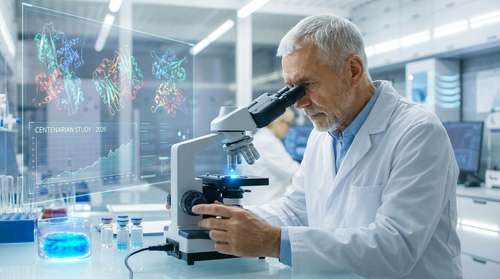
While the hospitalized octogenarians in the study showed typical signs of "inflammaging" and widespread organ decline, the centenarians possessed a radically different molecular profile. Out of more than 700 tracked plasma markers, 37 proteins effectively broke the curve. Instead of reflecting advanced age, the levels of these proteins remained stubbornly youthful. As researchers work to establish the most accurate biological age markers 2026 has to offer, this elite group of proteins stands out as the ultimate biological brake pedal, actively suppressing the usual cascade of cellular failure.
Tackling Oxidative Stress and Aging
One of the most profound discoveries regarding these newly identified proteins is their relationship with systemic inflammation and cellular damage. The connection between oxidative stress and aging is well-documented; it acts as molecular rust, gradually deteriorating tissues, mutating DNA, and fueling age-related diseases.
Astonishingly, centenarians naturally maintain an environment of remarkably low oxidative stress. The identified proteins play a crucial role in this protective mechanism. Some are responsible for triggering apoptosis—the programmed cell death that clears out dangerous cells and suppresses tumor formation—while others efficiently dispose of dysfunctional, misfolded proteins associated with neurodegenerative conditions like Alzheimer's disease. Rather than merely surviving the passage of time, the bodies of centenarians actively neutralize metabolic threats before they can trigger irreversible damage.
Extracellular Matrix Health: The Body's Structural Cement
A major factor explaining why 100-year-olds maintain such unexpected physical resilience lies in the structural integrity of their bodies. The newly discovered proteins are heavily involved in maintaining extracellular matrix health. The extracellular matrix acts as the cellular scaffolding or "cement" that holds tissues, organs, and blood vessels firmly together.
When this vital matrix degrades—as it typically does rapidly in our 70s and 80s—we see the invisible and visible signs of advanced aging: blood vessels stiffen, skin loses its elasticity, and critical organs become vulnerable to failure. The 37 proteins found in centenarians actively support the stability of this matrix, ensuring that the body's fundamental architecture remains highly functional. This exceptional tissue maintenance is a primary reason these individuals manage to avoid the rapid physical collapse experienced by the general elderly population.
Reversing Biological Decline: What This Means for the Future
Beyond structural integrity, these proteins aggressively regulate fat and sugar metabolism, protecting centenarians from the metabolic disorders that plague modern society. For instance, researchers found that these super-agers preserve a protein responsible for degrading GLP-1, the hormone that triggers insulin release, maintaining a metabolic profile remarkably similar to someone decades younger.
The implications of these findings extend far beyond simply understanding why a rare fraction of the population reaches a century of life. By pinpointing exactly which metabolic pathways are altered in centenarians, scientists now possess highly specific targets for future therapeutics. If pharmacological interventions or advanced therapies can stimulate the production of these 37 proteins in standard aging populations, the goal of reversing biological decline could soon transition from scientific theory to tangible medical reality.
The conversation within the medical community is rapidly shifting from extending absolute lifespan to dramatically prolonging "healthspan"—the number of years a person lives completely free from chronic disease. As we continue to decode the body's natural defense mechanisms, this unprecedented research proves that human aging is not a rigid inevitability. The ultimate blueprint for a longer, healthier life has been flowing through the veins of our oldest citizens all along.